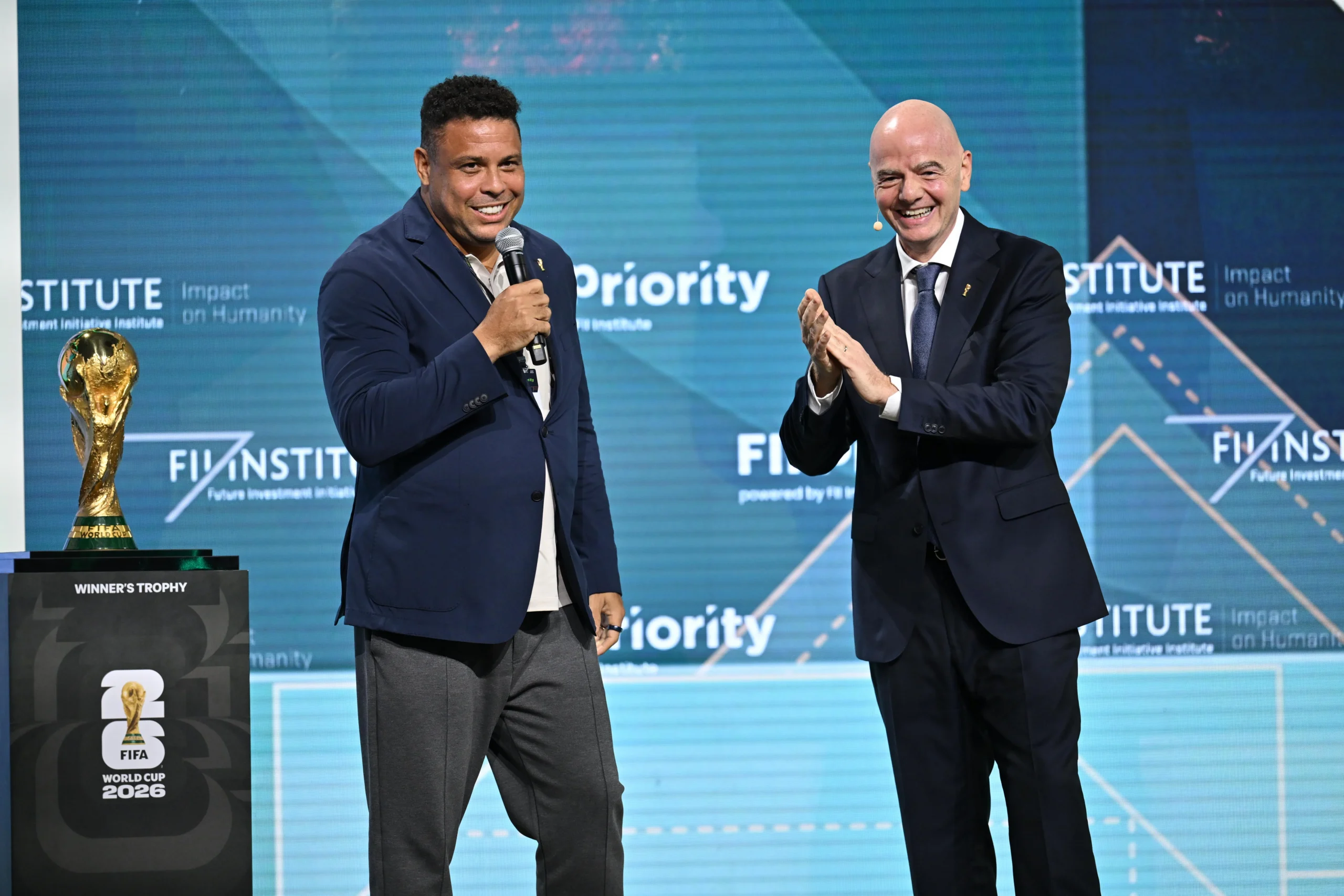
The afternoon sessions on the final day of FII PRIORITY Miami brought together some of the biggest names in sport, entertainment and technology. Their conversations covered a lot of ground — the World Cup, Hollywood, gaming, AI infrastructure — but kept returning to the same underlying question: what does it take to build something that lasts?
Live sport: Scale and economic power
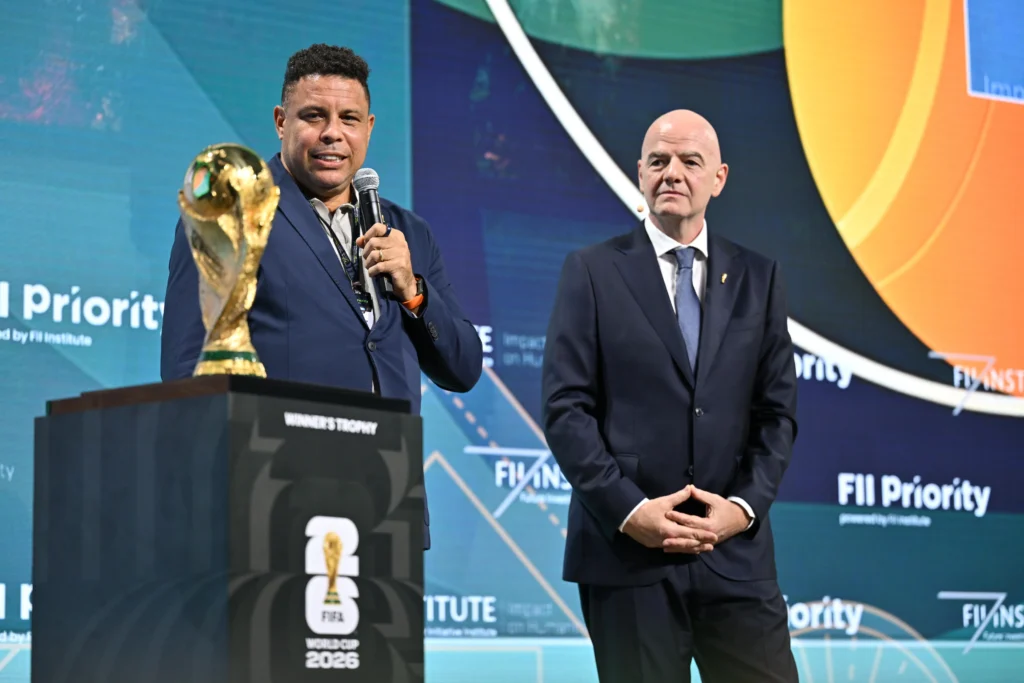
Gianni Infantino, President of FIFA, on stage with legendary Brazilian former football star Ronaldo Fenômeno and the World Cup trophy next to them, talked about the staggering economic impact of the World Cup.
“The economic impact of the World Cup is about $80 billion US dollars, is about 1 million permanent jobs, 200,000 of which in the United States.”
The 2026 World Cup, hosted across the United States, Canada, and Mexico, will feature 48 teams playing 104 matches in 39 days. In four weeks, FIFA received over 500 million ticket requests for 7 million available seats. Six billion people are expected to watch.
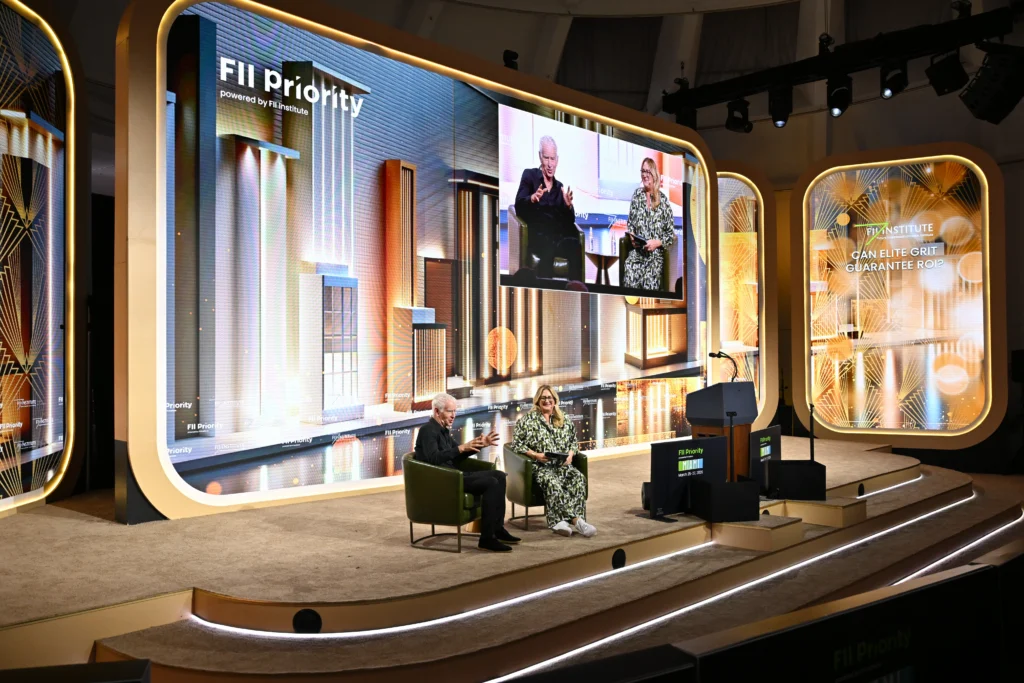
John McEnroe, International Tennis Hall of Fame inductee and former Grand Slam champion, in conversation with Mary Pierce, former professional tennis player, argued that grit increases the probability of success but cannot guarantee it, and that live sport, with all its uncertainty, is precisely what makes it irreplaceable.
Gaming: Building the next mythology
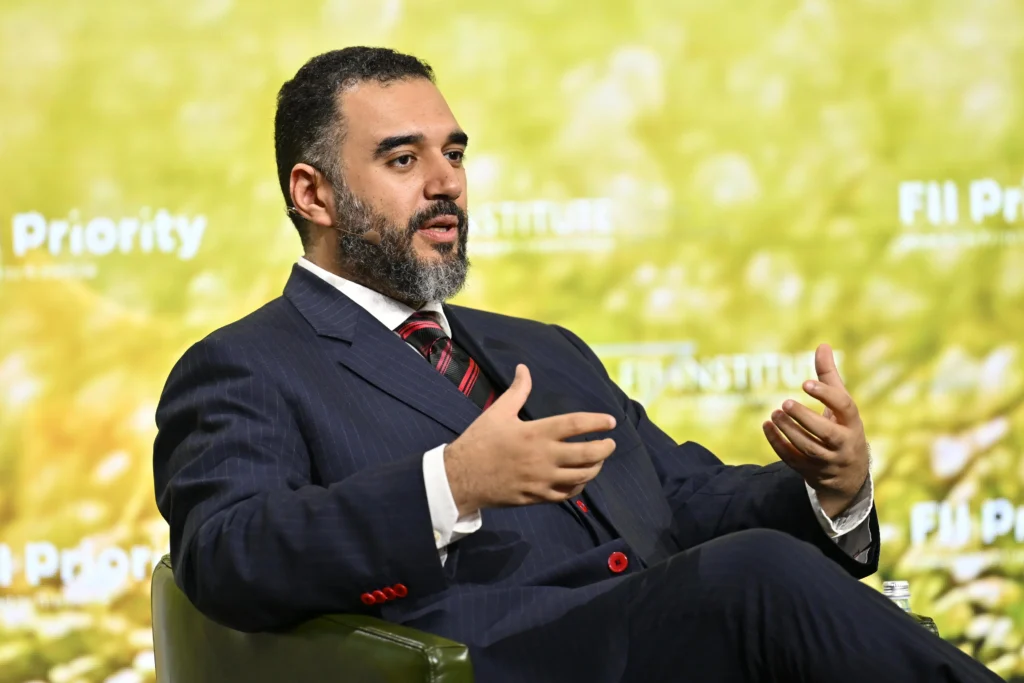
H.R.H. Prince Faisal bin Bandar bin Sultan Al Saud, Chairman of the Saudi Esports Federation and Vice Chairman of Savvy Games Group, explained that Saudi Arabia is not trying to copy an existing gaming ecosystem. It is trying to build one around stories that have not yet been told.
“All over the world, stories have been told. Two regions that still have stories that have not been told internationally are the Middle East and Sub-Saharan Africa. That’s right where we are.”
He also pointed to a shift in how gaming itself generates value.
“With cloud gaming and Web3 gaming, you’re now going to start seeing more paid-to-play, where playing becomes your career, not just as a professional gamer, but just to get on and play games. With companies like Sandbox and many others.”
Hollywood: The business of legacy
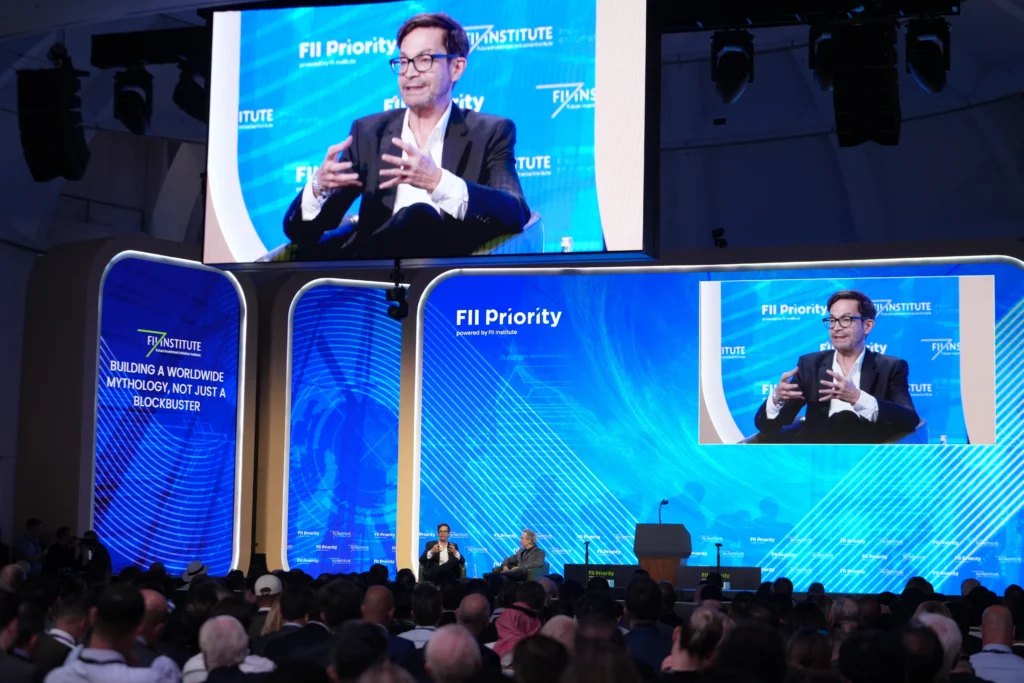
David Maisel, Founder of Marvel Studios and the architect behind the Marvel Cinematic Universe, pointed to something he says is rarely talked about.
“Something very important, and not really talked about a lot, is being owner-operated. When you’re an owner-operator, you care about things way more deeply. You have much longer timeframe. You’re all in. You can plan for a long time, which this requires. It took us five or six years to make Iron Man. And then it was another 20 years that we had planned out”, Maisel said.
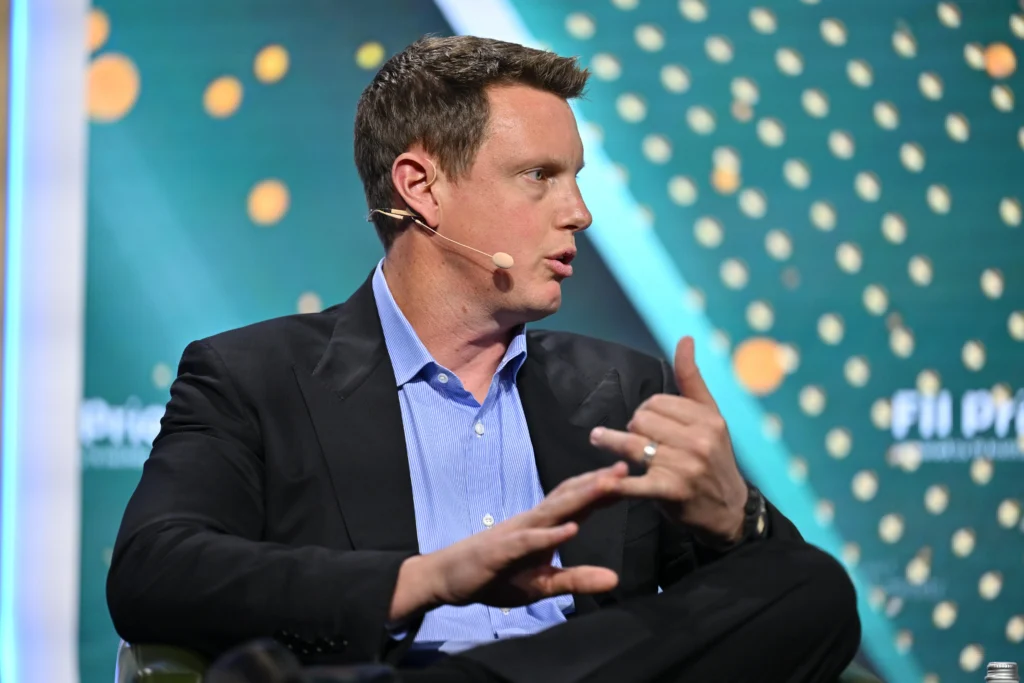
David Ellison, Chairman and CEO of Paramount Skydance, argued that the disruption happening in Hollywood right now is structurally similar to what happened to legacy technology companies a decade ago and to the music industry before that.
On AI, Ellison argued that the technology is not a threat to storytelling, but rather an iteration tool. Pixar’s rule was always “be wrong as fast as possible” — make the movie eight times before the audience sees it once. AI compresses that cycle further.
“If you can make the movie 15 times, 20 times, get that audience feedback, you’re going to be able to tell better stories that entertain your audience.”
Maisel made a related point: AI will help companies with established brands make products quicker and cheaper, while making it harder for new ones to break through.
AI infrastructure: The physical layer
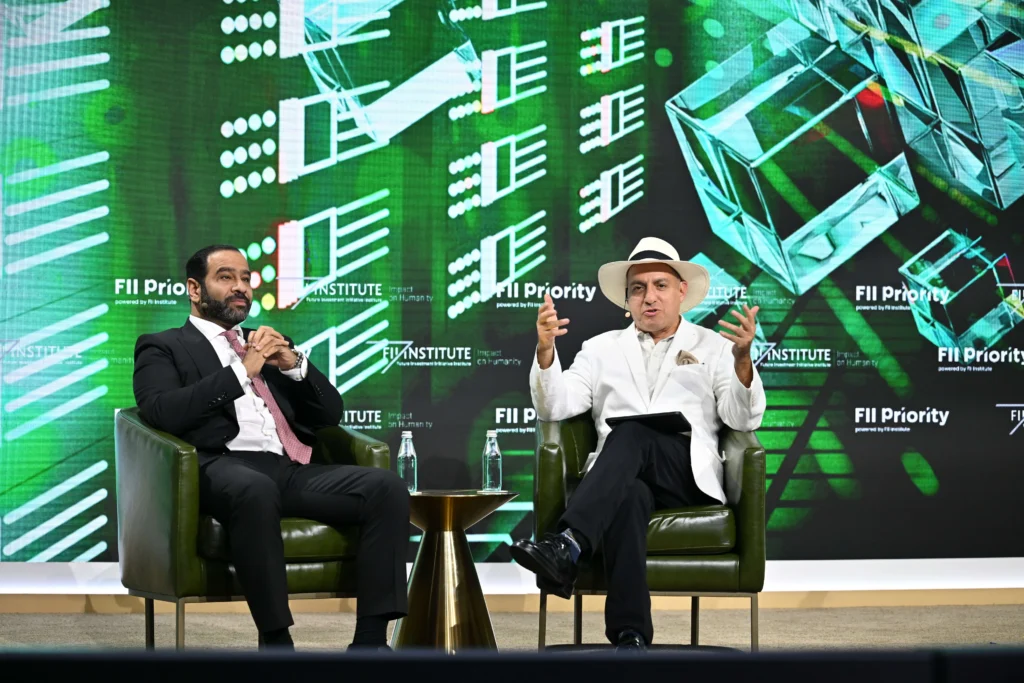
Behind all of it is physical infrastructure. Rayan Fayez, Deputy CEO of NEOM, made that case with numbers that reframe the scale of what is being built.
Three data points he used to locate the challenge: more than 150 zettabytes of data generated annually, expected to grow tenfold in the next decade; $2.5 trillion in AI investment in 2026 alone; and 300 gigawatts of power needed for AI data centers by 2035, at a cost of $30 to $50 billion per gigawatt.
The demand for compute, energy and physical infrastructure is growing faster than the industry can build it. That challenge sits underneath everything else discussed at FII PRIORITY Miami on Friday.