Aerospace, critical minerals, energy, and healthcare may sit in different parts of the economy, but they share common characteristics. Demand is expanding, systems are under pressure, and supply remains uneven. These sectors require long-term investment, operate under real capacity constraints, and play a central role in how economies function.
By the afternoon of Day 2 at FII PRIORITY Miami, the conversation had turned to how investment decisions are becoming more deliberate across these sectors, shaped by the need to secure access, build capacity, and support the systems economies depend on.
Aerospace expands under sustained demand and rising complexity
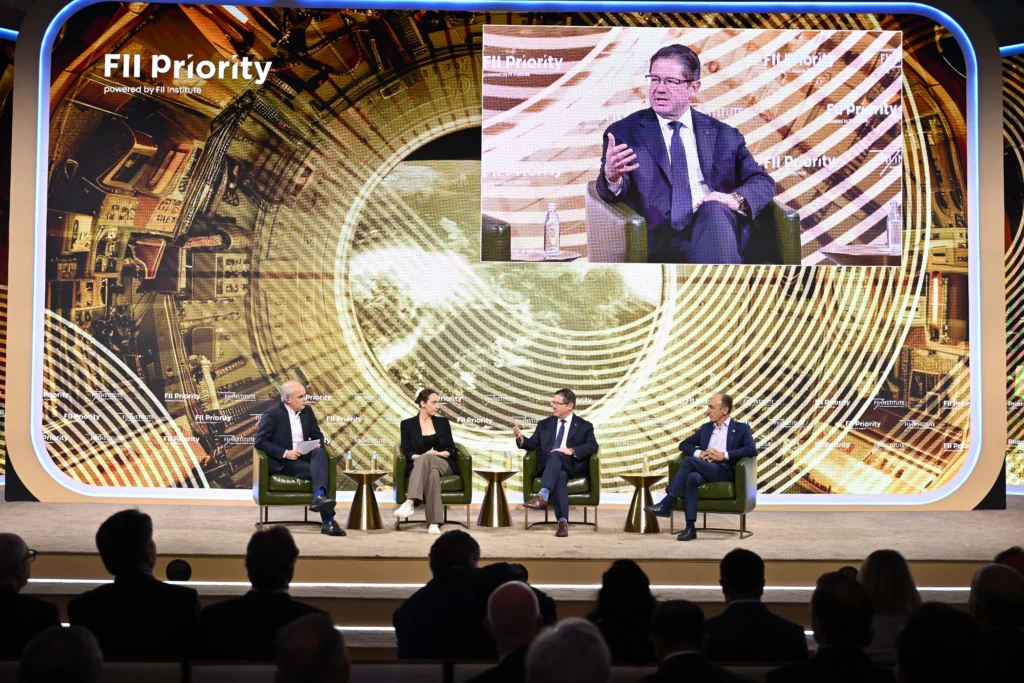
Aerospace opened with a clear signal on how demand is evolving across both commercial and private aviation. Éric Martel, President and CEO of Bombardier, pointed to a growing base of potential customers. “If you look at people that have access to USD 30 million, they will grow by about 6% per year over the next five years, easily. That’s another 30% more people that can become customers for a private jet.” He also noted how external conditions continue to influence behavior. “COVID was an accelerator for business aviation… and things that are happening right now in the Middle East could be an accelerator also.”
As aerospace expands beyond traditional aviation, space is also emerging as a major arena for capital and industrial ambition. Fatih Özmen, CEO and Owner of Sierra Nevada Corporation and Sierra Space, described the scale of that expansion. “[Aerospace] is really a trillion-dollar supercycle. Space is the ultimate frontier.”
Energy investment moves into new frontiers
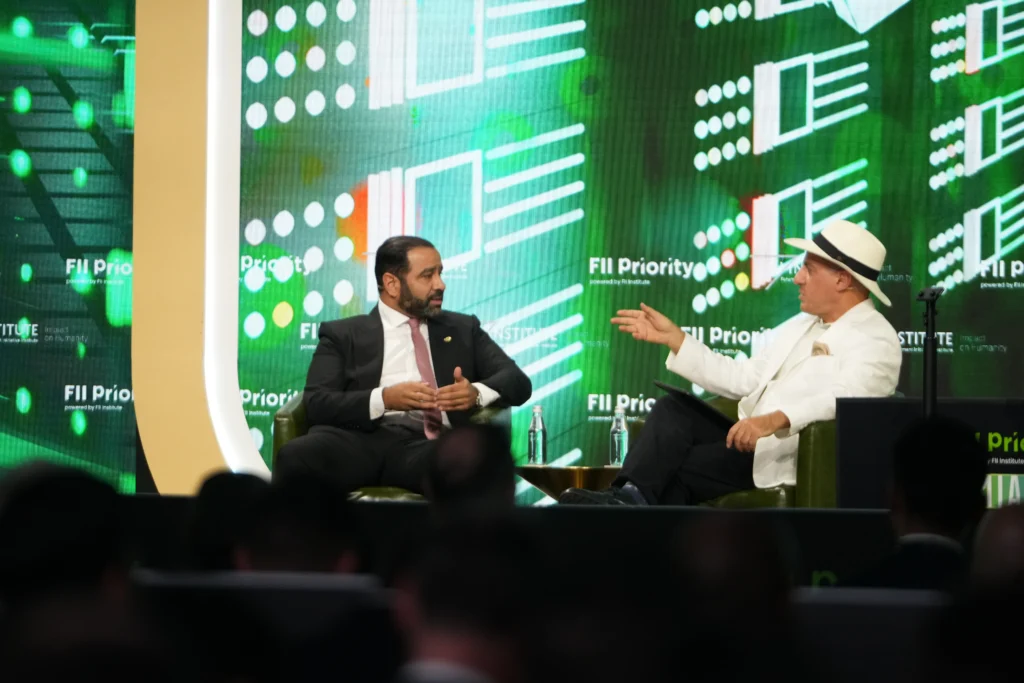
The expansion into space is also beginning to reshape how energy itself is produced and delivered. Marc Berte, Founder and CEO of Overview Energy, described a model in which solar power is generated beyond the limits of terrestrial systems. “You collect solar energy in space where the sun is 24/7… We’re looking at first megawatts on grid 2030, gigawatts 2035.”
The concept reflects a broader push to rethink how energy is sourced as demand continues to grow across industries. Energy remains the underlying requirement across sectors. As systems scale, the availability, affordability, and structure of power supply continue to define what can be built and how quickly it can operate.
Critical minerals shape supply and pricing power
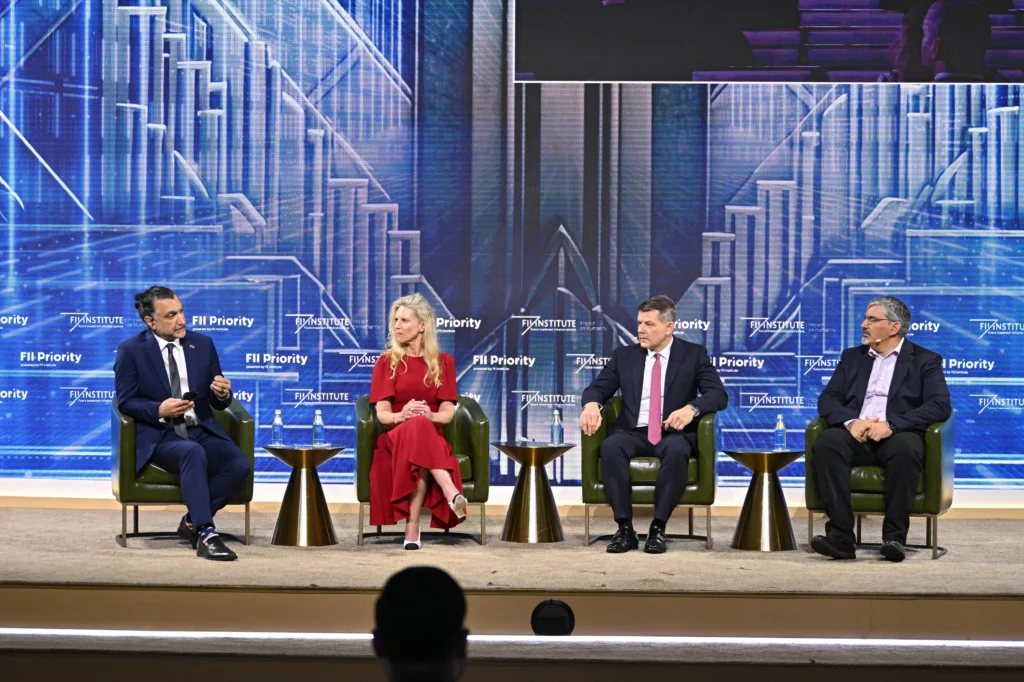
That demand is closely tied to the availability of critical inputs. The minerals sector highlights how supply concentration and pricing dynamics are shaping investment decisions. Jonathan Evans, President and CEO of Lithium Americas, described the structural challenges facing the sector. “Financing is very difficult in this industry… because it’s very, very cyclical. Private investors don’t like volatility.” He also pointed to the role of market concentration. “Transparency is very key… 80% of the batteries come from China. More than 90% of the processing of rare earths and 75% of lithium and many other metals come from China. They control the price because you control the supply and demand at the same time.”
In response, governments are taking a more active role in securing supply. Evans framed the issue in practical terms. “Don’t think this is a renewables game… This is a keep-the-lights-on game.” Oliver Gunasekara, CEO and Co-Founder of Impossible Metals, described how companies are responding. “We have to go for valuable resources that are very, very low-cost so that we have some protection against the price manipulation.”
Across the sector, access to supply and greater pricing transparency are shaping how capital is deployed and how projects are structured.
Healthcare operates on long-term system investment
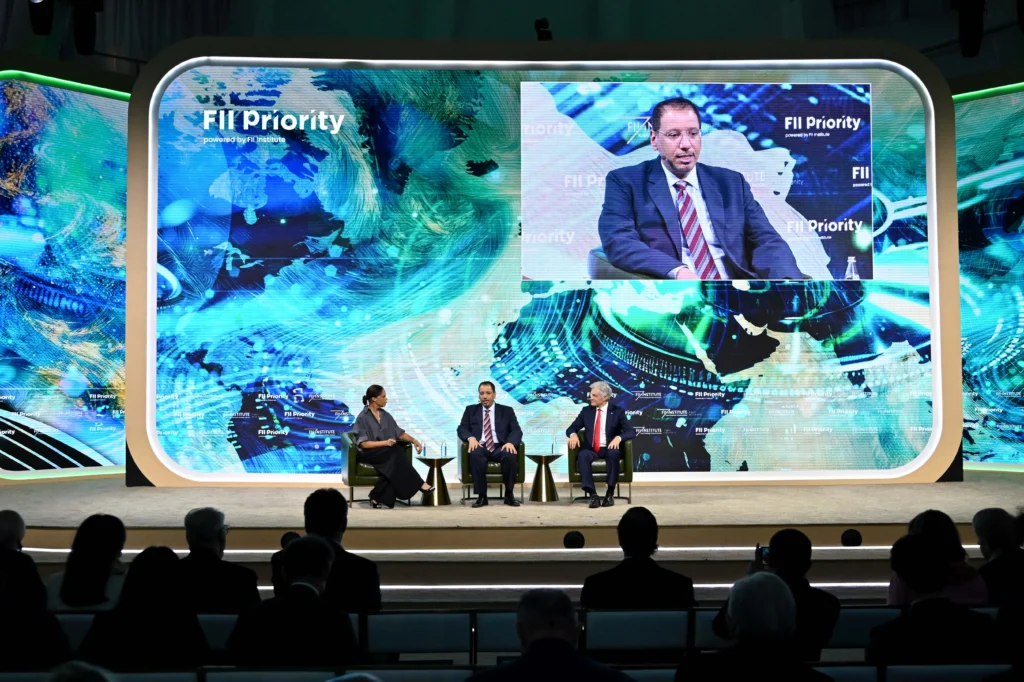
Healthcare reflects a different type of pressure, one that plays out over longer time horizons. Chronic diseases account for more than 70% of global deaths, placing sustained pressure on healthcare systems and shaping long-term investment priorities. H.E. Dr. Majid Alfayyadh, CEO of King Faisal Specialist Hospital and Research Centre, described medical diplomacy as a system that operates across borders and institutions. “Medical diplomacy, unlike diplomacy in general, transcends borders… so it is borderless and something that has been very effective over the years that needs to be utilized more.”
He emphasized that outcomes depend on alignment between policy and execution. “For medical diplomacy to be successful in transferring knowledge and improving healthcare globally, it has to be [a combination] of national strategy and political will.” He also reframed how healthcare is viewed within national systems. “Government tend to look at health as cost, where we see it as a platform for innovation, a platform for development. And the direct and indirect contribution to GDP is tremendous.”
Dr. Mehmet Öz, Administrator of the Centers for Medicare & Medicaid Services, connected this directly to economic performance. “You cannot be a wealthy country if you’re not a healthy country.”
In healthcare, capital is tied less to short-term cycles than to long-term system resilience, innovation capacity, and national productivity.
Capital aligns with policy, infrastructure, and execution
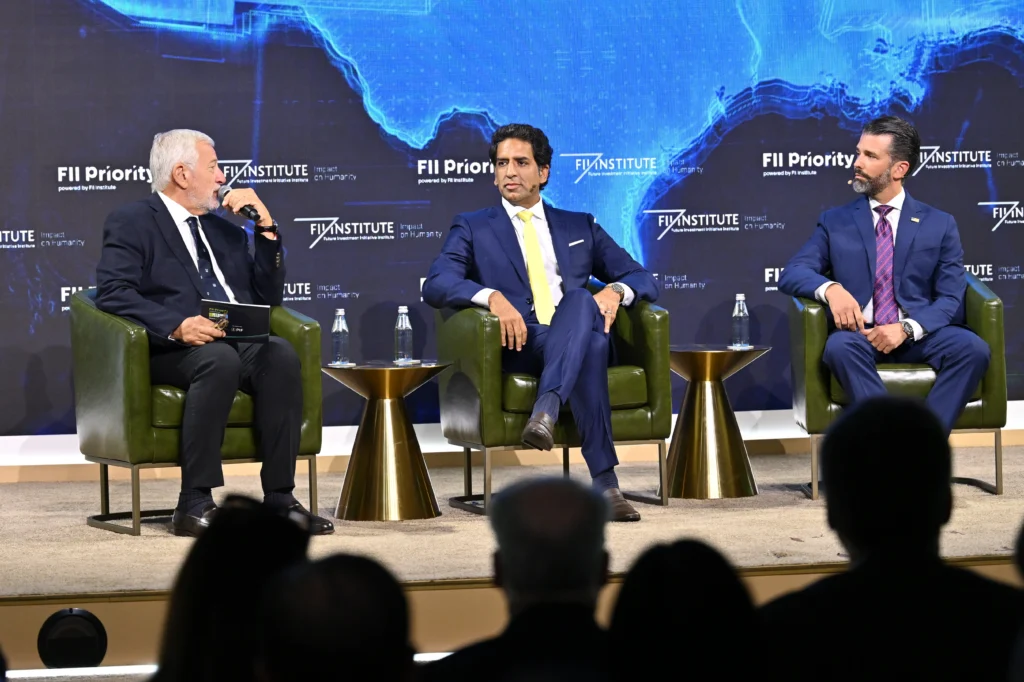
Across these sectors, investment decisions are increasingly shaped by broader frameworks. Omeed Malik, Founder and President of 1789 Capital, described the sequence succinctly. “Culture. Politics. Then finance. The money flows in that order.”
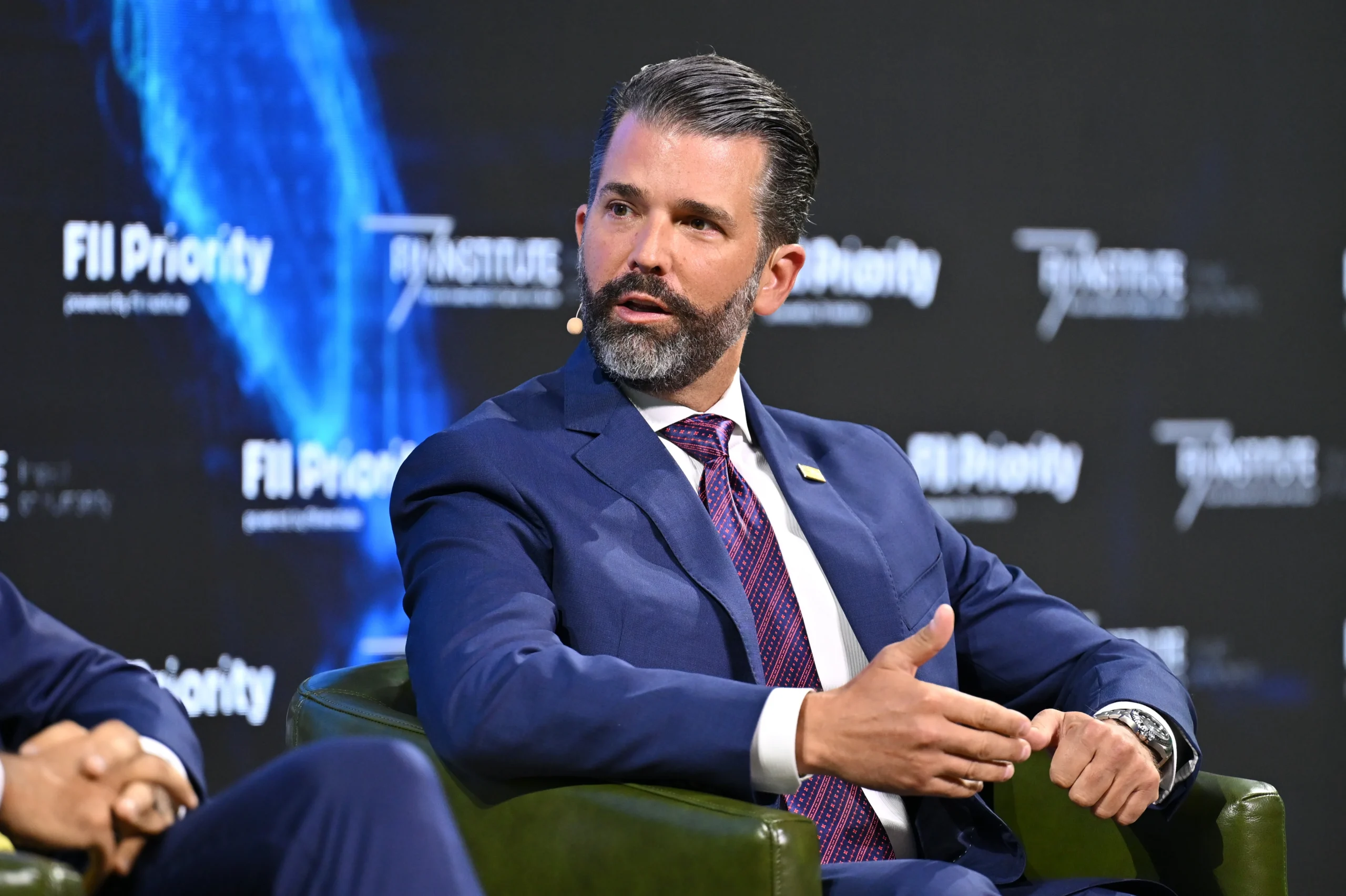
Donald Trump Jr., Partner at 1789 Capital, brought the focus back to a core enabler across sectors. “Energy is everything… If you don’t have the energy to power it, none of it matters.”
Where capital is being directed
Across aerospace, energy, critical minerals, and healthcare, the same pattern is visible. Demand continues to expand, systems operate under pressure, and supply remains uneven. Capital is moving toward sectors where long-term demand, system resilience, and strategic capacity matter most.
Produced by: FII Institute’s Editorial Team