MEMBERSHIP

FII PRIORITY Compass: FII Institute Identifies Global Priorities Before They Shape the World

Through its annual Global Survey, FII PRIORITY Compass, FII Institute captures insights from over 50,000 citizens across 24 countries, revealing humanity’s emerging priorities before they become global realities. These early signals empower leaders with actionable intelligence to navigate what comes next.

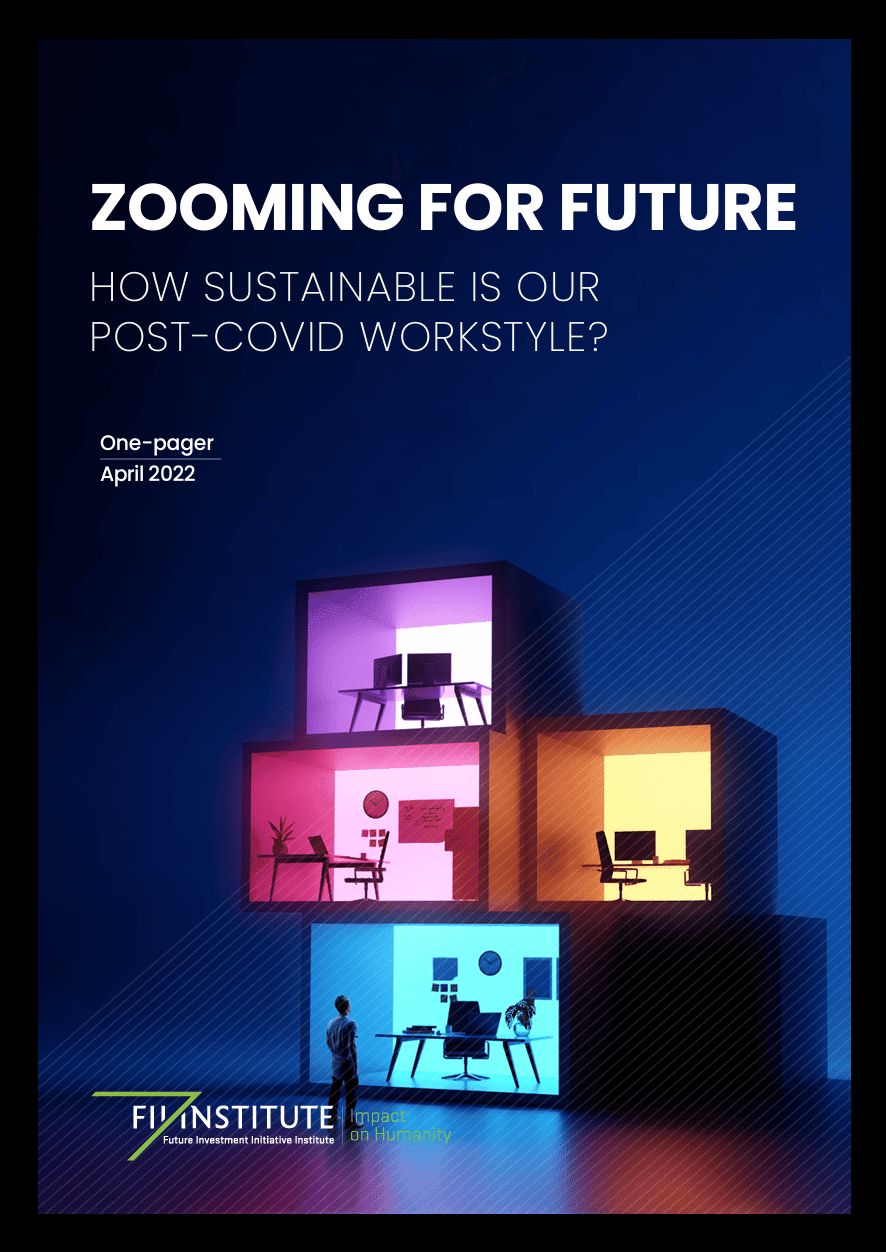
One-pager: Zooming for Future

Home offices are far more sustainable than office-offices, we were told during the pandemic. But how much resources does working from home really save? And how sustainable will our post-COVID office-mix be?

PUBLISHED BY FII INSTITUTE

أبريل 3, 2022
Share this Publication

SUSTAINABLE POST-COVID WORKSTYLE

The issue at stake: Home offices are far more sustainable than office-offices, we were told during the pandemic. But how much resources does working from home really save? And how sustainable will our post-COVID office-mix be?

WHY IT MATTERS

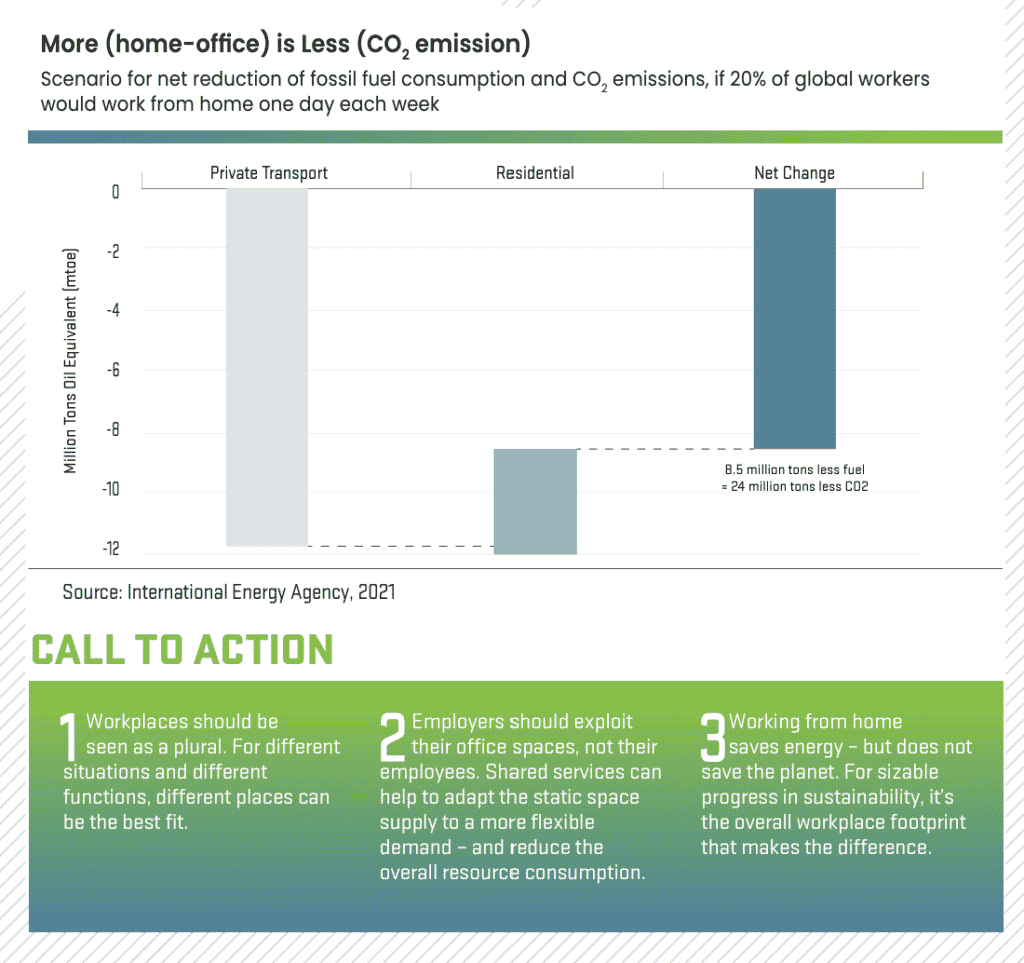
2020 smashed all the records. Almost two billion tons less CO2 production than in the year before, a decrease of 5.4 % of global CO2 emissions, mostly due to the economic shock waves of the COVID-19 pandemic – unprecedented! But though the virus raged on, the CO2 did not: according to Global Carbon Project, global emissions rose in 2021 by 4.9 %, an almost total rebound. But didn’t we change our behavior massively, and continue to do so? Less trade fairs and business travel, more online shopping and home office – a lot of changes that were induced by the global lockdown period in early 2020 are here to stay; and all of them should reduce the resource intensity of our lifestyle and workstyle. Let’s just look at our workplaces. A higher percentage of home-office work will lead to less commuting and less fuel consumption, so it must yield environmental benefits. Yes, it does, as many studies found out. The US e-Commerce company Shopify for example calculated, that letting all its 6000 employees work from home since 2020 reduced their energy consumption by a whopping 29 % per year. Other studies though, had more sobering results, like the one of the International Energy Agency IEA (see chart). For its scenario, the IEA assumed that 20% of all workers on the globe would do one day of home-office each week. The reduction of transportation energy was partly offset by higher energy consumption at home, eg. for office equipment or air-condition. The net result: overall energy use falls by around 8.5 million tons of oil equivalent, leading to a drop of 24 million tons in annual CO2 emissions.



Top Publications

Why South America Will Shape Europe’s Economic Resilience
EUROPE’S ECONOMIC FUTURE IS OFTEN discussed through the lenses of defense, energy security and industrial policy. Yet one of its most consequential vulnerabilities sits elsewhere: in food systems. In particular, the evolving agricultural interdependence between the European Union and South America will play a growing role in determining whether Europe becomes more economically resilient—or more […]
read more
What is Europe’s Economic Future and How Does Europe Get There?
Europe enters 2026 in a new phase: moving from crisis management to reimagining its strategic autonomy in energy, technology, security, and finance. The decisions made in Brussels, Berlin, Paris, Rome and boardrooms across the continent over the coming years will determine whether the continent leads the next wave of technological and economic transformation – or […]
read more

Be a part of the conversation

Tweet about this publication and mention #FIIPublications to connect with the author.

Stay Connected

Get Involved with FII Institute today

Stay in the know with our newsletter

Co-produce knowledge & thought leadership

Partner with us

Join FII Institute Membership Program

Become a member
SubscribeMembership
chevron-downarrow-right