MEMBERSHIP

FII PRIORITY Compass: FII Institute Identifies Global Priorities Before They Shape the World

Through its annual Global Survey, FII PRIORITY Compass, FII Institute captures insights from over 50,000 citizens across 24 countries, revealing humanity’s emerging priorities before they become global realities. These early signals empower leaders with actionable intelligence to navigate what comes next.

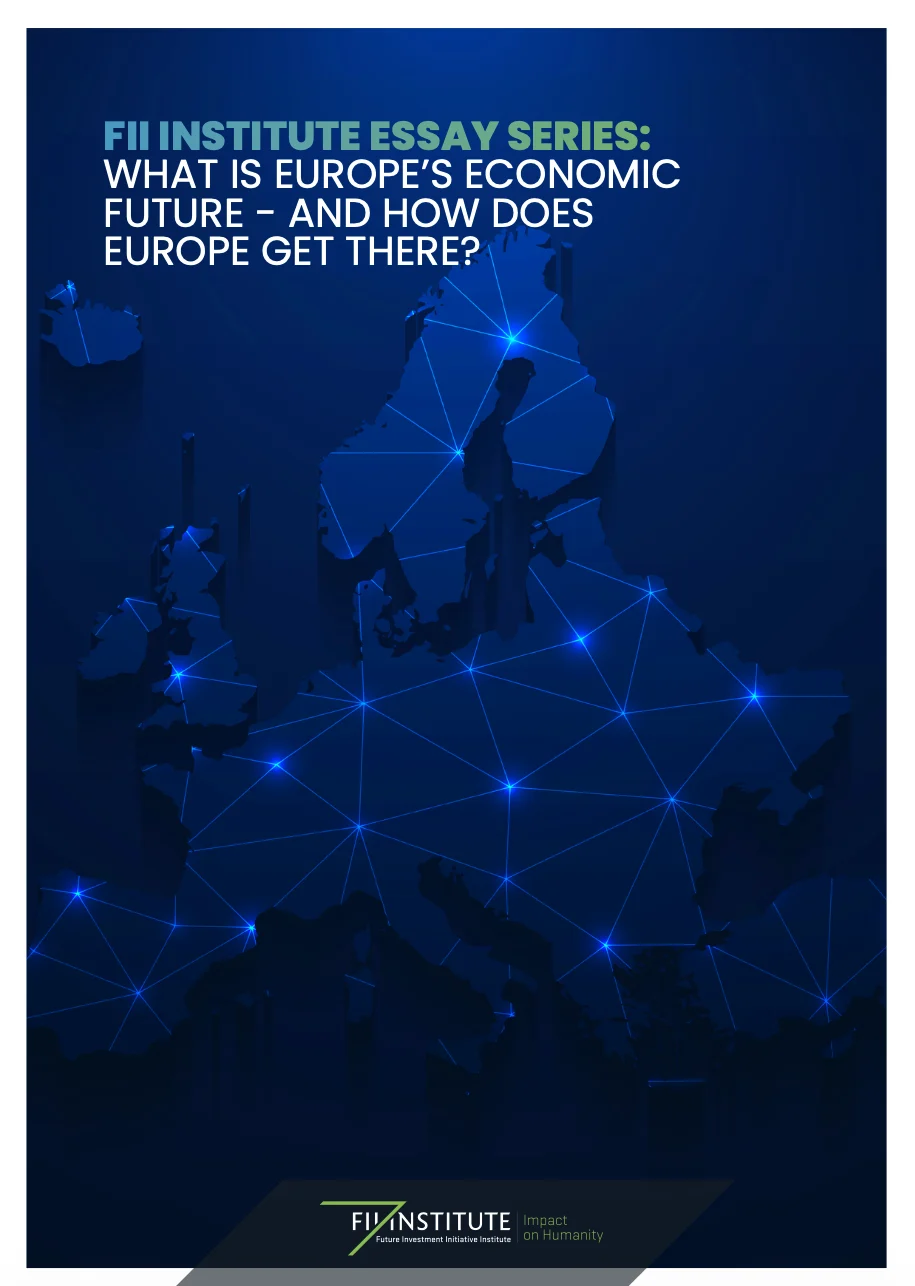
What is Europe’s Economic Future and How Does Europe Get There?

Europe enters 2026 in a new phase: moving from crisis management to reimagining its strategic autonomy in energy, technology, security, and finance. The decisions made in Brussels, Berlin, Paris, Rome and boardrooms across the continent over the coming years will determine whether the continent leads the next wave of technological and economic transformation – or […]

PUBLISHED BY FII INSTITUTE

يونيو 17, 2026
Share this Publication

Europe enters 2026 in a new phase: moving from crisis management to reimagining its strategic autonomy in energy, technology, security, and finance. The decisions made in Brussels, Berlin, Paris, Rome and boardrooms across the continent over the coming years will determine whether the continent leads the next wave of technological and economic transformation – or lets others define the future of the world economy.

These essays collected from FII Members and Strategic Partners do not share a single view. They reflect the perspectives of investors, entrepreneurs, technologists, economists, and statisticians who have each looked carefully at Europe’s present condition and arrived at a common sense of urgency.

From demography to digital currency, from artificial intelligence to venture capital, the picture that emerges is a continent rich in talent, heritage, and institutional depth – yet yearning for bold action that can transform those advantages into the kind of scalable innovation the moment demands.

These essays are a call to clarity, for speed, for greater competition – and, yes, for a lower burden from regulations.

Our writers acknowledge that Europe’s regulatory instinct comes from a good place: the desire to protect citizens, preserve competition, and ensure that powerful technologies serve the public interest. This structure reflects values the continent has fought hard to uphold.

But good intentions do not guarantee good outcomes. When regulation moves faster than innovation, when compliance costs more than creation, when the brightest entrepreneurs weigh whether to build here or elsewhere, then the balance has tipped in the wrong direction.

The world is not waiting. Capital is being redeployed. Talent is mobile. The great technological platforms of the next decade are being built somewhere, right now. The question is not whether Europe has what it takes to compete – it clearly does. The question is whether it has the will to transform along with the rest of the world.

The FII Institute’s mission is Impact on Humanity. That requires us to engage honestly with the forces shaping our world – and to bring together the kind of thinking that moves beyond diagnosis toward action. The voices in these pages represent exactly that spirit.

Read them with an open mind. The future belongs to those who are willing to reach for it.



  1. For Europe to Benefit From Its AI Investments, It Must Improve AI Governance
  2. The Growth Path Europe Has Yet to Choose
  3. Europe Doesn’t Have a Capital Problem, It Has a Buyer Problem
  4. Fortune Favors the Bold: Europe’s Capital Opportunity
  5. The Digital Euro in 2026: Policy Alignment, Persistent Concerns, and Emerging Solutions
  6. Innovation Not Regulation: How Europe Can Compete in the AI Race
  7. Politics Is Local, But AI Is Everywhere: Rethinking the EU AI Act in a Global Economy
  8. Europe’s Demographic Future: Clues From Greco-Roman Fecundity

Topics Included

, ,

Top Publications

Why South America Will Shape Europe’s Economic Resilience
EUROPE’S ECONOMIC FUTURE IS OFTEN discussed through the lenses of defense, energy security and industrial policy. Yet one of its most consequential vulnerabilities sits elsewhere: in food systems. In particular, the evolving agricultural interdependence between the European Union and South America will play a growing role in determining whether Europe becomes more economically resilient—or more […]
read more
What is Europe’s Economic Future and How Does Europe Get There?
Europe enters 2026 in a new phase: moving from crisis management to reimagining its strategic autonomy in energy, technology, security, and finance. The decisions made in Brussels, Berlin, Paris, Rome and boardrooms across the continent over the coming years will determine whether the continent leads the next wave of technological and economic transformation – or […]
read more

Be a part of the conversation

Tweet about this publication and mention #FIIPublications to connect with the author.

Stay Connected

Get Involved with FII Institute today

Stay in the know with our newsletter

Co-produce knowledge & thought leadership

Partner with us

Join FII Institute Membership Program

Become a member
SubscribeMembership
chevron-downarrow-right