CLOTHING MANUFACTURE CAUSES ONE-TENTH OF WORLD’S CARBON EMISSIONS
Today’s throwaway clothing or “fast fashion” has negative environmental impacts at every stage of its life cycle. Current systems are not sustainable. We need to change what our clothes are made from, where and how they are produced, and how we dispose of them.
THE ISSUE AT STAKE
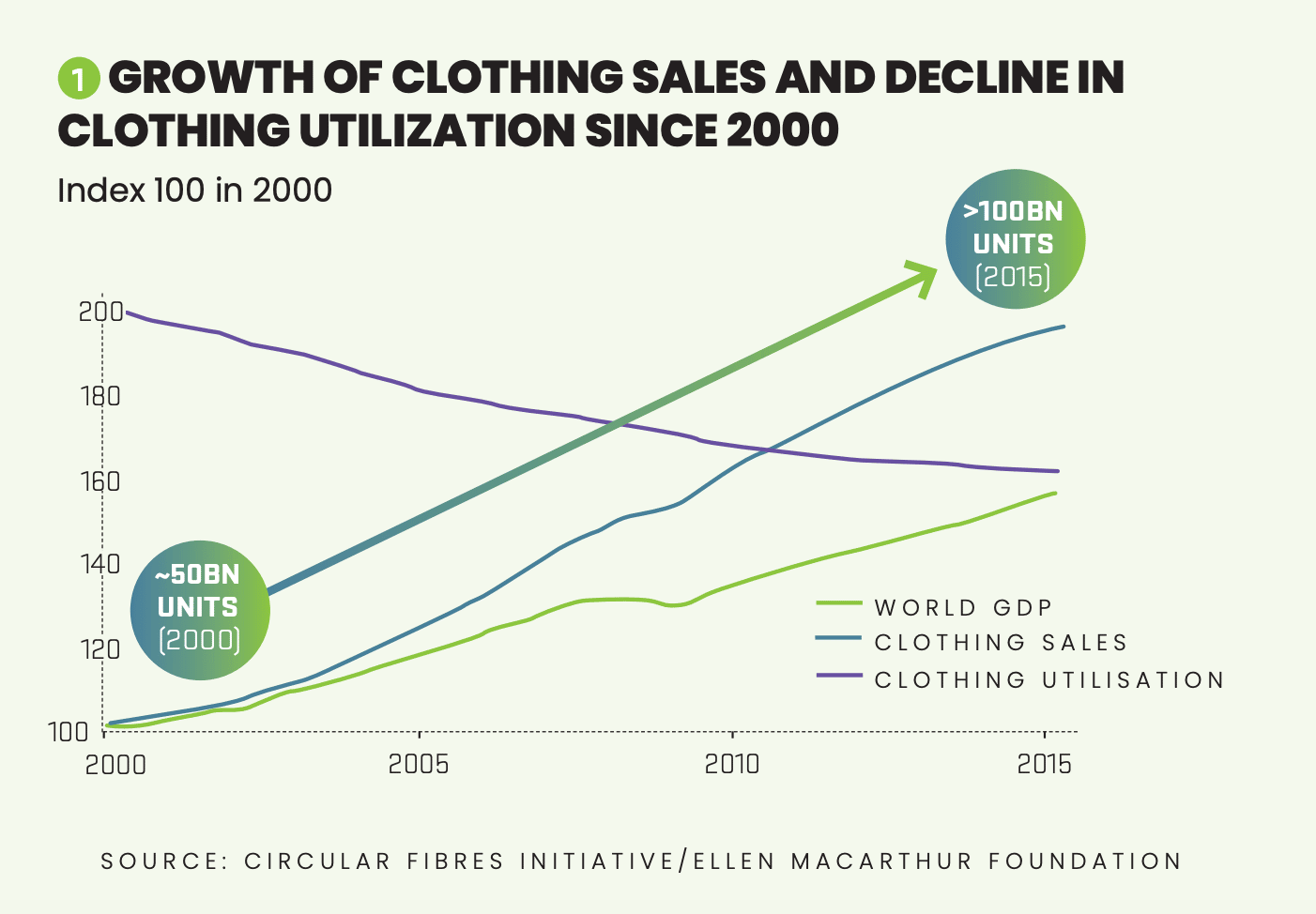
MOST PEOPLE DO NOT REALIZE the environmental damage that their clothes may be causing. But the facts are indisputable. The $2.4 trillion global clothing industry, which employs some 300 million people, is a huge carbon emitter, wasteful of resources and grossly polluting. China produces 65% of the world’s clothes and is the world’s largest exporter of textiles by value, followed by Germany. Globally, we are consuming more and more clothes each year and wearing them for less and less time. The clothing industry is responsible for 1.2 billion tonnes of greenhouse gas emissions annually. That’s one-tenth of all emissions – more than all international flights and maritime shipping combined. Clothing manufacture is the world’s second-largest consumer of water and causes one-fifth of all water pollution.3 Humans will always need and want clothes, and with 8 billion people on Earth, it will always require a substantial amount of energy, water, and raw materials to produce them. And as the textile industry is almost as omnipresent as agriculture, it will always play a major economic role, especially in low income countries. This means that we should not try to make the textile industry disappear, but instead try to make it as sustainable as possible. As we show, most of clothing’s carbon impacts occur during production, followed by clothing in use, and far smaller proportions for retailing and end-of-life disposal. Synthetic fibers, used in around 60% of clothing, are made from carbon intense chemicals derived from oil. They also release one-third of the microplastics found in the oceans. But natural fibers also have bad environmental impacts – growing cotton requires huge amounts of water.4 Despite these facts, it is estimated that just 12% of the material used for clothing is recycled. The world’s two largest exporters of used clothing for reuse, recycling or disposal are the US and the UK, and the largest markets are in Africa, Eastern Europe, Asia, and the Middle East.
LIMITATIONS OF SELF-REGULATION
A number of industry-backed NGOs and trade bodies are promoting sustainable fashion. The Circular Fashion Partnership 7 supports the textile recycling industry in Bangladesh by exporting fashion waste for new products. Dutch charity Fashion for Good.