MEMBERSHIP

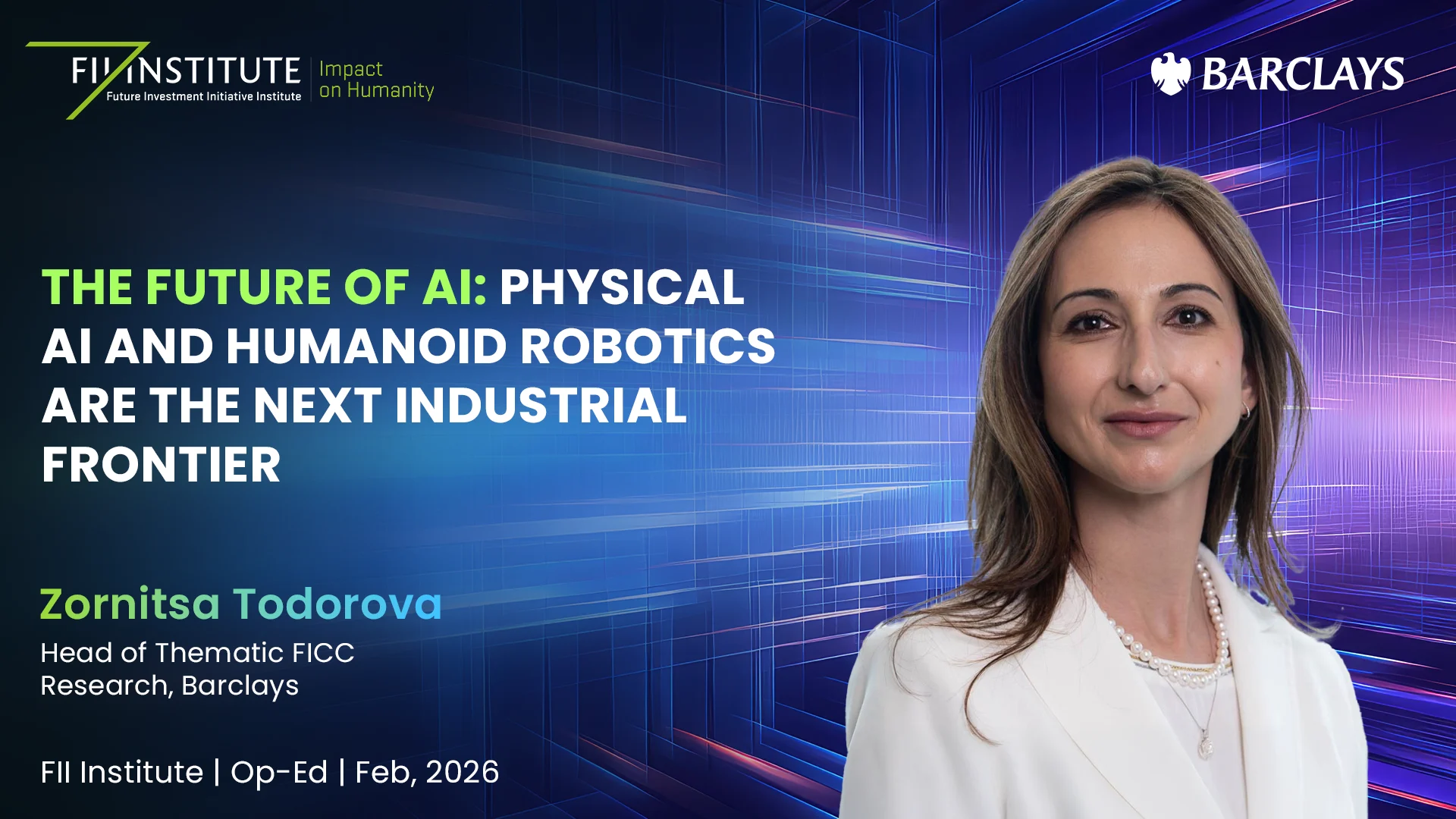
The Future Of Artificial Intelligence: Physical AI and Humanoid Robotics Are The Next Industrial Frontier

Humanoid robotics is moving from concept to commercial reality. As aging populations, rapid urbanization, and widening labor shortages strain global productivity, Physical AI is emerging as a structural solution. With the market projected to grow from $2–3 billion today to as much as $200 billion in the coming decade, and productivity gains reaching up to 150% at full human parity, humanoids may represent the next industrial frontier, where engineering, energy systems, and AI converge to reshape the future of work.

PUBLISHED BY FII INSTITUTE

فبراير 17, 2026
Share this Publication

Can robots solve the world’s growing labor and productivity crisis?

FII Institute in collaboration with our strategic partner, Barclays, authored by Zornitsa Todorova, Head of Thematic FICC Research, explores how humanoid robotics is reshaping the future of work, productivity, and global supply chains. With the market projected to grow from $2–3 billion today to as much as $200 billion in the coming decade, Physical AI is moving rapidly from research labs into real industrial environments.

Driven by aging populations, accelerating urbanization, and structural labor shortages, humanoid robots offer scalable productivity gains of up to 150% at full human parity. The report also examines Europe’s competitive edge in advanced manufacturing and precision engineering, positioning it as a key player in the next wave of AI innovation.

Discover how “brains, brawn, and batteries” are redefining industrial strategy, investment opportunities, and the global economy.

The future of work may not just be digital, it may be humanoid.


Topics Included

, , ,

Top Publications

Why South America Will Shape Europe’s Economic Resilience
EUROPE’S ECONOMIC FUTURE IS OFTEN discussed through the lenses of defense, energy security and industrial policy. Yet one of its most consequential vulnerabilities sits elsewhere: in food systems. In particular, the evolving agricultural interdependence between the European Union and South America will play a growing role in determining whether Europe becomes more economically resilient—or more […]
read more
What is Europe’s Economic Future and How Does Europe Get There?
Europe enters 2026 in a new phase: moving from crisis management to reimagining its strategic autonomy in energy, technology, security, and finance. The decisions made in Brussels, Berlin, Paris, Rome and boardrooms across the continent over the coming years will determine whether the continent leads the next wave of technological and economic transformation – or […]
read more

Be a part of the conversation

Tweet about this publication and mention #FIIPublications to connect with the author.

Stay Connected

Get Involved with FII Institute today

Stay in the know with our newsletter

Co-produce knowledge & thought leadership

Partner with us

Join FII Institute Membership Program

Become a member
SubscribeMembership
chevron-downarrow-right