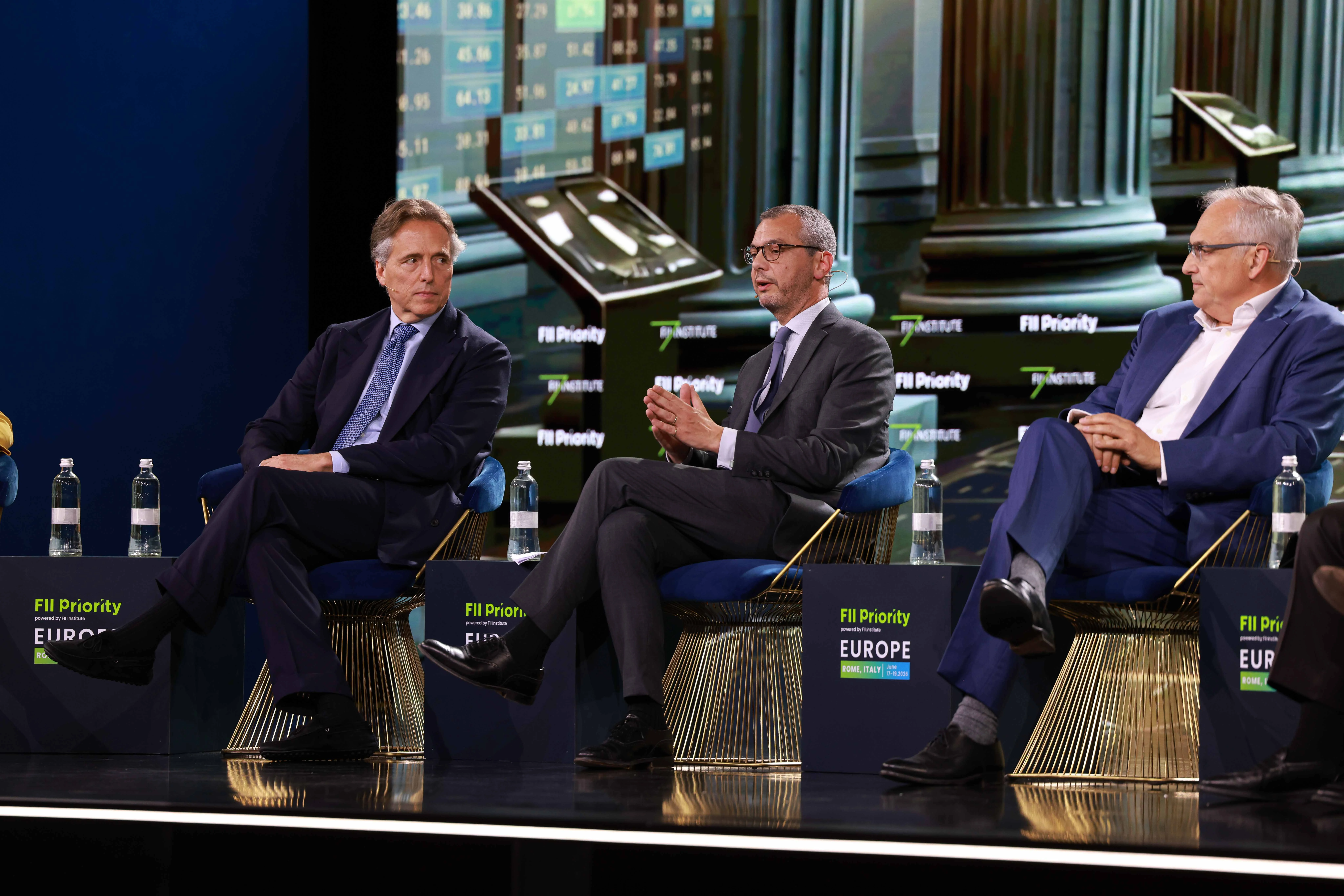
Two days of panels on European finance at FII PRIORITY Europe kept returning to the same uncomfortable observation: the continent’s problem is not a shortage of capital. It is a structural failure to get the capital it has to where it needs to go. The sessions on finance, capital markets, digital infrastructure, and institutional trust produced a consistent diagnosis — and some pointed disagreements about who is responsible for fixing it.
The paradox at the center
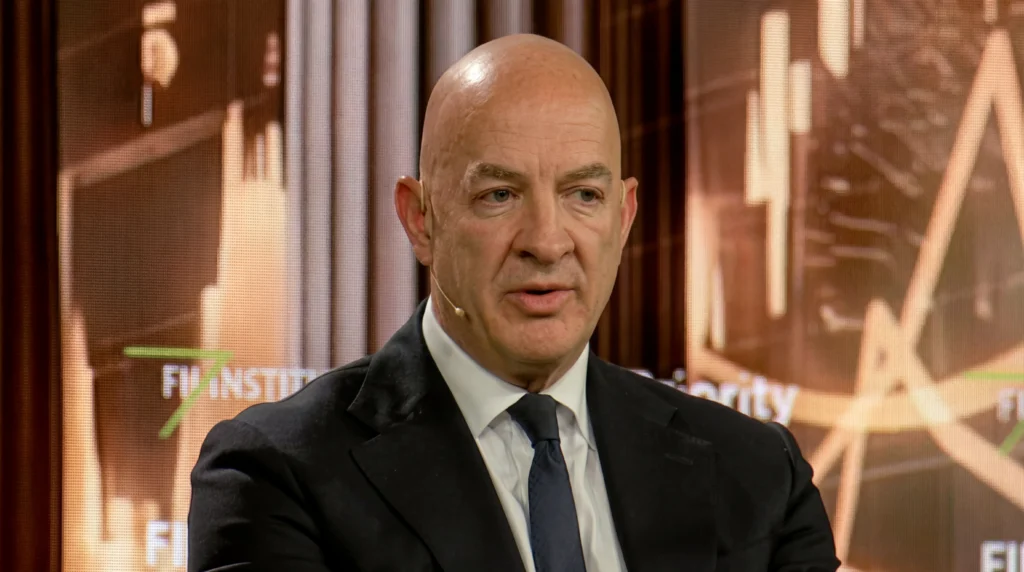
Alexis Kohler, Executive Vice President of Société Générale, opened the “Who Will Finance Europe’s Next Build-Out?” panel by framing the paradox clearly. Europe’s investment gap runs to between €800 billion and €1.2 trillion per year depending on the measure used. Yet the continent paradoxically exports €200 to €300 billion of capital to the United States every year, even as it runs that shortfall domestically. Banks, which still provide roughly 70% of European project financing — against a fraction of that in the United States, where individuals fund three times more than banks do — are being constrained from lending more by capital regulations that have grown three times faster than their lending capacity over the past decade. Only 10% of European households hold equity, compared to more than 60% in the United States.
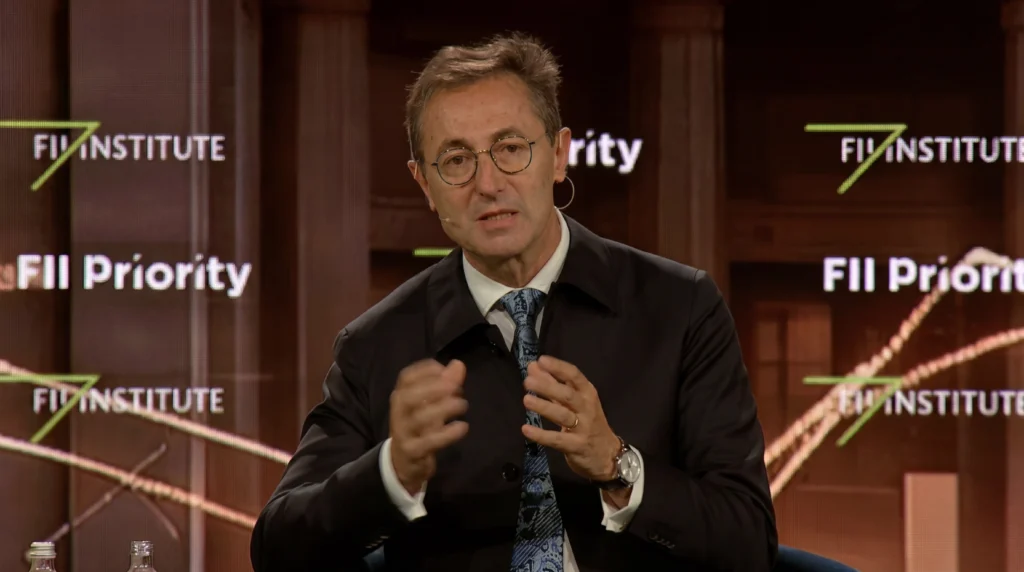
Geert Lippens of BNP Paribas put the scale of the challenge in terms of who is expected to finance it. Governments are already contributing more than 25% of Europe’s financing needs, he said, but are heading into what he called a “super capex cycle” — defence spending, energy transition, digital infrastructure — that will force hard choices between pensions, deficits and industrial investment. Banks face the same structural constraint Kohler described. Which leaves a third source: private capital, and specifically the foreign capital that Europe both needs and keeps pushing away.
Foreign capital: Invited in theory, restricted in practice
The most pointed exchange of the session came when discussing whether Europe could bring in sovereign wealth funds without surrendering strategic autonomy. It was, in effect, the session’s real question.
Israfil Mammadov, CEO of the State Oil Fund of Azerbaijan and representative of a family of sovereign wealth funds managing roughly $14 trillion collectively, addressed the fear directly. The International Forum of Sovereign Wealth Funds developed the Santiago Principles specifically to meet the concerns of recipient countries — a governance framework built around transparency, accountability and a core commitment to no political interference in investment decisions.
“I understand that in some of the jurisdictions, there is a fear,” Mammadov acknowledged. “There is a sovereign wealth fund which will potentially come and take over the strategic asset and will try to manipulate things.”
Andrea Bonomi, Chairman of Investindustrial, was less diplomatic. His firm invests 60% in the EU and 40% in the US — a split that reflects solid European returns, he said, even if American returns come faster. But the structural problem, in his telling, is a European instinct to close up precisely when capital starts arriving.
“Now all of a sudden, when there is a beginning of having capital, people are closing up,” he said — pointing to a contradiction between Europe’s stated need for foreign investment in strategic industries and its political reflex to restrict access to them.
The solution, he argued, costs nothing: “Very good capital from sovereign funds. Capital will come in. You just need to execute on a simplification and understanding what the problems of the industry are.”
The money that isn’t moving
The capital markets sessions returned repeatedly to the €11 trillion sitting in European household bank deposits — savings earning near-zero returns while the continent’s reindustrialization waits for funding. Olivier Bélorgey of Crédit Agricole framed it as a sovereignty question: “Finance sovereignty is the prerequisite sovereignty, because without sovereignty in finance, you do not have the means and the power to finance the other sovereignty.”
His prescription for unlocking household savings was practical — pension reform, tax incentives to shift household preferences from low-risk deposits toward equity, and securitization reform to free bank capital for productive lending — but he was candid that each of those solutions runs into national political interests that resist centralization.
Andrew Cohen, Executive Chairman of J.P. Morgan’s Global Private Bank, supplied the most concrete evidence that capital is not the binding constraint: the year’s largest defense IPO was a Czech company, oversubscribed in four minutes.
“Capital will flow from all over the world,” he said.

The digital euro: Behind on purpose, or just behind?
The Money Revolution panel opened with a figure that reframed the urgency: stablecoins have grown from a cryptocurrency curiosity to $322 billion in assets, processing $33 trillion in transactions — larger than the combined FX reserves of the UK and Canada. Ninety-three percent of that market is backed by US assets.
Zoe Cruz, Founder and CEO of Menai Financial Group, called it a revolution as significant as the globalisation of finance that defined her career at Morgan Stanley.
“The real revolution,” she said, “is we’re tokenizing, digitizing value — not just money, value. And it’s moving faster, cheaper, cross-border.”
The panel’s sharpest exchange was over whether Europe’s relative caution in this space is a principled choice or an expensive habit. Christopher Buskirk of 1789 Capital described the United States’ approach as a “very self-consciously created program” to make America the digital asset capital of the world, akin to the securities legislation of the 1930s that shaped modern US capital markets. Against that, Europe is still, as Massoli put it, “fastening its seatbelt before starting the engine.”
Fabio Massoli of Cassa Depositi e Prestiti argued the real European bottleneck is not regulation but interoperability — distributed ledger systems that cannot communicate with each other, preventing the infrastructure from scaling. Angus Fletcher of State Street agreed that MiCA provides a workable regulatory framework, but warned that blockchain fragmentation risks creating as many inefficiencies as it solves. The ECB’s digital euro, if it arrives by the end of the decade, may be too late to shape the infrastructure that is already being built elsewhere.
The same conclusion, from different rooms
Three sessions, three different entry points into the same problem. The capital is available, in household deposits, in sovereign wealth funds, in foreign institutional investors ready to commit if the conditions are right. The digital infrastructure to move it more efficiently is being built, faster in the United States than in Europe, but the European framework is taking shape. The question is whether the political conditions will follow.