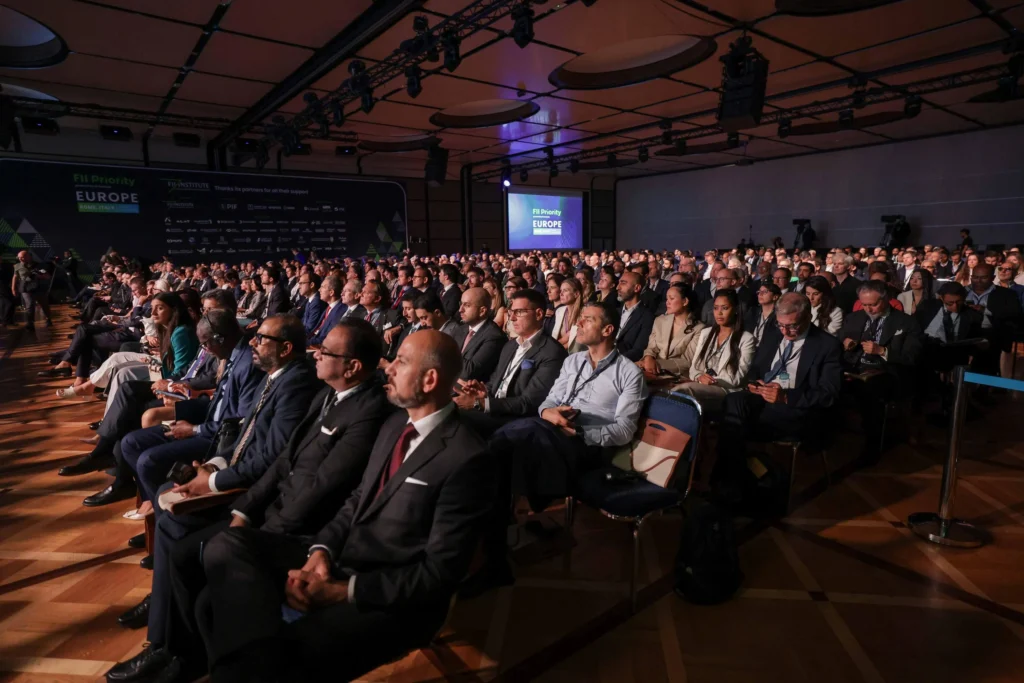
June 17 to 19, the coffee tables at the Rome Cavalieri were rarely empty. Between sessions, the conversations that had started on stage continued in the corridors, over lunch, and well past the official end of the afternoon program. The packed schedule was itself a strong argument: there is more to say than time allows, and most of it is urgent.
During three busy days of the FII PRIORITY Europe, over 1,800 investors, entrepreneurs, policymakers, scientists, and innovators converged on a single set of questions the summit had been designed to sharpen. Is Europe at an inflection point or at the edge of a cliff? Is the continent still investable? Can its growth model match the pace of the United States and China? What legacy will Europe leave, and what kind of future is it building?
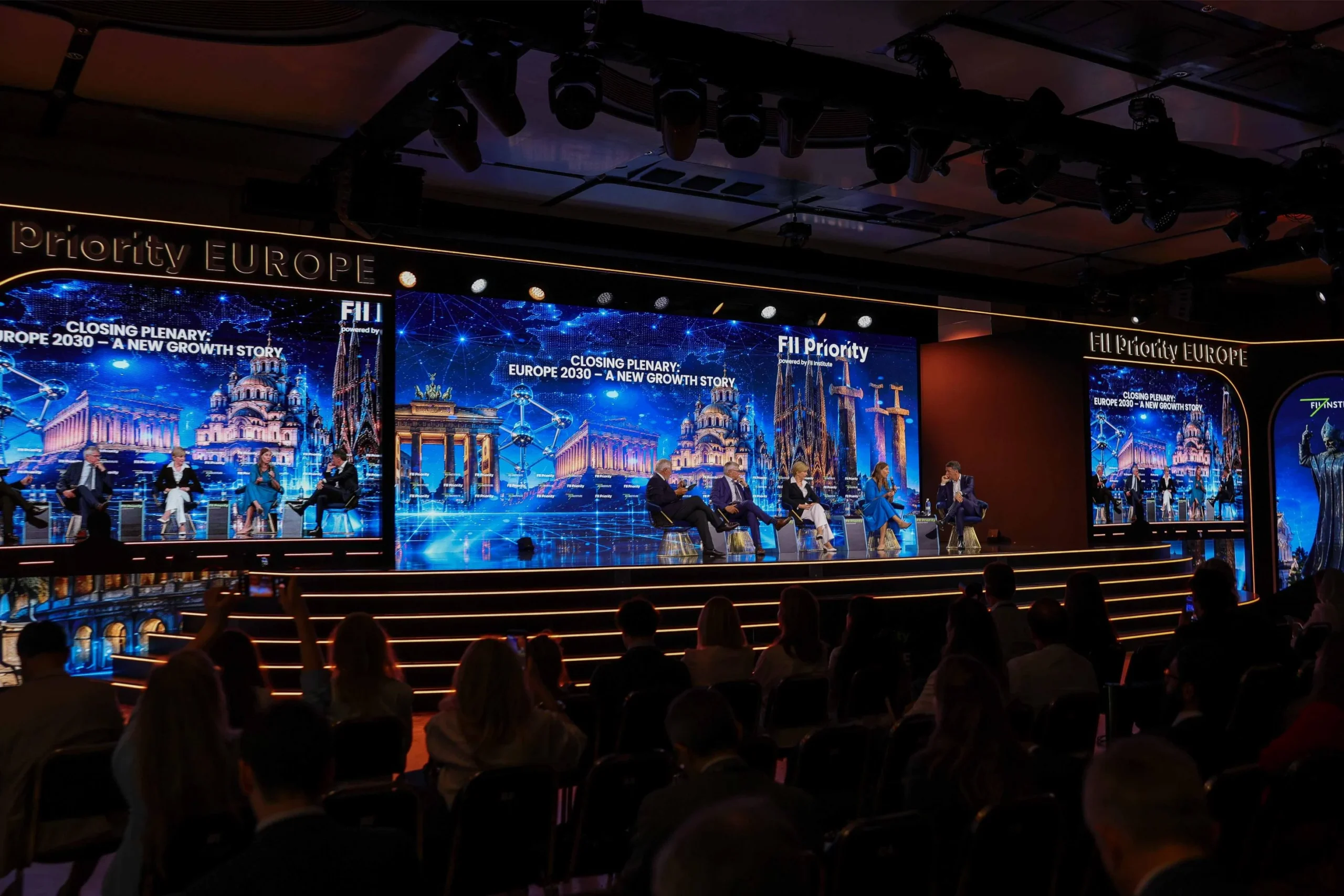
The Summit produced not yet another roadmap, but a consensus on priorities: the things that need to happen by 2030, across six interconnected areas, for Europe to reimagine itself. Anchoring the closing plenary “Europe 2030: A New Growth Story”, four former heads of state shared their views on the central questions: former Prime Minister of Norway Kjell Magne Bondevik, former President of Croatia Kolinda Grabar-Kitarović, former President of Estonia Kersti Kaljulaid, and former Prime Minister of Italy Matteo Renzi.
Capital Markets & Investment Flows: Finance the future
On capital markets, the headline news in early 2026 was positive: European equities outperformed US markets by 6 to 8% year-to-date, and the IPO market recorded its strongest opening since the 2008 financial crisis. However, the FII PRIORITY Europe sessions on financial architecture kept returning to the structural constraint beneath those gains.
European stock market capitalization still sits at roughly 70 to 75% of the EU’s GDP, against approximately 270% in the United States. The EU’s Savings and Investment Union has the ambition to mobilize close to €10 trillion in household savings currently held in bank deposits.
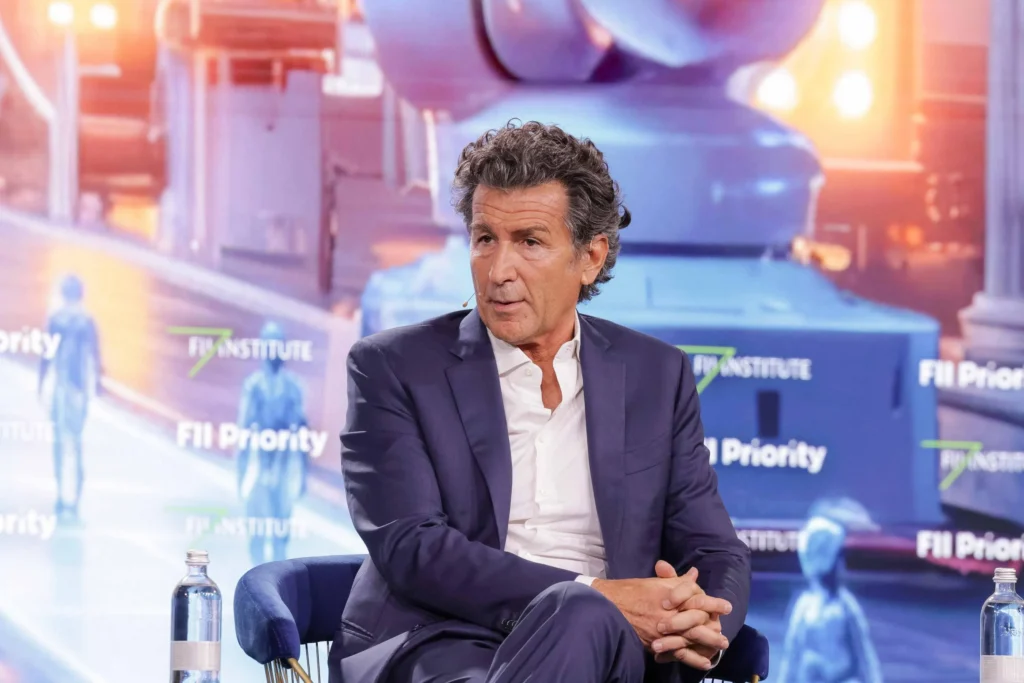
Andrea Pignataro, Founder and CEO of ION Group, explained this market structure gap: “Europe has been funded mostly by banks. The issue with bank financing is that information remains private — and if you don’t have information, you cannot develop deep capital markets.” As investment volumes grow, banks will need to syndicate more loans to the market, and that syndication will facilitate distributing information to attract new capital. “You need to educate companies to face investors, and you need banks that see themselves as a matching engine between private capital, institutional capital, and the needs of corporations.”
Moving from legislative momentum to a truly efficient capital markets infrastructure emerged in Rome as the financial system’s most important near-term test.
AI, Data & Digital Infrastructure: Sovereignty by design
Former President of Estonia Kersti Kaljulaid cited a single figure to measure Europe’s competitive position: 70% of inbound foreign direct investment into the United States is European. “There’s something wrong with our Europe. It has to be that it is easier to grow companies and develop technologies in the US than in Europe.”
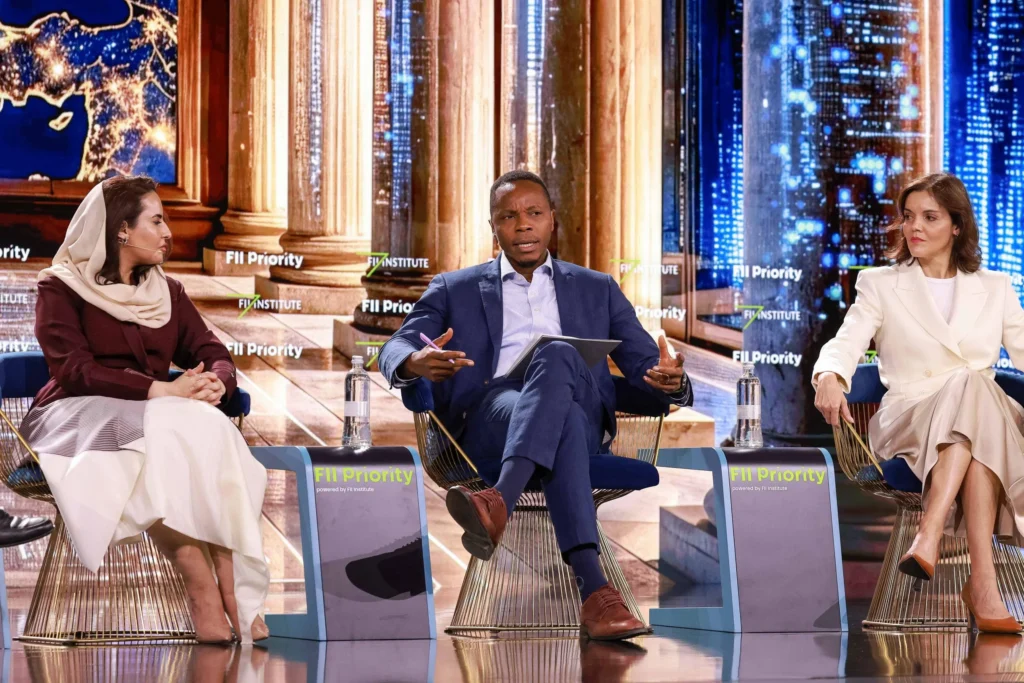
During the summit’s AI sessions on sovereign AI, the digital euro, and autonomous systems, the same question surfaced in different contexts. H.E. David Moinina Sengeh, Chief Minister of Sierra Leone, framed the stakes plainly: “AI and technology cannot be a reason why the world becomes more unequal, and we have to shift our mindset, including in the kinds of questions and ways we think about sovereignty.”
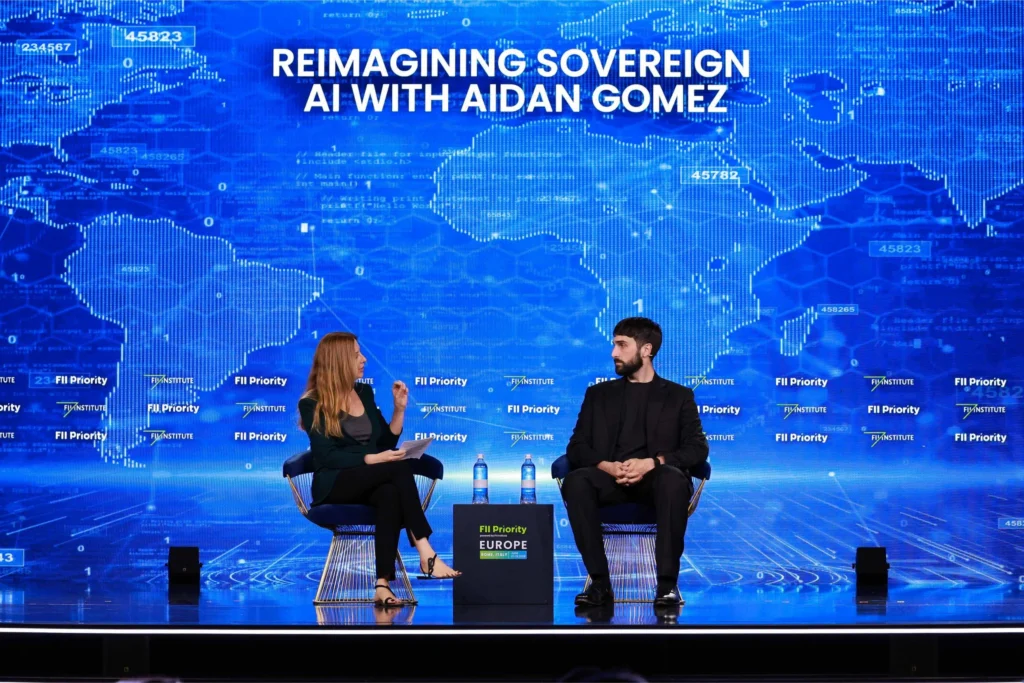
Aidan Gomez, CEO and Co-Founder of Cohere and co-author of the 2017 transformer paper that made today’s generative AI possible, expressed his confidence that Europe needs a fundamental position change: from the default mode of trying to control technology through regulation, to the default mode of innovation and building within the continent. Europe has not yet set up the entities capable of writing the significant checks needed to compete at the frontier: “If we don’t have the ability to fund these projects, it becomes a self-fulfilling prophecy: the technology will not get built here.”
Green Industrial Policy: End the energy fragmentation
The closing plenary panelists unanimously agreed on energy being one of the key challenges to solve. In 2025, wind and solar surpassed fossil fuels for the first time in EU electricity generation — 30% versus 29%. But Europe still imports close to 60% of its energy needs.
Former Prime Minister of Norway Kjell Magne Bondevik was clear on the stakes: “If we don’t tackle climate challenges, we will destroy our economy, sooner or later.” Matteo Renzi was equally direct from a different angle: without a European energy strategy capable of moving beyond what he described as the “ideological strategy” of the Green Deal, “we are over.” Data centers require energy; so do defense systems, manufacturing facilities, and the AI infrastructure Europe is trying to build.
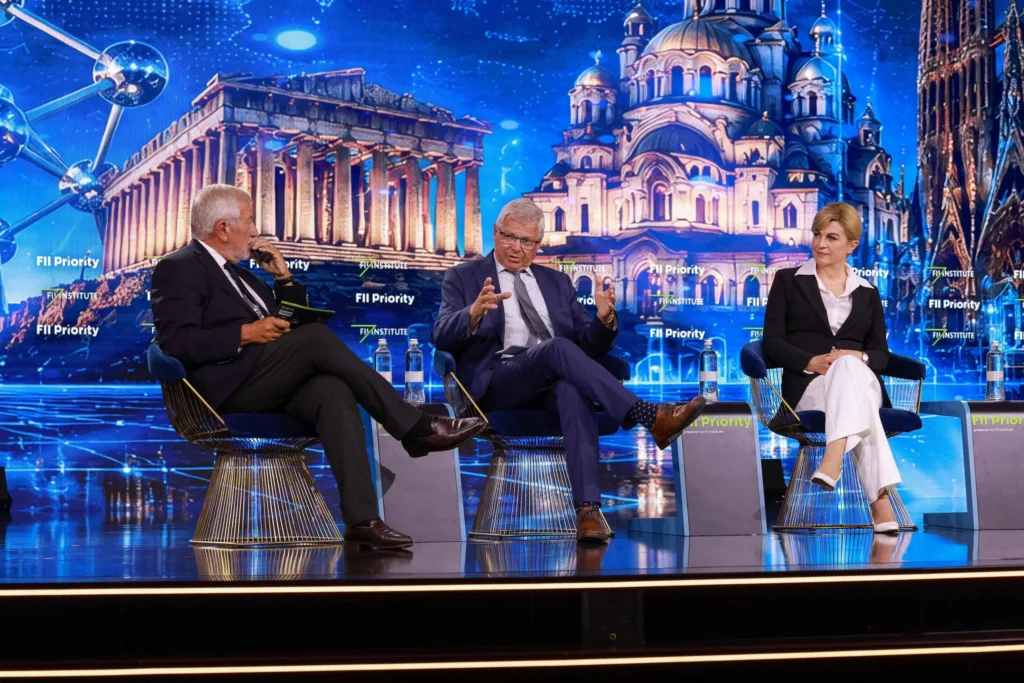
Kersti Kaljulaid suggested a solution to the problem of national subsidy systems (i.e., France supporting nuclear, Germany supporting gas, smaller states left as price takers) fragmenting the market and making coordinated investment nearly impossible. European policy and subsidies should be brought to the EU level, a common energy market should be created, and an infrastructure built that works across borders.
Supply Chains, Trade & Security: Collaboration as the new strategy
Across security and geoeconomics sessions, speakers agreed on a consistent diagnosis: Europe’s structural weakness is not an absence of capital but a duplication of effort and national silos that prevent scale. Admiral Giuseppe Cavo Dragone, Chair of the NATO Military Committee, put it like this: “For the first time in generations, Europe is again the center of global strategic competition. This reality demands all of us to broaden the approach to partnership, because security is no longer regional and neither can our partnership be.”
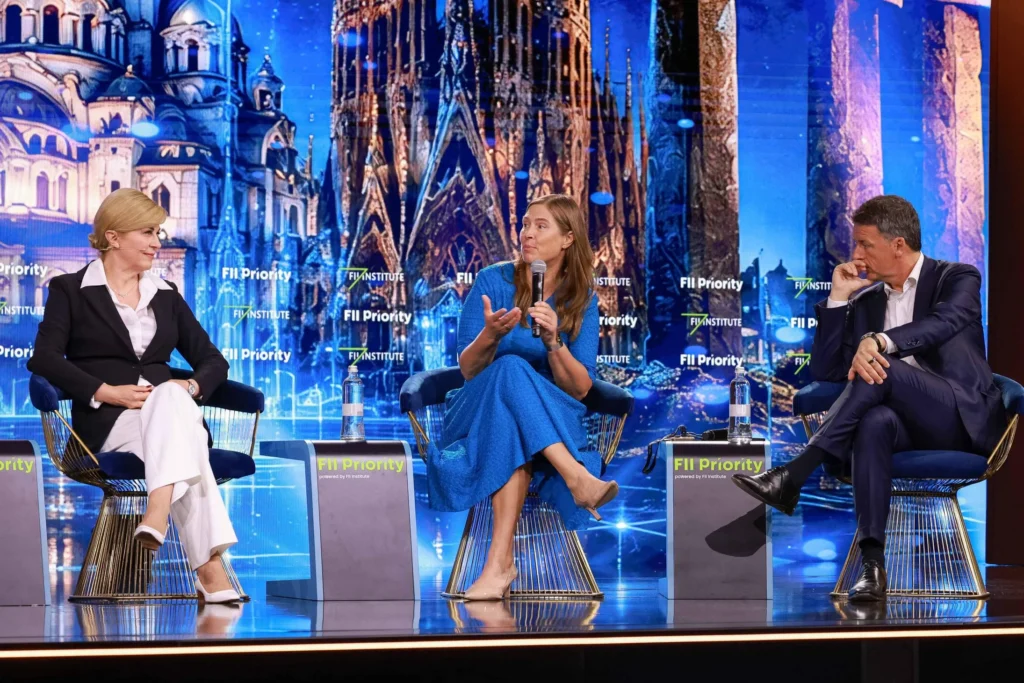
Former President of Croatia Kolinda Grabar-Kitarović, who co-founded the Three Seas Initiative in 2015 specifically to address infrastructure gaps across the Baltic, Adriatic, and Black Sea corridors, explained: “Strategic autonomy has to mean that we’re capable to act, but it cannot mean an illusion that we can act alone.” While NATO remains indispensable for European defense, the work is building genuine coalitions of interest where national and European priorities actually overlap, not just coexist on paper.
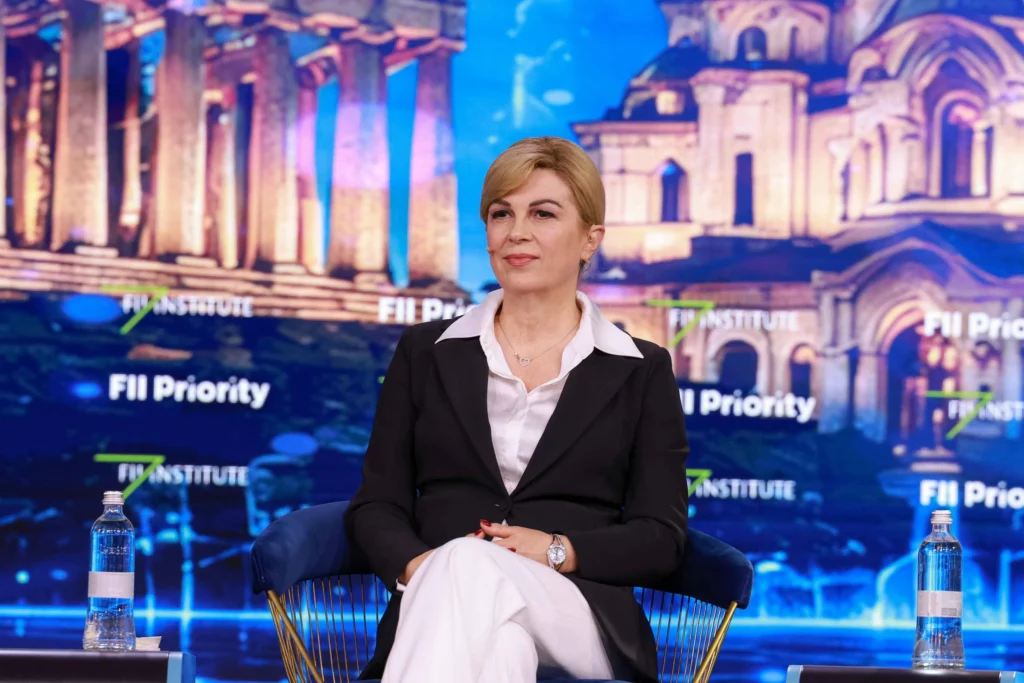
Renzi’s argument on defense spending reinforced the point: the issue is not the size of the budget (Europe and the United States spend at broadly comparable levels) but the quality of investment. While the US devotes 90% more than Europe to military research, generating dual-use technologies from the internet to satellites, Europe has been wasting money on bureaucracy: this definitely has to change.
Advanced Manufacturing & Deep Tech: From deep labs to industrial scale
There was no doubt among panelists that we are now living in the most exciting time to invest in deep tech in decades, but excitement alone does not close deals.
In 2025, European deep-tech startups raised approximately $20.3 billion, close to a third of all European venture capital. The talent is there, and increasingly so is the funding. What is missing is the bridge between investment and revenue: the first industrial buyers willing to deploy unproven technology at scale. Without them, founders face a circular dependency: smart capital waits for commercial traction, commercial buyers wait for de-risked technology, and the scale-up stalls.
Energy costs add another layer of competitive urgency. Stella Li, Executive Vice President of BYD, underlined that electricity costs are now the single biggest factor in where BYD builds next. Power runs at 20 to 40 cents per kilowatt-hour in Germany and can peak near 60 cents in the UK, against roughly 6 cents in Saudi Arabia and the UAE.
From the Capital Deployment Lab on AI and Deep Tech, Dr. Ramin Hasani, Co-Founder and CEO of Liquid AI, was precise about the real bottleneck: “We don’t have a shortage of talent in Europe. There is no shortage of capital. There’s no shortage of even infrastructure. The only thing is the cultural shift of enterprise AI and companies to backing an execution-first mentality.”
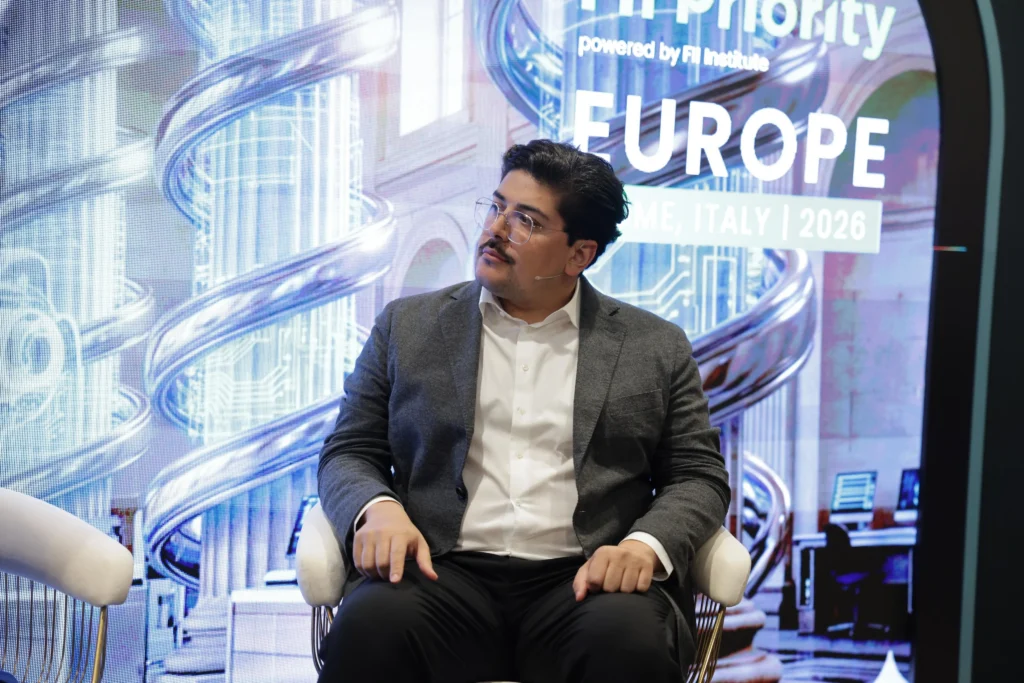
Renzi framed the wider stakes: “If we lose again opportunities such as innovation, the future of Europe will be very similar to the future of museums. We have to give a message of radical change.”
Tourism & Urban Revitalization: Culture, cities, and the urban century
The “Heritage, Power, and the Future of Culture” session framed what is genuinely at stake: the creative economy exceeds $2.5 trillion globally, and the nations treating cultural infrastructure as a strategic economic asset rather than a legacy cost are increasingly attracting both capital and talent.
The argument developed across sessions on sport, urban development, and cultural heritage was that Europe’s historical depth is a great advantage that cannot be manufactured elsewhere, not a competitive liability.
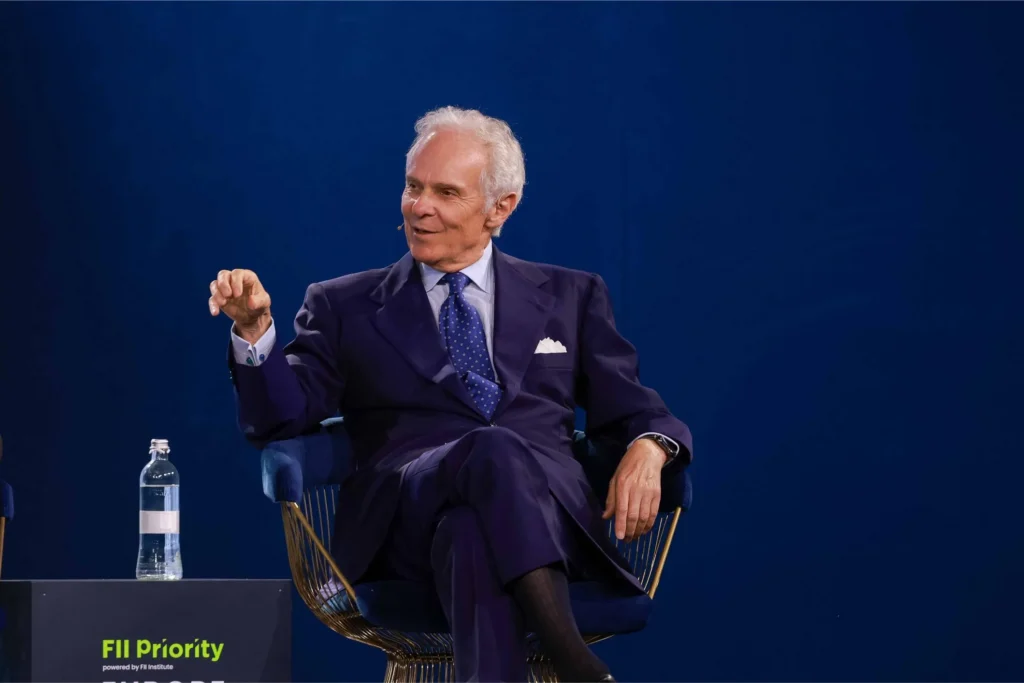
The Infrastructure for the Urban Century panel added a sharper dimension. Dr. Pietro Salini, CEO of Webuild, noted: “The problems we are solving for today, we could not have imagined when we were laying the infrastructure we are living with now. The ability to make a decision, to have a vision, and the capability to bring people on board to realize it — that is the most important thing.” That said, for European cities, the challenge is not ambition but pace.
The time of Europe is now
The summit’s closing plenary “Europe 2030: A New Growth Story” opened with a recognition of what Europe already has. As Bondevik put it: “Europe is the privileged part of the world because we have some core values that are a foundation of our democracies.” Kaljulaid echoed: “As Europeans, we are very different and have different development paths, and this is the strength of Europe. We absolutely need to figure out how to make our economies grow again, without losing at the same time our social market credentials.”
The session made it clear that the gap is not in diagnosis but in implementation. Grabar-Kitarović was precise: “What we lack now is speed and scale. We’re great at defining problems and producing strategies, frameworks, and roadmap papers, but when it comes to implementation, we’re too slow.” Her sharpest line was direct: “Just continue to regulate, and you’re behaving like a referee in a game that others who build and who innovate are playing.” Looking toward 2030, she wants to see “Europe that has managed decline, has built the confidence to take strategic decisions and implement them, and has invested a lot more into innovation — and Europe that is self-confident that we can do all that.”
Bondevik offered a structural vision of a more flexible European Union built around three concentric circles of integration, allowing countries at different stages to cooperate without a single imposed model: “Europe can be stronger if we speak in many voices, but unified for our main objective and for our main priorities.”
The plenary wrapped up with advice to the next generation of leaders. Bondevik wished them not to lose “your belief in your commitment to human rights and democracy,” and Kaljulaid to “keep social mobility,” while Renzi insisted on looking at the future “with more optimism and more confidence.” Grabar-Kitarović called for being bold: “Do not let the size of your country, your background, or other people’s expectations limit the size of your ambition. And do not confuse caution for wisdom: have the courage to take decisions and be accountable for them.”
From debates to action
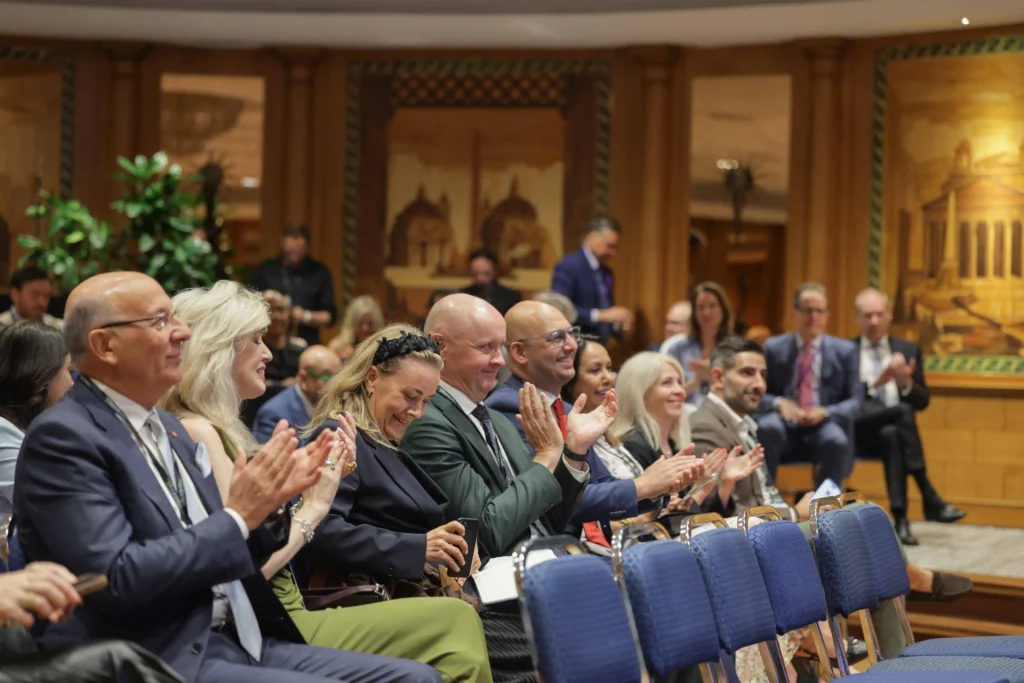
Three packed days at the Rome Cavalieri reflected on a reimagined Europe — a continent that has accumulated everything it needs, from capital and talent to institutional memory and democratic credibility, except the pace, the political will, and the institutional architecture to deploy them before the opportunity fades away.
H.R.H. Dr. Maha Bint Mishari Al Saud, CEO of FII Institute, distilled what the summit was built for: “Together, we can do more than imagine the future. Together, we can build it. The future will not be shaped by those who wait for certainty. It will be shaped by those willing to act despite uncertainty.”