





RIYADH, Saudi Arabia, September 28, 2026 – The Future Investment Initiative (FII) Institute today unveiled five startups selected from 1,321 applications across 90 countries for the third FII Innovators Pitch.
Hailing from Argentina, India, Poland and the United States, they will present technologies in healthcare, robotics, mobility and manufacturing to global investors on October 29 during FII10 Investment Day in Riyadh.
The FII Innovators Pitch brings together founders, investors and strategic partners to accelerate the commercialization and global scaling of breakthrough solutions.
The five selected companies are:
- APOLO Biotech, Argentina
AI-driven RNA technology advancing the future of sustainable agriculture
APOLO Biotech develops RNA-based, GMO-free crop protection solutions that activate plants’ natural defenses against fungi, viruses and other pests. Its technology aims to reduce reliance on synthetic pesticides while improving crop resilience and productivity. - iSono Health Inc., United States
The world’s first AI-driven portable and automated 3D breast ultrasound scanner
iSono Health has developed ATUSA, a portable and wearable system that automatically captures 3D images of the entire breast in approximately two minutes per breast. By combining automated ultrasound, 3D imaging and artificial intelligence, the platform aims to make breast imaging faster, more standardized and accessible at the point of care. - Nevomo, Poland
Next-gen MagRail technology with AI-powered freight logistics
Nevomo develops magnetic propulsion technology designed to upgrade existing rail infrastructure. Its MagRail system can equip conventional tracks and railcars with electromagnetic propulsion and automation, creating a pathway toward faster, higher-capacity and lower-emission rail transport without requiring entirely new railway networks. - Astrek Innovations Limited, India
Robotic exoskeleton that makes rehabilitation accessible
Astrek Innovations develops affordable and modular robotic exoskeletons for rehabilitation and mobility. Its flagship Unik Exo supports people with lower-limb disabilities as they stand, walk and undertake rehabilitation, combining motion sensors, artificial intelligence and data-driven therapy tools. - Argon Mechatronics, United States
AI-Powered Humanoid Robots for Advanced Manufacturing and Automation
Argon Mechatronics develops flexible industrial robotics with interchangeable toolheads. Its modular platform combines precision robotics, computer vision and physical AI, allowing one robot to perform several manufacturing processes, including 3D printing, CNC machining, laser processing and pick-and-place operations.
HRH Princess Dr. Maha Bint Mishari Bin Abdulaziz Al Saud, CEO of FII Institute, said: “Innovation becomes meaningful when it creates lasting value for society. These entrepreneurs are tackling some of the world’s most pressing challenges through science, technology and ingenuity. Through the FII Innovators Pitch, we are creating pathways that connect innovation with investment, partnerships and global networks capable of accelerating impact at scale.”
Held in partnership with MIT Solve, the third edition of FII Innovators Pitch supports entrepreneurs harnessing emerging technologies to address critical challenges across healthcare, sustainability, education, artificial intelligence and robotics. The initiative forms part of FII Institute’s commitment to identifying technologies with transformative societal impact.
Hala Hanna, Executive Director at MIT Solve, said: “We’re thrilled to continue to work with FII Institute to identify and support innovators who are leveraging AI and technology to transform the way we live, creating more opportunity and prosperity for all.”
FII10 Week will run from October 26 to 29, 2026, at the King Abdulaziz International Conference Center in Riyadh. Under the theme “The Power of Legacy,” leaders and investors will explore how today’s decisions can benefit future generations. Investment Day will close the program with pitches, roadshows, matchmaking and workshops.
-ends-
About the FII Institute
The FII Institute is a global nonprofit foundation with an investment arm and one agenda: Impact on Humanity. Through its THINK, XCHANGE, and ACT pillars, the Institute fosters great ideas, empowers innovators, and invests in scalable solutions across critical sectors, including AI and robotics, sustainability, healthcare, and education.
For more information, please visit: https://fii-institute.org/
For media inquiries, please contact [email protected].
RIYADH, Saudi Arabia, September 21, 2026 – The Future Investment Initiative (FII) Institute and Bombardier today announced a mutual expansion of their partnership, transitioning Bombardier from Summit Partner to Strategic Partner under a new three-year agreement.
Building on Bombardier’s successful participation at FII PRIORITY Miami 2026, the expanded partnership secures year-round engagement across the FII Institute’s flagship conference, international summits, ongoing research, specialized initiatives, and global community.
“We are pleased to welcome Bombardier into FII Institute’s community of Strategic Partners,” said HRH Princess Dr. Maha bint Mishari bin Abdulaziz Al Saud, CEO of FII Institute. “Aviation plays a vital role in bringing markets, people, talent, and ideas closer together. Bombardier brings a global perspective, deep industry expertise, and a strong culture of innovation that will enrich conversations and collaborations across our platforms throughout the year.”
As a world-class leader in business aviation, Bombardier designs, manufactures, and supports advanced aircraft relied upon by leading enterprises and governments worldwide. Its unique intersection of global mobility, advanced manufacturing, and engineering innovation adds a critical dimension to the FII Institute’s international network.
“Our partnership with FII Institute speaks to the importance of bringing together leaders who are shaping the future, all while building a legacy that will endure for generations,” said Éric Martel, President and CEO of Bombardier. “As FII marks its milestone 10th edition, the Kingdom of Saudi Arabia continues to shape new opportunities and strengthen its growing role in connecting the region with the world.”
Through this three-year collaboration, Bombardier will contribute its industry experience to FII platforms, engaging directly with international investors, policymakers, entrepreneurs, and business leaders on topics spanning connectivity, advanced manufacturing, innovation, and sustainable growth.
The alliance further reinforces the FII Institute’s robust network of global partners dedicated to fostering international cooperation, generating actionable ideas, and accelerating solutions in support of its core agenda: Impact on Humanity.
-end-
About the FII Institute
The FII Institute is a global nonprofit foundation with an investment arm and one agenda: Impact on Humanity. Through its THINK, XCHANGE, and ACT pillars, the Institute fosters great ideas, empowers innovators, and invests in scalable solutions across critical sectors, including AI and robotics, sustainability, healthcare, and education.
For more information, please visit: https://fii-institute.org/
For media inquiries, please contact [email protected].
RIYADH, Saudi Arabia, August 31, 2026 – The Future Investment Initiative (FII) Institute has announced a distinguished group of global leaders from across finance, investment, technology, and business who will speak at the 10th edition of the Future Investment Initiative Conference.
FII10 Week will take place in Riyadh from Monday, October 26, to Thursday, October 29, 2026. Held under the patronage of the Custodian of the Two Holy Mosques, King Salman bin Abdulaziz Al Saud, this landmark edition will convene under the theme “The Power of Legacy.”
HRH Princess Dr. Maha Bint Mishari Bin Abdulaziz Al Saud, CEO of FII Institute, said: “Over the past decade, FII Institute has become a unique global platform where capital meets ideas, leaders meet opportunity, and dialogue turns into impact. FII10 marks an important anniversary and a moment to define the legacy we want to build next. By bringing together the people who shape markets, technologies, media and societies, our mission is clear: to turn investment into lasting impact for humanity.”
A Global Community of Leaders
Confirmed speakers, include leading figures across banking and financial institutions, global investment and asset management, infrastructure, energy, technology and global business:
- H.E. Yasir Al-Rumayyan, Governor, Public Investment Fund, Chairman, Saudi Aramco and Chairman of FII Institute
- Jamie Dimon, Chairman and CEO, JPMorgan Chase
- Dame Jane Fraser, Chair of the Board & CEO, Citi
- Laurence Fink, Chairman and CEO, BlackRock
- Stephen A. Schwarzman, Co-Founder, Chairman and CEO, Blackstone Group
- Patrick Pouyanne – Chairman & CEO of TotalEnergies
- Amin Nasser, President & CEO, Aramco
- Ashishkumar Chauhan, Managing Director and CEO, National Stock Exchange of India
- Bill Winters, Group CEO, Standard Chartered Bank
- C.S. Venkatakrishnan, Group CEO, Barclays PLC
- David Solomon, Chairman and CEO, Goldman Sachs
- Georges Elhedery, Group CEO, HSBC
- Lubna S. Olayan, Chair of the Corporate Board, The Olayan Group; Chair, Saudi Awwal Bank (SAB)
- Makoto Takashima, Chairman of the Board, Sumitomo Mitsui Financial Group (SMFG)
- Masakazu Osawa, President and CEO, MUFG Bank Ltd.
- Ron O’Hanley, Chairman & CEO, State Street
- Alex Clavel, CEO, SoftBank Vision Funds
- Jenny Johnson, CEO, Franklin Templeton
- Lei Zhang, Founder and Chairman, Hillhouse Investment
- Marc Rowan, Co-Founder, CEO and Chair of the Board, Apollo Global Management
- Ray Dalio, Founder, CIO Mentor and Member of the Board, Bridgewater Associates; Founder, Dalio Family Office
- Robert F. Smith, Founder, Chairman and CEO, Vista Equity Partners
- Scott Nuttall, Co-CEO, KKR
- Adebayo Ogunlesi, Founding Partner, Chairman and CEO, Global Infrastructure Partners
- Dr. Mohamed Farouk, Vice-Chairman & Group CEO, ADES Holding
- Dr. Patrice Motsepe, Founder and Non-Executive Chairman, African Rainbow Minerals
- Eric Martel, President & CEO, Bombardier
- Laura M. Cha, Former Chairman, HKEX; Trustee, Rockefeller Foundation; Director, Bretton Woods Committee
- Talal H. AlMarri, CEO, Expo 2030 Riyadh
- Dina Powell McCormick, President and Vice Chairman, Meta
- Fernando Queiroz, CEO, Minerva Foods
- Ruth Porat, President and CIO, Alphabet and Google
- Sandy Ran Xu, CEO & Executive Director, JD.com, Inc.
- Tareq Amin, CEO, HUMAIN
These global leaders will contribute to conversations spanning financial markets, investment, economic growth, technology, infrastructure, energy, food and the forces shaping the future of capital and humanity.
The breadth and seniority of the FII10 speaker community underscore the Institute’s role as a trusted global platform for convening leaders across sectors and geographies. FII10 will also welcome the Institute’s partners and members, whose communities form an important part of its global ecosystem of changemakers and contribute to its mission to drive meaningful impact.
Through its three pillars — THINK, its thought-leadership platform; XCHANGE, which creates spaces for dialogue and collaboration; and ACT, which empowers innovators and supports scalable solutions — the FII Institute will translate ideas and conversations at FII10 into opportunities for action and lasting impact.
Further global leaders, program highlights and FII10 initiatives will be announced in the coming weeks, building momentum toward FII10 Week and the 10th edition of the Future Investment Initiative Conference in Riyadh.
-ends-
About the FII Institute
The FII Institute is a global nonprofit foundation with an investment arm and one agenda: Impact on Humanity. Through its THINK, XCHANGE, and ACT pillars, the Institute fosters great ideas, empowers innovators, and invests in scalable solutions across critical sectors, including AI and robotics, sustainability, healthcare, and education.
For more information, please visit: https://fii-institute.org/
For media inquiries, please contact [email protected].
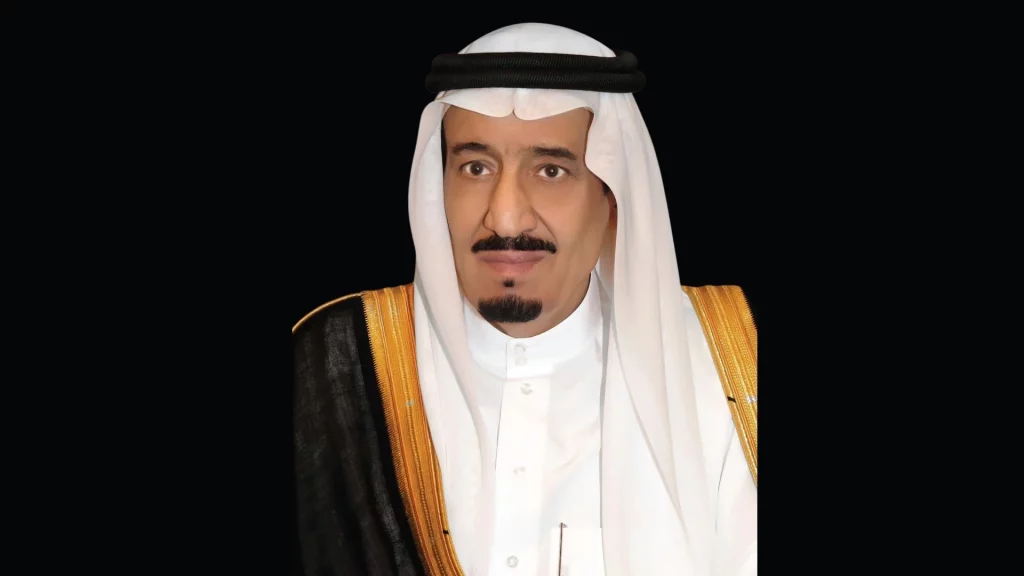
RIYADH, Saudi Arabia, 10th August, 2026 – Under the patronage of the Custodian of the Two Holy Mosques, King Salman bin Abdulaziz Al Saud, the tenth edition of the Future Investment Initiative (FII) Conference will take place from October 26 to 29, 2026, at the King Abdulaziz International Conference Center in Riyadh.
Held under the theme “The Power of Legacy,” FII10 will bring together heads of state, investors, policymakers, innovators and business leaders to explore how today’s decisions can create lasting prosperity for future generations. The program will focus on four pillars: capital that builds, technology that elevates, societies that thrive and leadership that inspires.
Her Royal Highness Princess Dr. Maha bint Mishari Al Saud, Chief Executive Officer of FII Institute, expressed her appreciation for the generous Royal Patronage of the tenth edition. She noted that the Saudi leadership’s continued support for the Institute’s events and activities, together with the guidance of His Royal Highness Prince Mohammed bin Salman bin Abdulaziz Al Saud, Crown Prince and Prime Minister, constitutes a fundamental pillar in advancing the comprehensive development envisioned by Saudi Vision 2030 and shaping a prosperous and sustainable economic future. “For ten years, FII has brought together leaders who recognize the power of investment to advance human progress. FII10 invites our global community to consider the legacy of the choices we make, the partnerships we build and the innovations we support. Our goal is to turn these choices into lasting impact for people and future generations,” she added.
Across four days, FII10 will bring together a diverse global community of leaders, investors, policymakers, innovators, and changemakers for a wide-ranging program addressing the world’s most pressing economic and investment priorities.
Since its launch, FII has evolved into a leading global platform for dialogue, collaboration, and action, convening influential voices from around the world. Major agreements and commitments have been announced through the platform, further reinforcing Riyadh’s position as a global center for investment, collaboration, and action.
-ends-
About the FII Institute
The FII Institute is a global nonprofit foundation with an investment arm and one agenda: Impact on Humanity. Through its THINK, XCHANGE, and ACT pillars, the Institute fosters great ideas, empowers innovators, and invests in scalable solutions across critical sectors, including AI and robotics, sustainability, healthcare, and education.
For more information, please visit: https://fii-institute.org/
For media inquiries, please contact [email protected].
RIYADH, Saudi Arabia, July 13, 2026 – The Future Investment Initiative (FII) Institute, a global non-profit foundation with an investment arm and one agenda, Impact on Humanity, will celebrate its 10th anniversary with FII10, taking place in Riyadh from October 26–29, 2026 under the theme “The Power of Legacy.”
Marking a defining milestone for one of the world’s leading global platforms for investment, innovation, and international dialogue, FII10 will celebrate a decade of impact while exploring the forces that will shape the next era of investment, growth, and global cooperation.
Since its inception, FII Institute and its global network have helped facilitate and spotlight more than USD 250 billion in investments and initiatives, demonstrating the power of convening capital, ideas, and leadership to create meaningful impact.
Today, FII Institute has grown into a year-round global platform, supported by more than 45 strategic partners from around the world and a thriving international membership community comprising thousands of members representing business, government, investment, academia, and innovation ecosystems across every region.
As artificial intelligence, technological disruption, shifting geopolitical dynamics, and evolving capital markets reshape economies and societies at unprecedented speed, the need for long-term thinking and trusted global dialogue has never been greater.
“The Power of Legacy is not simply about celebrating the past decade,” said HRH Princess Dr. Maha Bint Mishari Bin Abdulaziz Al Saud, CEO of FII Institute. “It is about understanding how the decisions, investments, and partnerships we make today will shape generations to come. FII10 represents both a reflection on what has been achieved and a commitment to what comes next.”
While the program themes and agenda will be revealed in the months ahead, FII10 will address the most pressing issues shaping the future of investment and humanity, creating a platform for bold ideas, meaningful partnerships, and transformative action.
-end-
About the FII Institute
The FII Institute is a global nonprofit foundation with an investment arm and one agenda: Impact on Humanity. Through its THINK, XCHANGE, and ACT pillars, the Institute fosters great ideas, empowers innovators, and invests in scalable solutions across critical sectors, including AI and robotics, sustainability, healthcare, and education.
For more information, please visit: https://fii-institute.org/
For media inquiries, please contact [email protected].
ROME, Italy, June 19, 2026 – The second and final day of FII Priority Europe 2026 opened with a speech by H.R.H Princess Dr. Maha bint Mishari bin Abdulaziz Al Saud, CEO of the FII Institute, making her first plenary address to the summit since assuming the role.
She called on all participants, governments, investors and business leaders alike, to treat the frameworks and roadmaps developed across two days in Rome as commitments to turn capital into action, and action into impact.
INNOVATION HELD HOSTAGE: THE COST OF REGULATORY DELAY
Travis Kalanick, CEO of Atoms and founder of Uber, took part in a fireside conversation on autonomous systems and Europe’s capacity to become a builder, rather than a rule-taker, in the next era of technology.
Drawing on direct experience of deploying transformative technology across dozens of regulatory environments, Kalanick argued that Europe’s instinct to regulate first and deploy later has a cost:
“When the regulatory process becomes the outcome, something that is genuinely good for people can roll out a decade late. That is how innovation gets delayed even when the benefits are already clear.” – Travis Kalanick, CEO, Atoms
The session highlighted the wider tension running through the summit: Europe’s strengths in standards, trust and rule-making are also, if misapplied, the mechanism by which it cedes ground to faster-moving competitors in the United States and China.
TRUTH, TRUST AND CAPITAL: THE INSTITUTIONAL FOUNDATION OF INVESTABILITY
In a session moderated by Cécilia Attias, The Most Excellent Cayetana Álvarez de Toledo, 15th Marchioness of Casa Fuerte and Member of the Spanish Parliament for Madrid, drew a direct line between institutional quality and the flow of long-term capital, warning that structural reforms are hollow without genuine independence in enforcement.
“As Acemoglu’s Nobel Prize idea showed, it’s not geography, it’s not culture. Institutions are crucial. You can have low taxes, but captured courts. You can have better regulation, but no independent enforcement. That’s not good enough.” – The Most Excellent Cayetana Álvarez de Toledo, 15th Marchioness of Casa Fuerte, Member of the Spanish Parliament for Madrid
REIMAGINING SECURITY: ALLIANCE, SOVEREIGNTY AND THE DEFENCE BUILD-OUT
With the EU’s ReArm Europe plan mobilizing €800 billion through 2029, the summit addressed what it takes to convert spending commitments into capability. Admiral Giuseppe Cavo Dragone, Chair of the NATO Military Committee, rejected the false choice between sovereignty and alliance:
“Sovereignty and cooperation are not contradictory concepts. Together, allies achieve a level of security that none could achieve alone. NATO demonstrates every day how partnership strengthens rather than diminishes national sovereignty.” – Admiral Giuseppe Cavo Dragone, Chair of the NATO Military Committee
In a follow-on discussion Italian Defense Minister Guido Crosetto added the industrial imperative:
“The biggest enemy of every industry is time. European industry does not have many years to renovate itself, and the goal now, especially in defense, must be to speed up the journey from prototypization to production.” – The Rt. Hon. Guido Crosetto, Minister of Defense, Republic of Italy
SOVEREIGN AI: FROM ASPIRATION TO CONTROL OF THE FULL STACK
Aidan Gomez, CEO and Co-Founder of Cohere, explained that AI sovereignty requires moving beyond regulation to the ownership of underlying infrastructure:
“Countries need capabilities that no one else can mess with, see the data inside of, or switch off at will. That is what true AI sovereignty means.” – Aidan Gomez, CEO & Co-Founder, Cohere
Europe, generating 18% of global GDP while capturing only a fraction of global AI investment, must treat chips, compute, energy and data infrastructure as critical national assets on a par with power grids and transport networks.
EUROPE 2030: A NEW GROWTH STORY
FII Priority Europe closed with four former heads of state delivering an optimistic verdict on Europe’s prospects. Richard Attias said: “Europe prospered under an implicit bargain of American security, Russian energy, Chinese markets. That model is over. What replaces it?”
The panel offered a prescription: fix the energy market at European level, redefine competition policy to allow globally scaled companies to form, redirect defense spending into dual-use research rather than bureaucracy, and stop producing roadmaps that never reach implementation.
Former Prime Minister Matteo Renzi said: “If we lose opportunities again, the future of Europe will look very similar to the future of museums. I prefer to have the future on my side.”
The message from Rome to the world was that Europe has the talent, the values and the tools, what it needs now is the will to act.
A SUMMIT THAT PRODUCED ANSWERS, NOT JUST QUESTIONS
Across two days, FII Priority Europe 2026 clarified some prescriptions for the future success of the continent: compress defense procurement timelines, control the full AI stack, anchor investment in independent institutions, and ensure regulation becomes an enabler for success.
-ends-
About FII Institute
The FII Institute is a global nonprofit foundation with an investment arm and one agenda: Impact on Humanity. Through its THINK, XCHANGE, and ACT pillars, the Institute fosters great ideas, empowers innovators, and invests in scalable solutions across critical sectors including AI and robotics, sustainability, healthcare, and education.
For more information, please visit: https://fii-institute.org
For media inquiries, please contact [email protected]
For photography, please visit https://drive.google.com/drive/folders/1OMwXiopQqAqWNufX3Ppva3CLyggxuty4
Summit convenes global finance, industry and government leaders to mobilize capital, restore ambition and build Europe’s strategic autonomy.
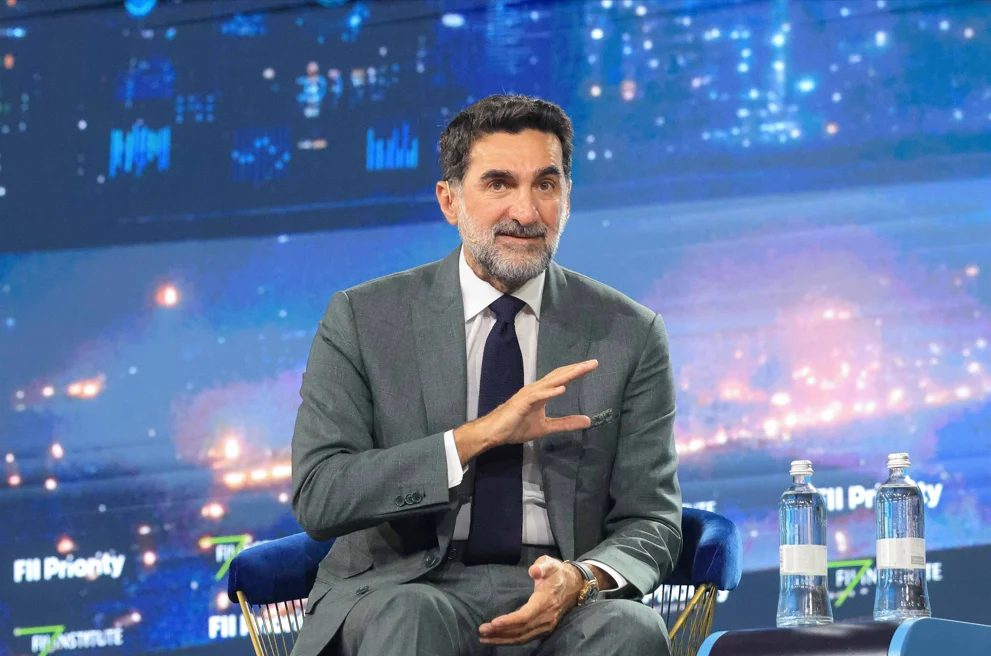
ROME, Italy, June 18, 2026 – The first day of FII PRIORITY Europe 2026 concluded today at the Rome Cavalieri Waldorf Astoria, bringing together heads of state, sovereign wealth funds, global bank chiefs and industry leaders in a conversation about the future of European growth. Hosted by the FII Institute under the chairmanship of H.E. Yasir O. Al-Rumayyan, Governor of the Public Investment Fund of Saudi Arabia, the summit drew senior participants from across Europe, the Middle East, Africa, Asia and the Americas to address the continent’s most pressing economic, technological and geopolitical challenges.
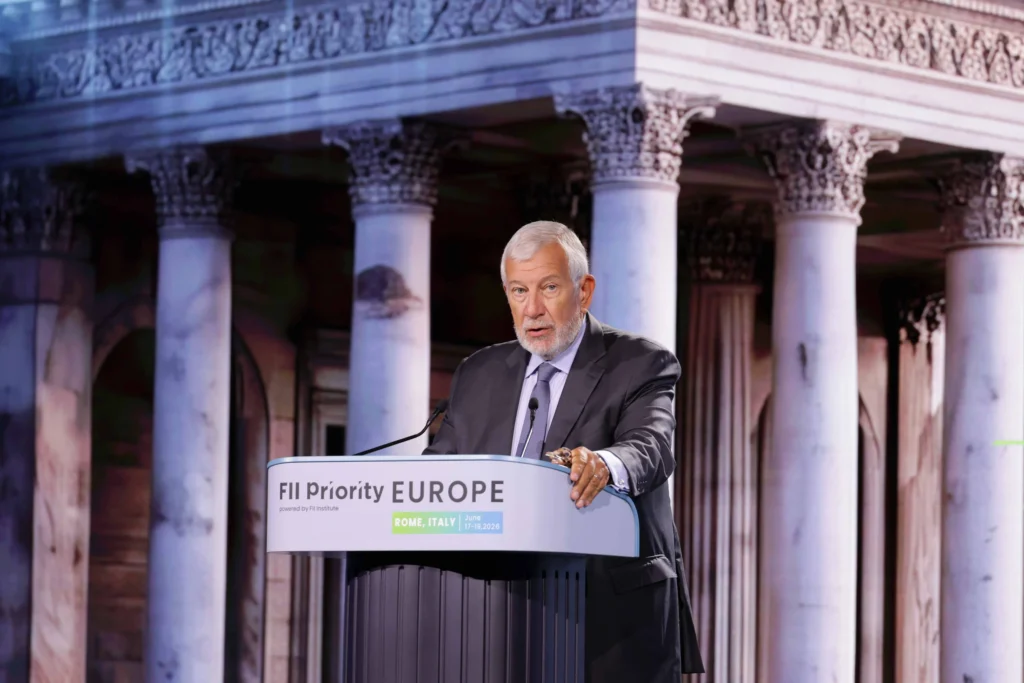
Opening proceedings, Richard Attias, Chairman of the Executive Committee of FII Institute, Founder and Chairman of Richard Attias & Associates, set a tone of qualified optimism, acknowledging the headwinds facing the continent while insisting that decline is a choice, not a destiny.
Richard Attias also welcomed Her Royal Highness Princess Dr Maha bint Mishari Bin Abdulaziz Al Saud as the new Chief Executive Officer of FII Institute, describing her appointment as the beginning of an exciting new chapter for the organization.
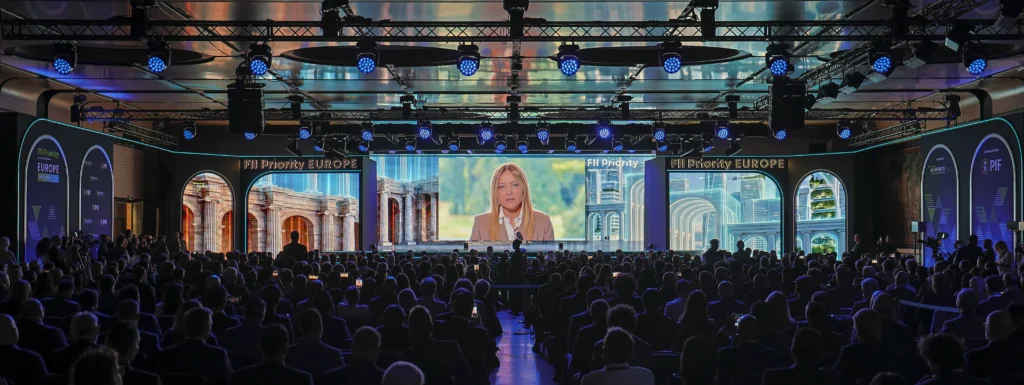
In a special address, Italian Prime Minister Giorgia Meloni framed the summit’s ambitions in explicitly strategic terms, arguing that Europe must move well beyond its role as a commercial and regulatory platform:
“We need strategic autonomy, industrial capacity, technological sovereignty, and financial power.” – Giorgia Meloni, President of the Council of Ministers, Italy.
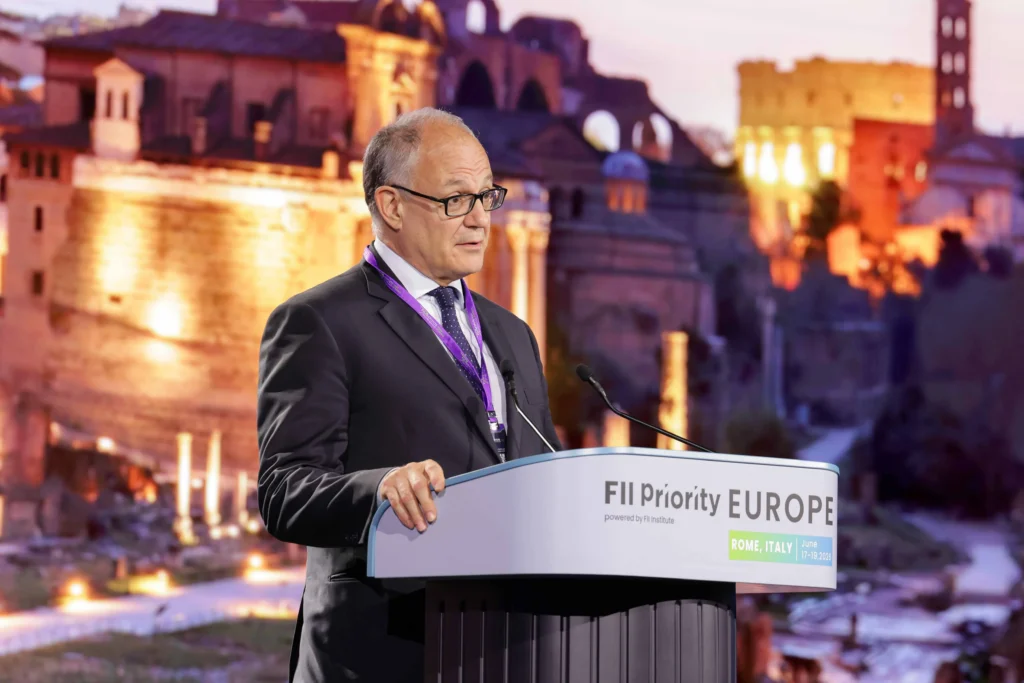
Rome’s Mayor Roberto Gualtieri welcomed delegates by highlighting the city’s own transformation as a microcosm of Europe’s wider potential, pointing to major programs in urban regeneration, quantum computing and artificial intelligence:
“Europe has the potential to attract public and private investment, not only in infrastructure, but also in sustainability and innovation. Rome is proud to be a place where millions of tourists come every year, but also a hub of technology.” – Roberto Gualtieri, Mayor of Rome
MAJOR INVESTMENT COMMITMENTS AND A BILATERAL AGENDA
A focus of Day 1 was the depth of capital available to flow into Europe if the right conditions are created. H.E. Yasir O. Al-Rumayyan, Governor of PIF, Chairman of FII Institute, and Chairman of Saudi Aramco, revealed the scale of Saudi Arabia’s investment appetite for the continent.
Having already deployed approximately €98 billion across Europe and the UK since 2017 generating around €70 billion in GDP contribution and some 160,000 jobs the PIF Governor said that his fund will present 140 opportunities that can benefit European partners to the tune of approximately €10.4 billion through 2030.
AN INVESTMENT SUPERCYCLE WITHIN REACH
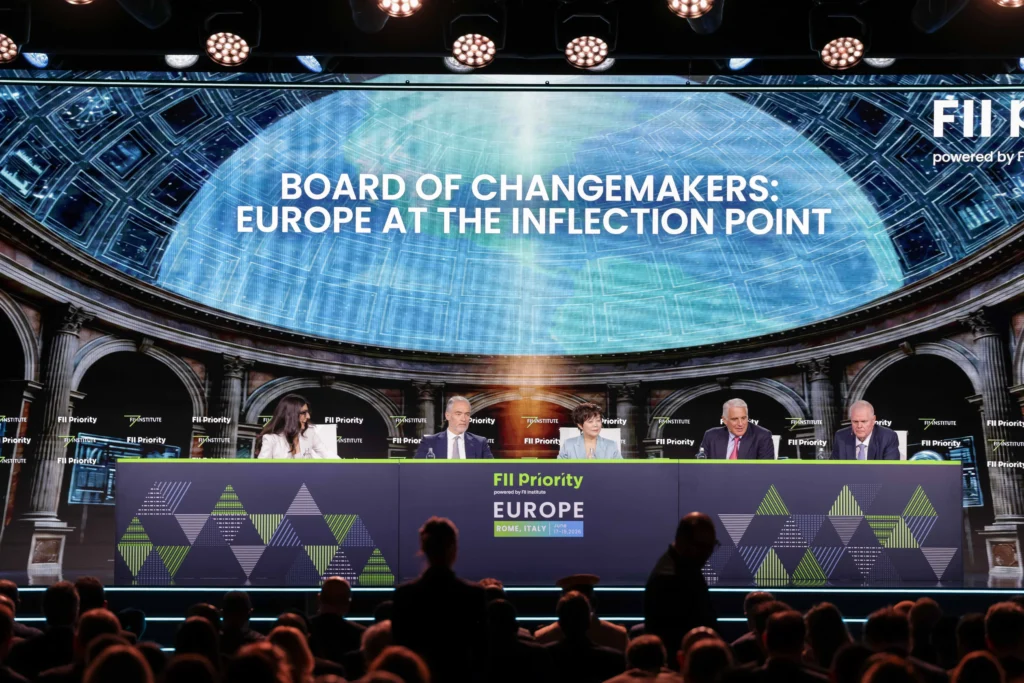
The summit’s Board of Changemakers session, bringing together senior figures from Goldman Sachs, UniCredit, Julius Baer Group and BYD, delivered a frank assessment of where Europe stands and what it must do. The panel was unanimous that Europe is at an inflection point, not a cliff edge, and that the window to act remains open:
“This is an exciting moment for the world and an exciting moment for Europe right now. We are still on the cusp of what we think is an incredible investment super cycle driven by what is going on with AI.” — Anthony Gutman, Global Co-Head of Investment Banking, Goldman Sachs
Sir Noel Quinn, Chair of Julius Baer Group drew on his experience leading a global banking group through its own transformation:
“Europe needs a mindset shift from a global holding company to a global operating company, with coordinated action creating a unified, agile market where investors know they can operate efficiently across the trade bloc.” — Sir Noel Quinn, Chair, Julius Baer Group
Panelists were candid about the obstacles. Regulatory fragmentation, high energy costs, restrictive labor frameworks and a persistent gap between policy ambition and execution were all cited as barriers to the kind of capital deployment Europe needs.
Yet the overriding message was that the tools for recovery exist: the talent, the research base, the industrial heritage, and now with AI, defense investment and energy transition the catalyst.
GOVERNMENT AND BUSINESS: A CALL FOR CONCERTED ACTION
Across every session, a consistent theme emerged: neither government nor business can deliver Europe’s renewal alone. The urgency of developing sovereign capability in technology, energy and defense was a thread that ran through discussions, reflecting the geopolitical realities of 2026.
FII PRIORITY Europe continues tomorrow with further plenary sessions, roundtables and bilateral engagements.
SIGNING CEREMONIES
Today’s signing ceremonies highlighted new partnerships across construction technology, carbon removal, and digital infrastructure. Redcon International and Saudi ConTech signed an agreement to accelerate the use of construction technology. The signing between Red Sea Global and Sequest will support the deployment of durable carbon removal technology in the tourist destination through access to land for a pilot project. ACWA and Telecom Italia Sparkle will explore cooperation on power and data transmission infrastructure.
-ends-
About FII Institute
The FII Institute is a global nonprofit foundation with an investment arm and one agenda: Impact on Humanity. Through its THINK, XCHANGE, and ACT pillars, the Institute fosters great ideas, empowers innovators, and invests in scalable solutions across critical sectors including AI and robotics, sustainability, healthcare, and education.
For more information, please visit: https://fii-institute.org
For media inquiries, please contact [email protected]
For photography, please visit https://drive.google.com/drive/folders/1OMwXiopQqAqWNufX3Ppva3CLyggxuty4
RIYADH, April 16, 2026 – The Future Investment Initiative (FII) Institute, a global non-profit foundation with an investment arm and one agenda, impact on humanity, extends its gratitude to the distinguished partners supporting FII PRIORITY Europe 2026, taking place in Rome from June 17–19, 2026.
The Summit will bring together influential voices from Europe and around the world to explore how capital, policy, and innovation can strengthen resilience, productivity, and sustainable growth in a rapidly changing global economy.
Founding and Vision Partners
FII Institute acknowledges the continued support of its Founding Partner, the Public Investment Fund (PIF) of Saudi Arabia, whose long-term commitment enables the Institute to advance its mission of driving impact on humanity.
The Institute further recognizes its Vision Partners, the Ministry of Investment of Saudi Arabia, Aramco, and ADES Holding, for their active leadership in shaping meaningful engagement across sectors and regions.
Summit Support Partners
The Institute extends its appreciation to Cerved as a Summit Support Partner. A leading Italian business information and analytics group, Cerved supports informed decision-making across credit, risk, and investment, including through data-driven insights on business resilience and economic security.
The Institute also thanks The Fashion Commission as a Summit Support Partner. The Fashion Commission supports the growth of Saudi Arabia’s fashion sector, advancing creativity, sustainability, and cultural identity on the global stage through initiatives that showcase Saudi talent and expand the sector’s global reach.
The Institute further recognizes Fondo Strategico Italiano (FSI) as a Summit Support Partner. FSI is Europe’s largest private equity investor dedicated to a single country — Italy — and the country’s leading strategic private capital platform, acting as a systemic investor and an institutional reference point for international capital seeking access to the Italian private market.
Strategic Partners
In addition, the Institute values the contributions of its Strategic Partners, whose expertise and collaboration enrich the Summit’s dialogue and outcomes: Acwa, ALAT, Arabian Dyar, Barclays, Bombardier, Brookfield, Diriyah, EFG Hermes, Elm, Emaar, Expo 2030 Riyadh Company, Franklin Templeton, GFH, Guggenheim Investments, HSBC, HUMAIN, JD.com, KAFD, King Salman International Airport, Maaden, MARA, Minerva Foods, Mizuho, Mitsubishi UFJ Financial Group (MUFG), NEOM, New Murabba, Premium Residency, Red Sea Global, Riyad Bank, Riyadh Air, ROSHN Group, Royal Commission for AlUla, SABIC, Sanabil Investments, Saudi Energy (SE), SMBC, SNB, SoftBank Vision Fund, Soudah Development, Standard Chartered, State Street, stc group, VCM, Visa, and Vision Invest. Their partnership reinforces the Institute’s efforts to catalyze investment, foster innovation, and promote sustainable solutions.
Together, these partners help advance impact-driven initiatives and cross-border collaboration, ensuring that FII Institute continues to illuminate pathways for sustainable growth, strategic resilience, and shared prosperity across Europe and around the globe.
Confirmed speakers from FII Institute partner organizations at FII PRIORITY Europe include:
- H.E. Yasir O. Al-Rumayyan, Governor, PIF; Chairman, Saudi Aramco; Chairman, FII Institute
- Angus Fletcher, Global Head, Digital Solutions, State Street
- Andrea Pignataro, Founder & CEO, Ion Group;
- Anna Paglia, Executive Vice-President & Chief Business Officer, State Street Investment Management
- Burak Çakmak, CEO, Saudi Fashion Commission;
- Dr. Mohamed Farouk, Vice-Chairman & Group CEO, ADES Holding
- Dr. Vivek Ramachandran, Head, Global Trade Solutions, HSBC
- Fahad Al-Dhubaib, Senior Vice-President, Strategy & Market Analysis, Aramco
- Fernando Galletti de Queiroz, CEO, Minerva Foods
- Gerard Inzerillo, Group CEO, Diriyah Company
- Hani Enaya, CIO, Sanabil Investments
- Hisham Ahmed Al-Rayes, CEO & Board Member, GFH Financial Group;
- Jerry Todd, Head of National Development Division & Acting Head of the Investment Strategy & Economic Insights Division, PIF
- John Pagano, Group CEO, Red Sea Global
- Marco Arcelli, Advisor to the Chairman & Former CEO, Acwa
- Maurizio Tamagnini, Founder & CEO, FSI.
- Michael Dyke, CEO, New Murabba
- Mohamed Alabbar, Founder, Emaar Properties; Founder, Noon.com
- Muammar Alatawi, Chairman, ARABIAN DYAR
- Osamah Alnuaiser, Senior Vice-President, Marketing & Corporate Communications, Riyadh Air
- Rayan Fayez, Deputy CEO, NEOM
- Sabah Barakat, Acting Group CEO, ROSHN Group
- Stephen Dainton, President, Barclays Bank; Head, Investment Bank Management, Barclays
- Talal H. AlMarri, CEO, Expo 2030 Riyadh
-ends-
About FII Institute
The FII Institute is a global nonprofit foundation with an investment arm and one agenda: Impact on Humanity. Through its THINK, XCHANGE, and ACT pillars, the Institute fosters great ideas, empowers innovators, and invests in scalable solutions across critical sectors including AI and robotics, sustainability, healthcare, and education.
For more information, please visit: https://fii-institute.org
For media inquiries, please contact [email protected]
Rome, Italy, June 15, 2026 – The Future Investment Initiative (FII) Institute today announced the launch of its latest report, Artificial Intelligence for Climate Risk Prediction and Adaptation. The report, authored by Thomas Chandler, PhD; Richard Hendra, PhD; Joshua L. DeVincenzo, EdD; and Shuyang Huang, MS, examines how artificial intelligence can help governments, emergency managers, investors, and communities better anticipate, prepare for, and respond to climate-related disasters.
The report will be launched in connection with FII PRIORITY Europe 2026, taking place in Rome from June 17–19, 2026, under the theme “Europe Reimagined: Capital, Sovereignty & Strategic Autonomy.” The Summit will convene global leaders across investment, policy, technology, energy, and industry to examine how capital can strengthen resilience, competitiveness, and long-term growth.
The report points to the scale of the challenge facing governments, insurers, infrastructure operators, and communities, citing Munich Re data showing that global natural catastrophe losses reached approximately US$320 billion in 2024, including US$140 billion in insured losses.
The report highlights how AI can support climate risk prediction through faster forecasting, early warning systems, damage assessment, resource allocation, and real-time emergency coordination. It also warns that AI tools will only deliver real impact if they are trusted, explainable, locally relevant, and supported by strong data systems.
Key takeaways from the report include:
- AI is making substantial progress across climate risk management, including preventive maintenance, digital twin technologies, real-time disaster monitoring, and rapid damage assessments for housing recovery.
- Firms focused on data provenance, linkage, verification, and infrastructure monitoring may represent some of the most durable opportunities within the climate AI ecosystem.
- Current disaster recovery systems often focus on returning communities to pre-disaster conditions, rather than addressing the vulnerabilities that made impacts worse. AI can help support more proactive response, recovery, and resilience planning.
- A major digital and knowledge divide remains between the Global North and Global South, especially around access to credible information, trusted data sources, and educational resources. Workforce development will be critical.
“AI has the potential to transform how societies predict, prepare for, and respond to climate risk, but technology alone is not enough,” said Dr. Thomas Chandler, one of the report’s authors. “The real test is whether AI can be integrated into institutions, trusted by communities, and used to reduce vulnerability before disasters occur.”
Dr. Chandler will join leaders and experts at FII PRIORITY Europe 2026 in Rome, where climate resilience, AI, data infrastructure, capital allocation, and strategic autonomy will be part of the wider conversation on Europe’s future competitiveness.
The report argues that effective AI-enabled climate adaptation depends on cooperation between governments, investors, technology companies, emergency managers, and local communities. It calls for greater investment in open and interoperable data systems, AI literacy, public-private partnerships, and tools that keep human judgment at the center of emergency decision-making.
-end-
Read the report on our website: https://fii-institute.org/publication/artificial-intelligence-for-climate-risk-prediction-and-adaptation/
Please send any interview requests for Dr. Thomas Chandler, to [email protected]
About the FII Institute
The FII Institute is a global nonprofit foundation with an investment arm and one agenda: Impact on Humanity. Through its THINK, XCHANGE, and ACT pillars, the Institute fosters great ideas, empowers innovators, and invests in scalable solutions across critical sectors, including AI and robotics, sustainability, healthcare, and education.
For more information, please visit: https://fii-institute.org/
For media inquiries, please contact [email protected].
RIYADH, Saudi Arabia, June 10, 2026 — The Board of Trustees of the Future Investment Initiative (FII) Institute is pleased to announce the appointment of Her Royal Highness Princess Dr. Maha bint Mishari bin Abdulaziz Al Saud as Chief Executive Officer of FII Institute.
HRH Dr. Maha brings an exceptional track record of leadership spanning healthcare, higher education, research, institutional advancement, and international engagement. Throughout her distinguished career, she has played a pivotal role in building global partnerships, advancing innovation, fostering talent development, and promoting Saudi Arabia’s growing influence on the world stage. Most recently, she served as Vice President of External Relations & Advancement at Alfaisal University, where she helped transform the institution into one of the Kingdom’s leading centers of excellence.
In her new role, HRH Dr. Maha will lead the next chapter of growth and global impact for the FII Institute, further strengthening its mission to empower leaders, investors, innovators, and policymakers to address humanity’s most pressing challenges through investment, collaboration, and action.
Commenting on the appointment, H.E. Yasir Al-Rumayyan, Chairman of the Board of Trustees, FII Institute, and the Governor of PIF, said: “HRH Dr. Maha Al Saud brings a rare combination of leadership, vision, and global perspective that will be instrumental in advancing the FII Institute’s mission. Her distinguished career reflects a deep commitment to education, innovation, and societal progress. As the Institute enters its next chapter of growth and global impact, I am confident that under her leadership and working closely with Richard Attias as Chairman of the Executive Committee, FII Institute will continue to strengthen its role as a catalyst for investment, ideas, and solutions that serve humanity.”
HRH Princess Dr. Maha Al Saud, CEO of FII Institute said: “It is a privilege to join the FII Institute at such an important moment in its journey. The Institute has become a globally recognized platform for dialogue, innovation, and investment. I look forward to working with the Board of Trustees, the Executive Committee, our partners, and our talented team to further advance our mission and create meaningful impact for future generations.”
Her Royal Highness will deliver the opening remarks on Day 2 of the FII PRIORITY Europe Summit on June 19 in Rome, Italy.
-ends-
About the FII Institute
The FII Institute is a global nonprofit foundation with an investment arm and one agenda: Impact on Humanity. Through its THINK, XCHANGE, and ACT pillars, the Institute fosters great ideas, empowers innovators, and invests in scalable solutions across critical sectors, including AI and robotics, sustainability, healthcare, and education.
For more information, please visit: https://fii-institute.org/
For media inquiries, please contact:
Yahya Hamidaddin, Head of Communications, FII Institute: [email protected]
Salma Arafa, Special Projects Lead, FII Institute: [email protected]