
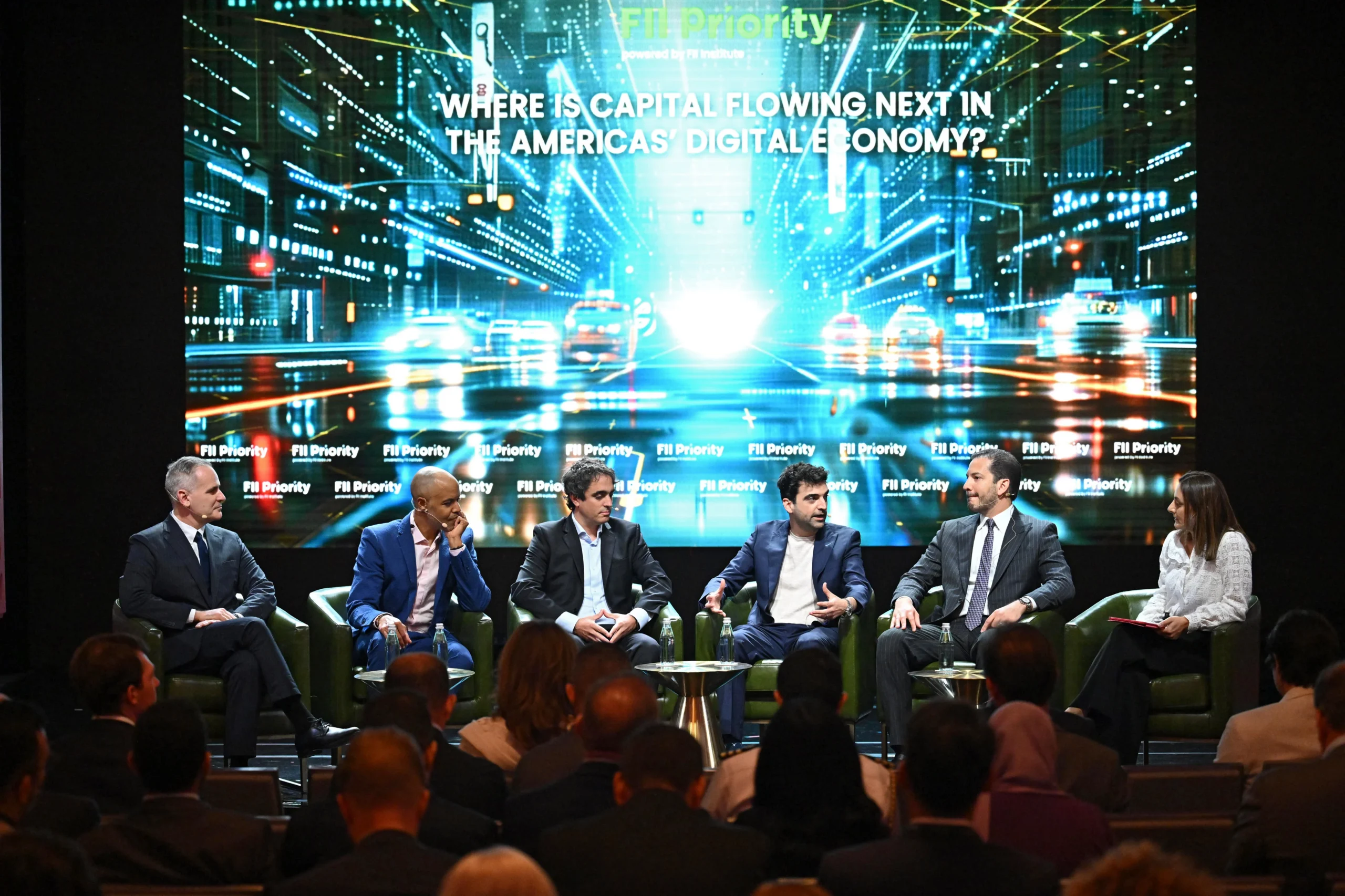
Latin America is stepping into a defining investment moment. Global interest is surging, opportunities are ripe, and leaders stress that building the right conditions is key to turning potential into scalable, long-term growth. As Richard Attias, Chairman of the Executive Committee, and Acting CEO of the FII Institute, said as he inaugurated the summit: “The new LATAM order will not be defined by speech. It will be defined by decisions. By partnerships. By investment. By courage.”
The FII PRIORITY Miami New LatAm Order Summit has made one thing clear: the appetite for investment in Latin America is real. As Ilan Goldfajn, President of the Inter-American Development Bank, emphasized, an inter-American investment corridor is already taking shape. He pointed to clear demand, countries willing to invest, and broader efforts to help more countries integrate into global standard and investment frameworks. He also presented the summit as a platform helping connect investors and opportunities across the region.
Looking ahead, the ability to scale will ultimately depend on sustained productivity gains. Goldfajn pointed to “productivity growth” as the defining factor, with “countries reaching 5 or 6%” growth rates. “With high investment, high productivity… we can get all of these countries to another level.”
Venezuela welcomes 120+ energy companies amid legal reforms
A supportive policy environment is now seen as a cornerstone of investment flows into Latin America, especially in energy. Delcy Rodríguez Gómez, Acting President of the Bolivarian Republic of Venezuela, framed legal certainty as essential to attracting investment, pointing to the country’s hydrocarbons law and broader legal reforms. She also said Venezuela has recently received more than 120 energy companies, mainly from the US as well as from the Middle East, Asia, Africa and Europe.
Trade agreements are fueling Latin America’s investment surge, with Norberto Giangrande Jr., Chairman of Minerva Foods, pointing to the region’s game-changing potential. “After 30 years, in May, the EU-Mercosur agreement is coming into play. This is creating the largest free trade group market in the world,” he said, reaching “over 700 million consumers,” highlighting the unprecedented opportunities this opens for Latin American businesses.
Giangrande described Brazil as a “safe haven” amid global turmoil. “In the beginning of 2000, we exported 50,000 tons of beef to the world. This year, maybe we will do 5 million,” he said, highlighting the sector’s rapid expansion. He added that productivity comes from innovation and technology combined with talented people, noting that Minerva Foods is increasing output by “putting more technology—without cutting one single tree”.
Emerging opportunities: commodities and human capital
Social investment is increasingly recognized as a foundation for growth. María José Pinto González Artigas, Constitutional Vice President of Ecuador, explained that Ecuador has “just shifted from seeing social investment as a cost and seeing it as the foundation of economic growth”. She said her country prioritizes fighting chronic malnutrition and improving support for early pregnancy, early childhood, education, water systems, and sanitation as part of that broader shift.She alsourged investors to look beyond short-term returns and focus on long-term human capital. Citing World Bank data, she said that a one-dollar investment in solutions to address chronic malnutrition can generate a future return of twenty-three dollars, and she described it as one of the most important social investments countries in the region can make.
What It Takes to Turn Opportunity into Scalable Growth
Leaders emphasized that unlocking Latin America’s full potential will require local understanding, stronger partnerships, and a long-term vision.
Abdulrahman T. Bakir, Managing Director-Americas at the Ministry of Investment of Saudi Arabia said: “When you look at LATAM and you don’t know how to do business in São Paulo, versus Bogotá, versus Asunción or Buenos Aires, then you can’t really operate in that part of the region.” He stressed that the focus is not simply on whether to invest, but on how to invest in the region, through long-term partnerships, on-the-ground presence and a clear understanding of local markets. He also made clear that the aim is not only to finance projects, but to support economies as they grow.
Latin America’s investment moment is here—but realizing its full potential depends on aligning capital, policy, and people around a shared, long-term vision. With strategic partnerships, clear regulation, and a stronger focus on human capital, the region is well positioned to turn emerging opportunities into lasting, scalable growth.