





Collaborative whitepaper “Silent Systems, Loud Burden” establishes the conceptual foundation for a forthcoming Preventive Health Readiness Index to be unveiled at FII10 in Riyadh in October 2026
Riyadh, 4 June 2026 — FTI Consulting, Inc. (NYSE: FCN) and the Future Investment Initiative (FII) Institute, a global non-profit foundation with an investment arm and one agenda; Impact on Humanity, have jointly published Silent Systems, Loud Burden: Why We Are Building a Preventive Health Readiness Index — and Why It is Important for Investors and Policymakers, a new whitepaper report that introduces a conceptual framework for measuring how prepared countries and health systems are to prevent future health burdens before they emerge.
Developed by FTI Consulting’s global Healthcare team within the firm’s Strategy & Transformation segment in collaboration with FII Institute, the report explores one of the most significant challenges facing healthcare systems globally: the persistent imbalance between investment in prevention and spending on treatment and crisis response. Despite growing evidence demonstrating the long-term value of preventive health measures, health systems worldwide continue to allocate the vast majority of resources to reactive care. The report argues that a lack of consistent and comparable measurement has made it difficult for policymakers, investors and health system leaders to assess readiness, identify gaps and prioritise action.
“Healthcare systems around the world face growing pressure from rising chronic disease burdens, evolving public health threats and increasing fiscal constraints,” said Oussama Nicolas, Head of Healthcare, Middle East, Strategy & Transformation at FTI Consulting. “Yet despite broad recognition that prevention delivers better long-term outcomes, there remains no consistent way to assess whether countries are truly equipped to prevent future health burdens. This report is an important first step toward addressing that gap. By establishing a common framework for preventive health readiness, we hope to support more informed decision-making, more targeted investment and ultimately more resilient health systems.”
The report proposes a structured approach to understanding preventive health readiness, examining the policy, funding, data, digital, access and capacity enablers required to support effective prevention across a range of health threats, including non-communicable diseases, infectious diseases and injuries. It is intended to provide a foundation for future dialogue among policymakers, investors, healthcare leaders and researchers on how prevention can be measured, strengthened and prioritised.
“This report reflects the strength of the collaboration between FTI Consulting and FII Institute and our shared commitment to advancing ideas that create meaningful impact,” said Antoine Nasr, Head of FTI Consulting Middle East and Head of Strategy & Transformation, Middle East “By bringing together FTI Consulting’s healthcare and strategy expertise with FII Institute’s global platform and focus on the future of humanity, we are helping to drive an important conversation about how health systems can become more proactive, resilient and sustainable.”
This publication serves as a precursor to the launch of the Preventive Health Readiness Index, which FTI Consulting and FII Institute are developing as a practical tool to assess preventive health capabilities across countries and health systems, with key findings and insights showcased during the 10th edition of FII Institute’s flagship conference FII10, taking place in Riyadh in October 26 to 292026.
The report also aligns with FII Institute’s broader Healthy Humanity agenda, which identifies prevention as a critical pillar in improving long-term health outcomes, economic resilience and societal wellbeing. October’s Preventive Health Readiness Index is expected to provide governments, investors, healthcare organisations and international institutions with a structured and comparable assessment of preventive health capabilities, helping to identify opportunities for targeted intervention, investment and system improvement.
To read the full report, click here.
-ends-
About FTI Consulting
FTI Consulting, Inc. is a leading global expert firm for organizations facing crisis and transformation, with more than 8,100 employees located in 32 countries and territories as of March 31, 2026. In certain jurisdictions, FTI Consulting’s services are provided through distinct legal entities that are separately capitalized and independently managed. The Company generated $3.8 billion in revenues during fiscal year 2025. More information can be found at www.fticonsulting.com.
FTI Consulting, Inc.
200 Aldersgate
Aldersgate Street
London, EC1A 4HD
Investor Contact:
Mollie Hawkes
+1.617.747.1791
Media Contact:
Helen Obi
+44 20 7632 5071
About the FII Institute
The FII Institute is a global nonprofit foundation with an investment arm and one agenda: Impact on Humanity. Through its THINK, XCHANGE, and ACT pillars, the Institute fosters great ideas, empowers innovators, and invests in scalable solutions across critical sectors, including AI and robotics, sustainability, healthcare, and education.
For more information, please visit: https://fii-institute.org/
For media inquiries, please contact: [email protected].
In Rome, Europe takes center stage at an international summit to rethink the continent’s sovereignty, capital and strategic autonomy
Rome, Italy, May 11, 2026 – The Future Investment Initiative (FII) Institute, a global non-profit foundation with an investment arm and one agenda, Impact on Humanity, today unveiled the first wave of headline speakers and the strategic agenda for FII PRIORITY Europe 2026, taking place June 17–19, 2026, at the Rome Cavalieri, A Waldorf Astoria Hotel, in Rome.
Under the theme “Europe Reimagined: Capital, Sovereignty & Strategic Autonomy”, the summit will convene global investors, policymakers, innovators, and business leaders to examine how capital can strengthen Europe’s long-term competitiveness across energy, technology, security, finance, and industrial transformation.
“Europe is entering a decisive period where competitiveness, resilience, and strategic autonomy will increasingly depend on how effectively capital is mobilized across industries, technologies, and infrastructure,” said Richard Attias, Chairman of the Executive Committee and Acting CEO of FII Institute. “FII PRIORITY Europe is designed to bring together global leaders and investors to examine not only Europe’s challenges, but also the significant opportunities emerging across energy, AI, manufacturing, finance, and sustainable growth.”
Among the leading discussions on the agenda are:
- Europe at the Inflection Point
- Tariffs, Trade, and the New Geoeconomic Order
- Sovereign AI: Can Europe Build Its Own Intelligence Infrastructure?
The summit will convene a confirmed group of global leaders and decision-makers, including:
- H.E. Yasir O. Al-Rumayyan – Governor, Public Investment Fund; Chairman, Saudi Aramco; Chairman, FII Institute
- H.R.H. Ambassador Reema Bandar Al Saud – Ambassador to the United States, Embassy of the Kingdom of Saudi Arabia, Member of the Board of Trustees, FII Institute
- H.E. Edi Rama – Prime Minister, Republic of Albania
- H.E. Adolfo Urso – Minister of Enterprise and Made in Italy, Italy
- H.E. Ahmed Al-Khateeb – Minister of Tourism, Kingdom of Saudi Arabia
- the Kingdom of Saudi Arabia
- H.E. Matteo Renzi – Senator of the Italian Republic; Former Prime Minister of Italy
- Alejandro Reynal – President & CEO, Four Seasons
- Ana Cabral – Co-Chairperson & CEO, Sigma Lithium
- Ana Paula Assis – SVP and Chair, IBM Europe, Middle East, Africa and Asia Pacific, IBM
- Andrew L. Cohen – Executive Chairman, Global Private Bank; Global Chair, Investment Banking, JPMorgan Chase & Co.
- Andrea Orcel – CEO, UniCredit
- Anthony Gutman – Global Co-Head of Investment Banking, Goldman Sachs; Co-CEO, Goldman Sachs International
- Carme Artigas – Co-Chair, UN AI Advisory Body
- Dina DiLorenzo – President, Guggenheim Investments
- Emmanuel Roman – CEO & Managing Director, PIMCO
- Dr. Mohamed Farouk – Vice-Chairman & Group CEO, ADES Holding
Dr. Samir J. Serhan – CEO, Acwa - Ioannis Tsakiris – Vice President, European Investment Bank
- Jacob Helberg – U.S. Under Secretary of State for Economic Affairs, White House
- Dr. Jennifer Holmgren – Chair & CEO, LanzaTech
- John Pagano – Group CEO, Red Sea Global
- Mark Bowman – Vice President for Policy and Partnerships, European Bank for Reconstruction and Development
- Michael Dyke – CEO, New Murabba
- Nerio Alessandri – Founder & Chairman, Technogym
- Peggy Johnson – CEO, Agility Robotics
- Ramin Hasani – Co-Founder & CEO, Liquid AI
- Sarah Youngwood – Chief Financial Officer, Nasdaq
- Sir Noel Quinn – Chair, Julius Baer Group
- Stefano Buono – Founder & CEO, newcleo
- Stephen Dainton – President, Barclays Bank & Head, Investment Bank Management
- Stella Li – Executive Vice President, BYD
- Talal H. AlMarri – CEO, Expo 2030 Riyadh
Together, these speakers reflect the summit’s focus on Europe’s next growth chapter: mobilizing capital, strengthening strategic industries, securing digital and energy infrastructure, and connecting Europe’s public and private sectors with global markets.
-end-
About the FII Institute
The FII Institute is a global nonprofit foundation with an investment arm and one agenda: Impact on Humanity. Through its THINK, XCHANGE, and ACT pillars, the Institute fosters great ideas, empowers innovators, and invests in scalable solutions across critical sectors, including AI and robotics, sustainability, healthcare, and education.
For more information, please visit: https://fii-institute.org/ For media inquiries, please contact [email protected]
[Riyadh – 22 April 2026] – Collective action platform Wave, powered by the Future Investment Initiative Institute is excited to announce that its data platform Ocean Central – oceancentral.org – has won a trophy in the annual awards that recognize the best of the internet.
Ocean Central, developed by Ode Partners, won The Webby People’s Voice Award in the Websites & Mobile Sites, Sustainability & Environment category, reflecting its efforts to track and advance Wave’s goal of ocean regeneration within a human generation.
Her Royal Highness Princess Reema Bandar Al-Saud, Founder of Wave, said: “We’re delighted to be recognized for our work on Ocean Central.
“To achieve ocean regeneration within a human generation, it is imperative that we act on dependable data and transform insight into action. If we all come together, Ocean Central can offer a roadmap to protect and restore marine ecosystems.”
Hailed as the “Internet’s highest honor” by The New York Times, The Webby Awards, now in its 30th year, is the leading international awards organization honoring excellence on the Internet. With more than 13,000 pieces of work submitted from over 70 countries, and over 4.6 million votes cast by 940,00-plus people in this year’s Webby Awards, Ocean Central’s win is a significant accomplishment.
Ocean Central is modelled around the study co-authored by Wave Chief Scientist Professor Carlos Duarte entitled “Rebuilding Marine Life”. The study lays out a high-level roadmap of how the ocean can be regenerated within a human generation if collective action is taken in specific areas.
Using an unprecedented depth of data, geospatial visualizations, and contextual information, Ocean Central tracks ocean health, while providing actionable insights for positive interventions.
ENDS.
About Wave
Founded by HRH Princess Reema Bandar Al-Saud, Wave is a Collective Action Platform dedicated to restoring a thriving ocean by 2050. Powered by the Future Investment Initiative, Wave delivers impactful interventions across the foundational pillars of Engagement, Insights, Sectorial Activation, and Innovation, in order to achieve its objectives.
For more information, visit thewave.global and data platform oceancentral.org. Get in touch at [email protected].
Riyadh, April 14, 2026 – The Future Investment Initiative (FII) Institute, a global non-profit foundation with an investment arm and one agenda, Impact on Humanity, today announced FII PRIORITY Europe Summit, taking place June 17–19, 2026, in Rome, Italy, as global leaders gather to confront a defining question for the continent’s future: how capital can secure Europe’s competitiveness, resilience, and strategic autonomy in a rapidly changing world.
Under the theme “Europe Reimagined: Capital, Sovereignty & Strategic Autonomy,” FII PRIORITY Europe 2026 will bring together policymakers, investors, innovators, and decision-makers to examine how capital, industrial policy, and cross-border collaboration can strengthen Europe’s long-term position across energy, technology, security, and finance.
The Summit comes at a key moment as Europe moves from crisis management to long-term reinvention. As the continent enters a decisive chapter, the question is no longer whether Europe must adapt, but how it can lead. With euro area growth projected at around 1.2% in 2026, FII PRIORITY Europe will focus on how patient private capital, smarter policy frameworks, and strategic investment can unlock higher productivity, resilient supply chains, and a stronger industrial base.
Core topics at the Summit will include:
- AI, Data & Digital Infrastructure
- Capital Markets & Investment Flows
- Green Industrial Policy & Energy
- Supply Chains, Trade & Security
- Advanced Manufacturing & Deep Tech
- Real Estate, Tourism & Urban Revitalization
The three-day program will feature plenary sessions, labs, conclaves, networking breakfasts, bilateral meetings, and partner dinners designed to foster high-level exchange and real-world outcomes. Building on the legacy of FII Institute’s flagship annual conference in Riyadh, FII PRIORITY Summits are designed as engines of actionable change in influential cities around the world.
-ends-
Register as media or request an invite: https://fii-institute.org/conference/fii-priority-europe-2026-summit/
About the FII Institute
The FII Institute is a global nonprofit foundation with an investment arm and one agenda: Impact on Humanity. Through its THINK, XCHANGE, and ACT pillars, the Institute fosters great ideas, empowers innovators, and invests in scalable solutions across critical sectors, including AI and robotics, sustainability, healthcare, and education.
For more information, please visit: https://fii-institute.org/
For media inquiries, please contact [email protected].
The conversation around big opportunities often starts with size, speed or valuation. But in many cases, the real challenge begins later, when the question is no longer what is possible, but what can actually be delivered.
That was one of the threads connecting two very different panel discussions on the afternoon of Day 2 at FII PRIORITY Miami 2026. One focused on co-investments in private markets. The other explored physical AI and simulation. The sectors were different, but both discussions pointed in the same direction: scale is still attractive, but making it work is becoming more demanding.
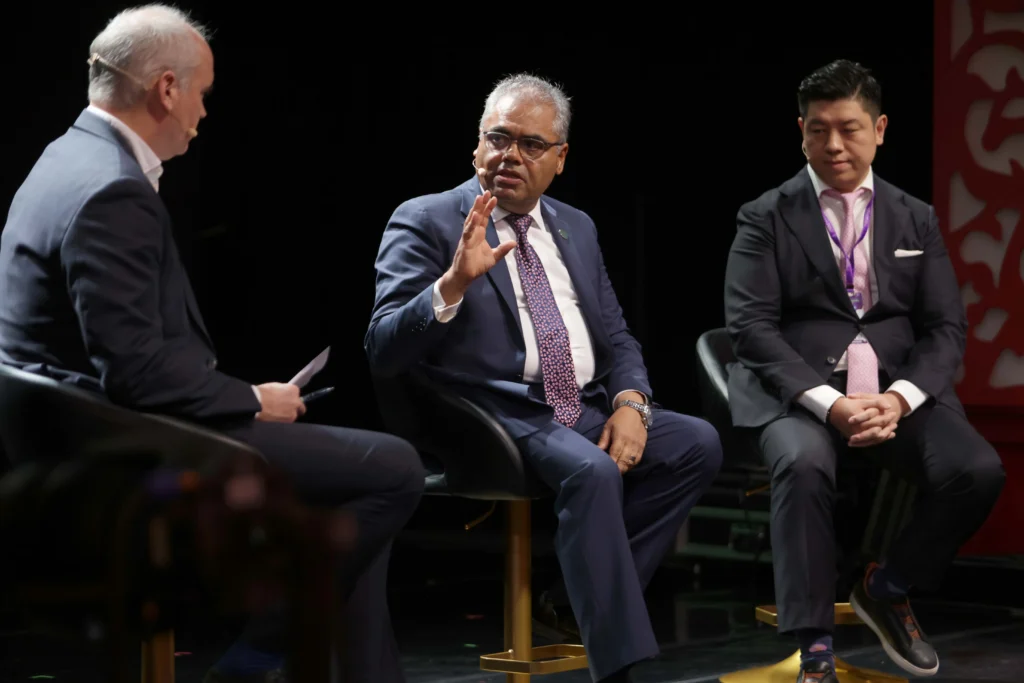
In the co-investment session, the emphasis was not so much on the appeal of larger deals as on what it takes to participate in them well. Rishi Kapoor, Vice-Chairman & CIO of Investcorp, described co-investments as “a much more programmatic vehicle,” reflecting how far the market has moved beyond selective, ad hoc participation. Henry Zhang, President & Managing Partner of Hermitage Capital, captured the pressure that comes with that shift when he said, “Timeline is a few days, right?” The point was not simply that opportunities are bigger, but that acting on them now requires speed, structure and the capacity to make decisions under tighter timeframes.
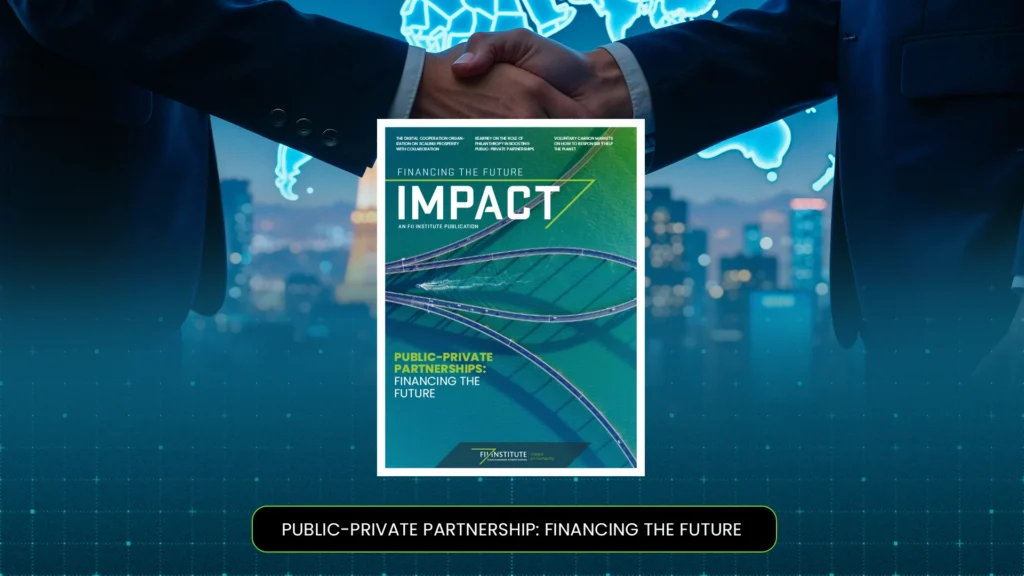
That broader question of execution is also reflected in FII Institute’s report Public-Private Partnerships: Financing the Future, which argues that delivering large-scale projects is not just a matter of capital, but of coordination — “a translation exercise between two worlds” with different views of risk, success and accountability. In that sense, the ability to align incentives, timelines and expectations becomes as critical as access to capital itself.
From capital to infrastructure
The second panel approached that same pressure from the technology side. Here, the question was not how to allocate capital, but how to bring AI into real-world use. Jim Keller, CEO of Tenstorrent, said, “We see an opportunity to really lower the cost of AI,” pointing to the importance of infrastructure that is more accessible and easier to work with. Dr. Raquel Urtasun, CEO & Founder of Waabi, focused on what that looks like in autonomous systems, stressing that “simulation is an absolute must” when AI has to be trained and validated before operating in the real world. Her reference to long-haul trucking in North America as a “trillion dollar market” underlined the scale of what is at stake when that process works.
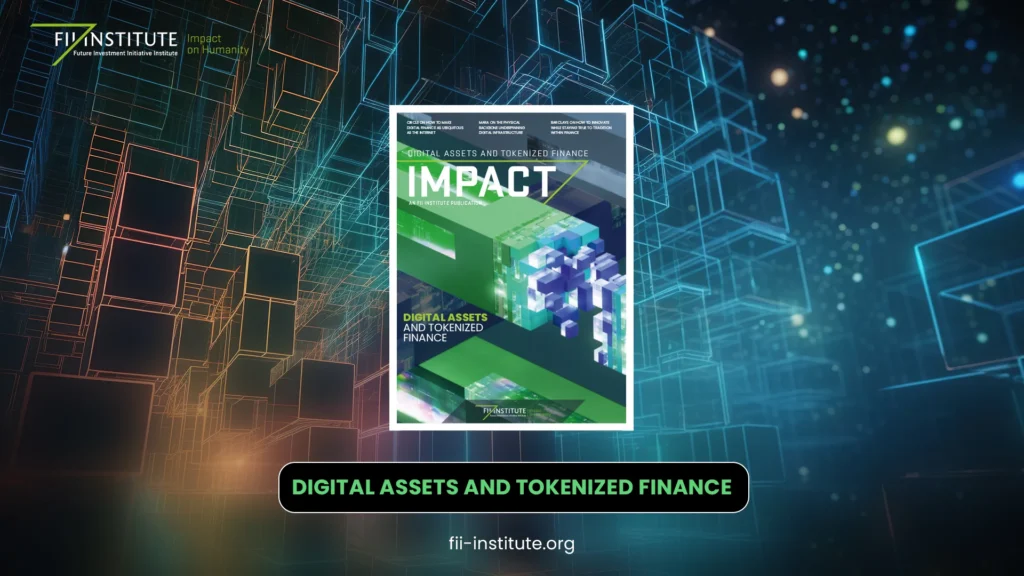
FII Institute’s report Digital Assets and Tokenized Finance reinforces that point, noting that “the physical backbone of digital infrastructure is becoming increasingly strategic” as demand for compute continues to rise. Citing International Energy Agency data, the report highlights that global data center electricity consumption could increase significantly by the end of the decade — a reminder that scaling AI is not only a software challenge, but a physical one.
Taken together, the two discussions suggested something simple but important: in both finance and AI, the opportunity may be large, but delivering on it is becoming the harder part.
Produced by: FII Institute’s Editorial Team
The afternoon sessions on the final day of FII PRIORITY Miami brought together some of the biggest names in sport, entertainment and technology. Their conversations covered a lot of ground — the World Cup, Hollywood, gaming, AI infrastructure — but kept returning to the same underlying question: what does it take to build something that lasts?
Live sport: Scale and economic power
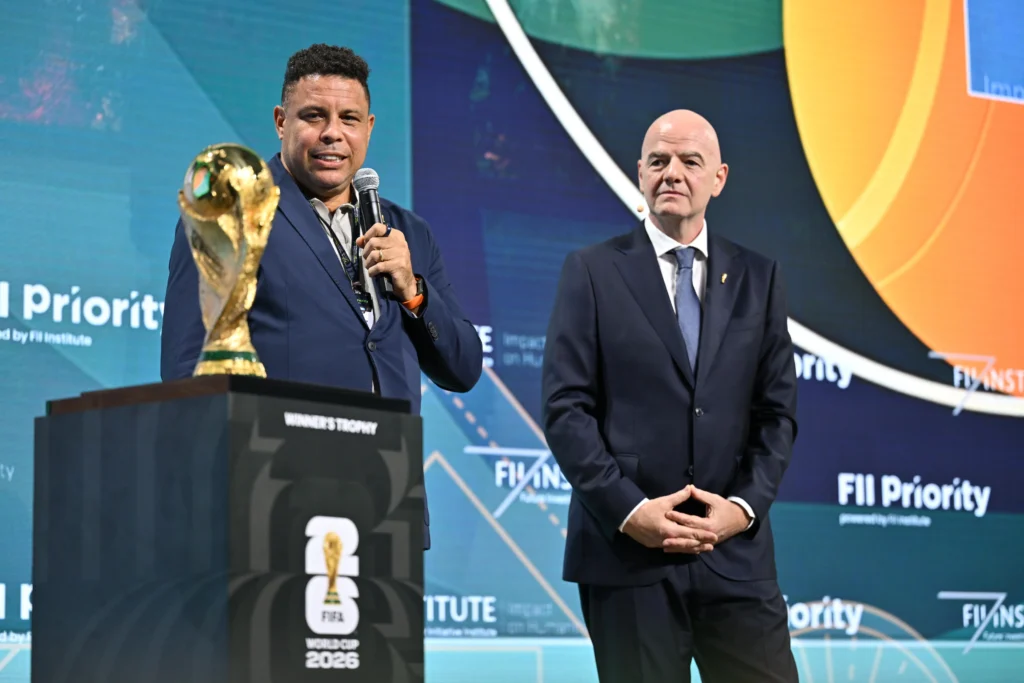
Gianni Infantino, President of FIFA, on stage with legendary Brazilian former football star Ronaldo Fenômeno and the World Cup trophy next to them, talked about the staggering economic impact of the World Cup.
“The economic impact of the World Cup is about $80 billion US dollars, is about 1 million permanent jobs, 200,000 of which in the United States.”
The 2026 World Cup, hosted across the United States, Canada, and Mexico, will feature 48 teams playing 104 matches in 39 days. In four weeks, FIFA received over 500 million ticket requests for 7 million available seats. Six billion people are expected to watch.

John McEnroe, International Tennis Hall of Fame inductee and former Grand Slam champion, in conversation with Mary Pierce, former professional tennis player, argued that grit increases the probability of success but cannot guarantee it, and that live sport, with all its uncertainty, is precisely what makes it irreplaceable.
Gaming: Building the next mythology
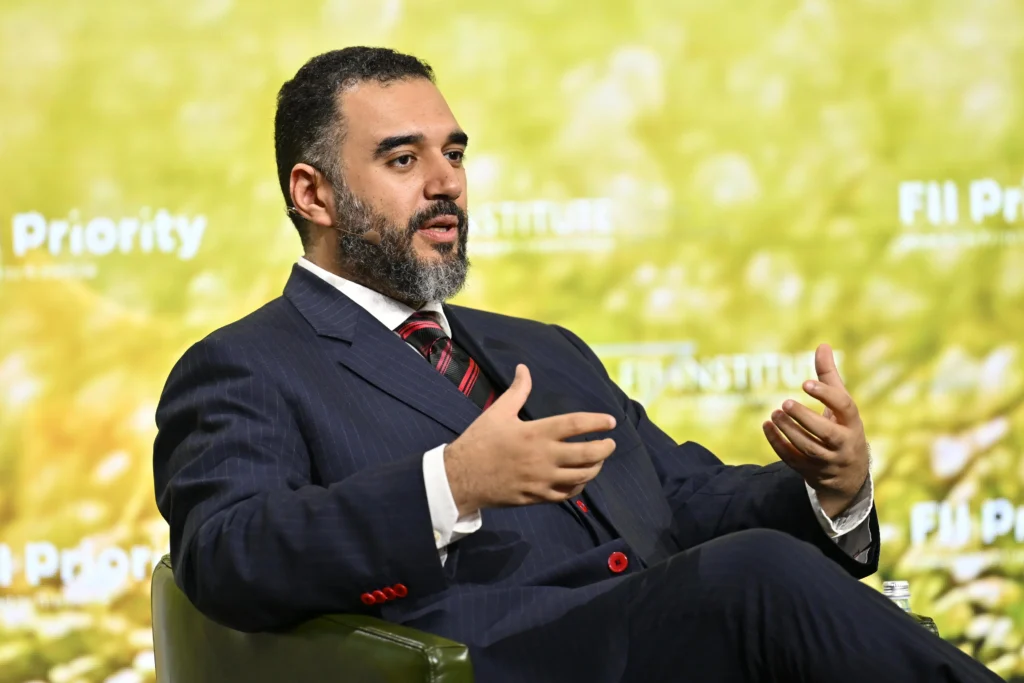
H.R.H. Prince Faisal bin Bandar bin Sultan Al Saud, Chairman of the Saudi Esports Federation and Vice Chairman of Savvy Games Group, explained that Saudi Arabia is not trying to copy an existing gaming ecosystem. It is trying to build one around stories that have not yet been told.
“All over the world, stories have been told. Two regions that still have stories that have not been told internationally are the Middle East and Sub-Saharan Africa. That’s right where we are.”
He also pointed to a shift in how gaming itself generates value.
“With cloud gaming and Web3 gaming, you’re now going to start seeing more paid-to-play, where playing becomes your career, not just as a professional gamer, but just to get on and play games. With companies like Sandbox and many others.”
Hollywood: The business of legacy
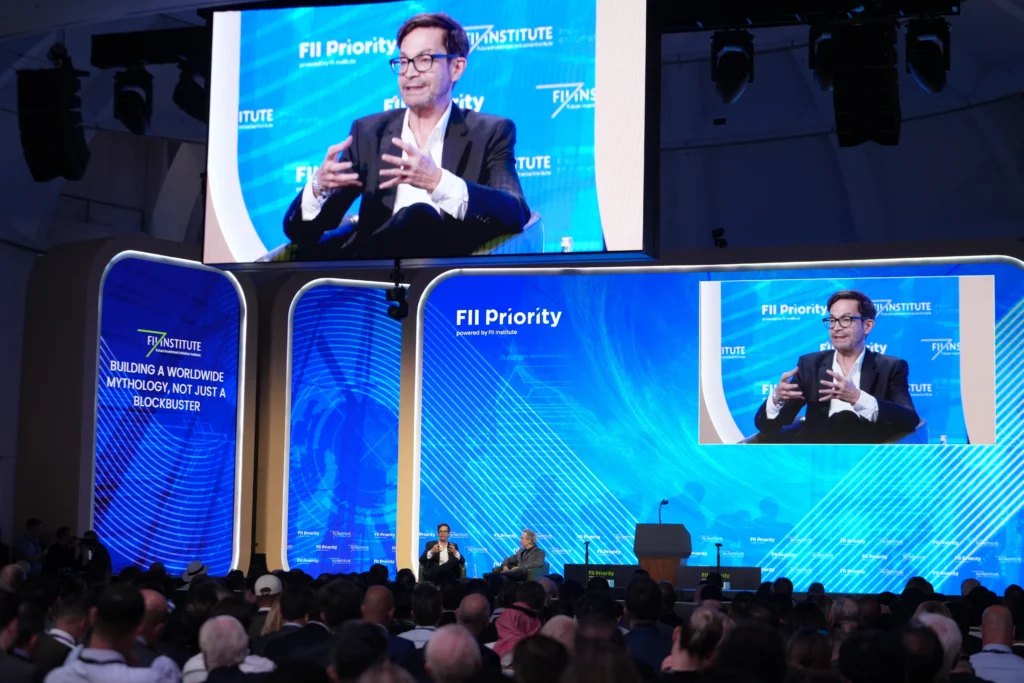
David Maisel, Founder of Marvel Studios and the architect behind the Marvel Cinematic Universe, pointed to something he says is rarely talked about.
“Something very important, and not really talked about a lot, is being owner-operated. When you’re an owner-operator, you care about things way more deeply. You have much longer timeframe. You’re all in. You can plan for a long time, which this requires. It took us five or six years to make Iron Man. And then it was another 20 years that we had planned out”, Maisel said.
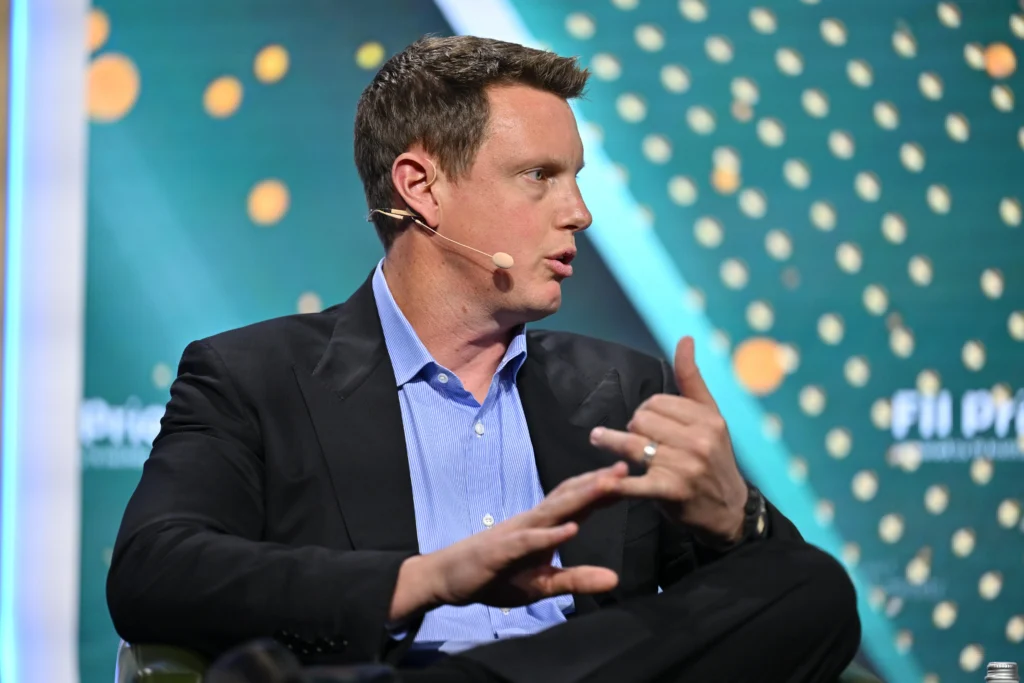
David Ellison, Chairman and CEO of Paramount Skydance, argued that the disruption happening in Hollywood right now is structurally similar to what happened to legacy technology companies a decade ago and to the music industry before that.
On AI, Ellison argued that the technology is not a threat to storytelling, but rather an iteration tool. Pixar’s rule was always “be wrong as fast as possible” — make the movie eight times before the audience sees it once. AI compresses that cycle further.
“If you can make the movie 15 times, 20 times, get that audience feedback, you’re going to be able to tell better stories that entertain your audience.”
Maisel made a related point: AI will help companies with established brands make products quicker and cheaper, while making it harder for new ones to break through.
AI infrastructure: The physical layer
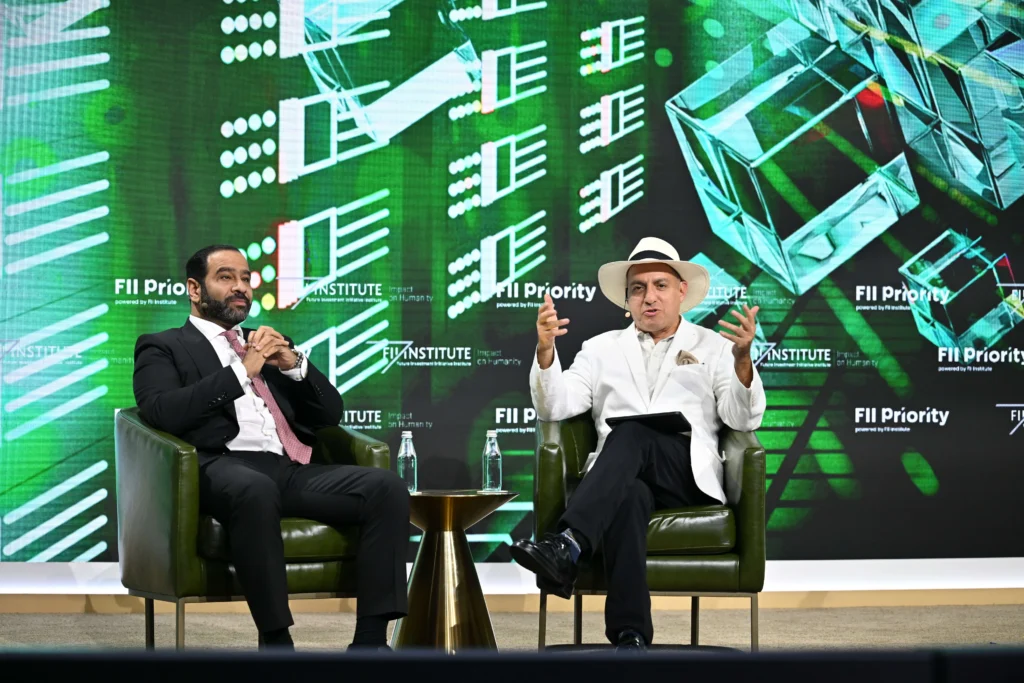
Behind all of it is physical infrastructure. Rayan Fayez, Deputy CEO of NEOM, made that case with numbers that reframe the scale of what is being built.
Three data points he used to locate the challenge: more than 150 zettabytes of data generated annually, expected to grow tenfold in the next decade; $2.5 trillion in AI investment in 2026 alone; and 300 gigawatts of power needed for AI data centers by 2035, at a cost of $30 to $50 billion per gigawatt.
The demand for compute, energy and physical infrastructure is growing faster than the industry can build it. That challenge sits underneath everything else discussed at FII PRIORITY Miami on Friday.
Aerospace, critical minerals, energy, and healthcare may sit in different parts of the economy, but they share common characteristics. Demand is expanding, systems are under pressure, and supply remains uneven. These sectors require long-term investment, operate under real capacity constraints, and play a central role in how economies function.
By the afternoon of Day 2 at FII PRIORITY Miami, the conversation had turned to how investment decisions are becoming more deliberate across these sectors, shaped by the need to secure access, build capacity, and support the systems economies depend on.
Aerospace expands under sustained demand and rising complexity
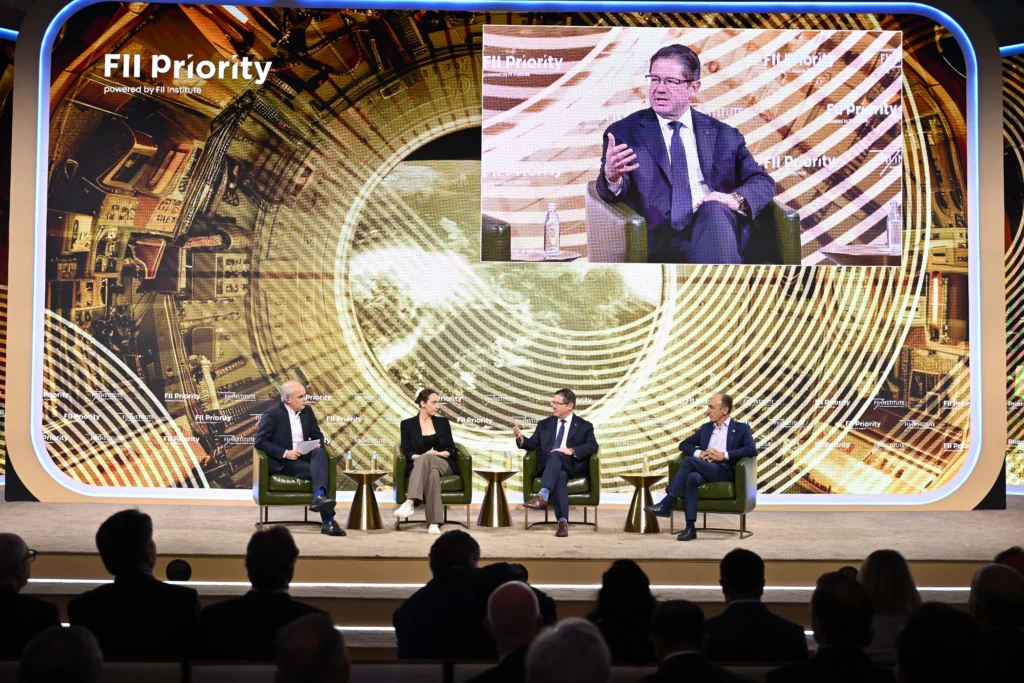
Aerospace opened with a clear signal on how demand is evolving across both commercial and private aviation. Éric Martel, President and CEO of Bombardier, pointed to a growing base of potential customers. “If you look at people that have access to USD 30 million, they will grow by about 6% per year over the next five years, easily. That’s another 30% more people that can become customers for a private jet.” He also noted how external conditions continue to influence behavior. “COVID was an accelerator for business aviation… and things that are happening right now in the Middle East could be an accelerator also.”
As aerospace expands beyond traditional aviation, space is also emerging as a major arena for capital and industrial ambition. Fatih Özmen, CEO and Owner of Sierra Nevada Corporation and Sierra Space, described the scale of that expansion. “[Aerospace] is really a trillion-dollar supercycle. Space is the ultimate frontier.”
Energy investment moves into new frontiers
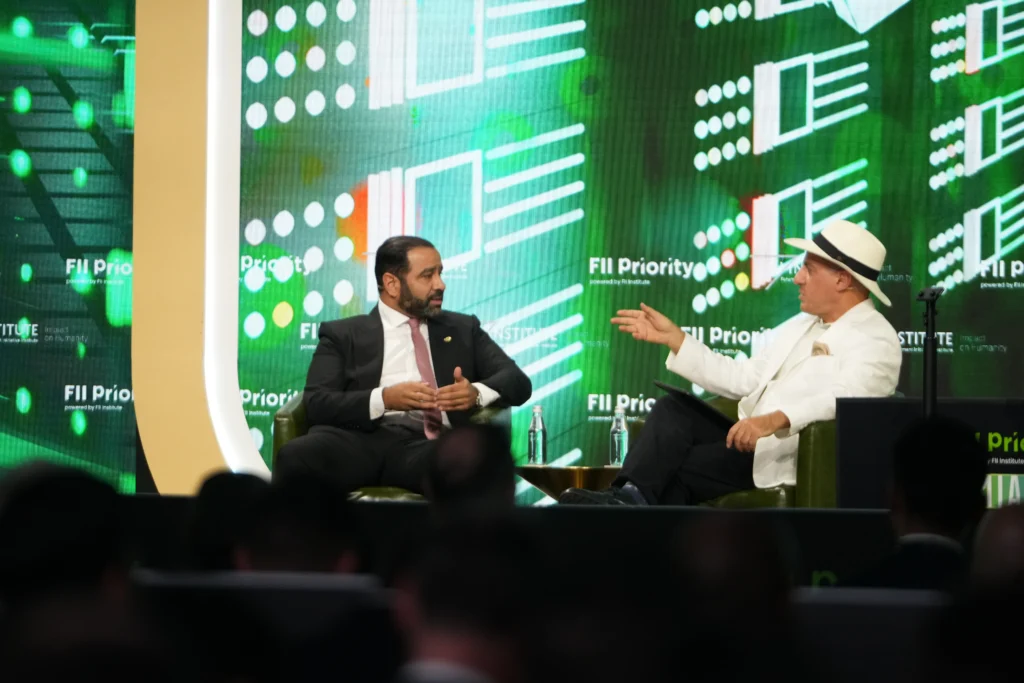
The expansion into space is also beginning to reshape how energy itself is produced and delivered. Marc Berte, Founder and CEO of Overview Energy, described a model in which solar power is generated beyond the limits of terrestrial systems. “You collect solar energy in space where the sun is 24/7… We’re looking at first megawatts on grid 2030, gigawatts 2035.”
The concept reflects a broader push to rethink how energy is sourced as demand continues to grow across industries. Energy remains the underlying requirement across sectors. As systems scale, the availability, affordability, and structure of power supply continue to define what can be built and how quickly it can operate.
Critical minerals shape supply and pricing power
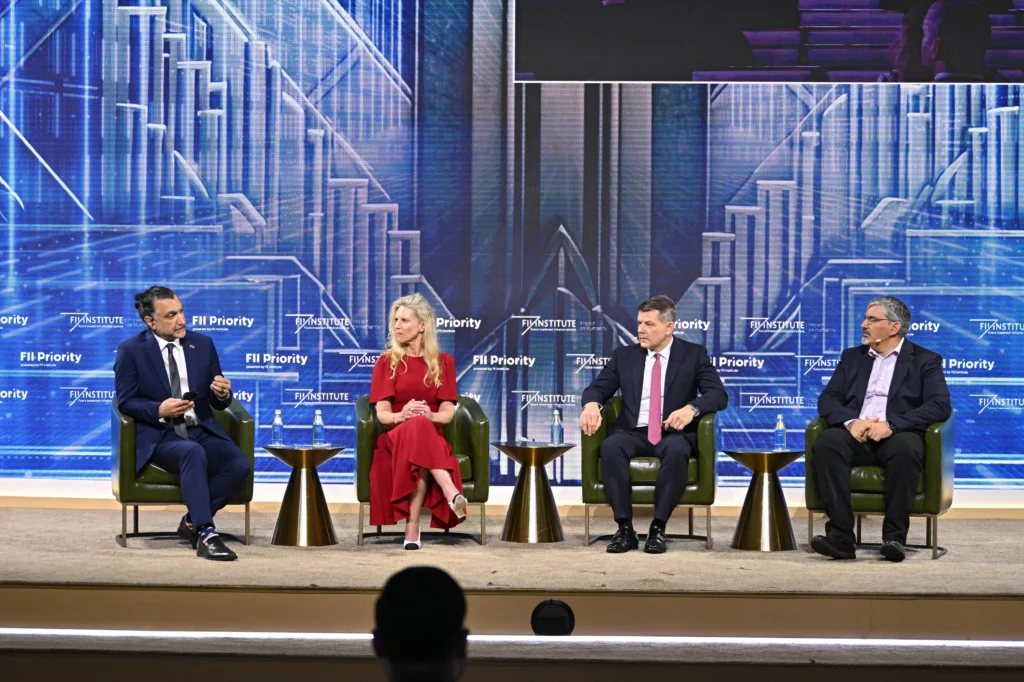
That demand is closely tied to the availability of critical inputs. The minerals sector highlights how supply concentration and pricing dynamics are shaping investment decisions. Jonathan Evans, President and CEO of Lithium Americas, described the structural challenges facing the sector. “Financing is very difficult in this industry… because it’s very, very cyclical. Private investors don’t like volatility.” He also pointed to the role of market concentration. “Transparency is very key… 80% of the batteries come from China. More than 90% of the processing of rare earths and 75% of lithium and many other metals come from China. They control the price because you control the supply and demand at the same time.”
In response, governments are taking a more active role in securing supply. Evans framed the issue in practical terms. “Don’t think this is a renewables game… This is a keep-the-lights-on game.” Oliver Gunasekara, CEO and Co-Founder of Impossible Metals, described how companies are responding. “We have to go for valuable resources that are very, very low-cost so that we have some protection against the price manipulation.”
Across the sector, access to supply and greater pricing transparency are shaping how capital is deployed and how projects are structured.
Healthcare operates on long-term system investment
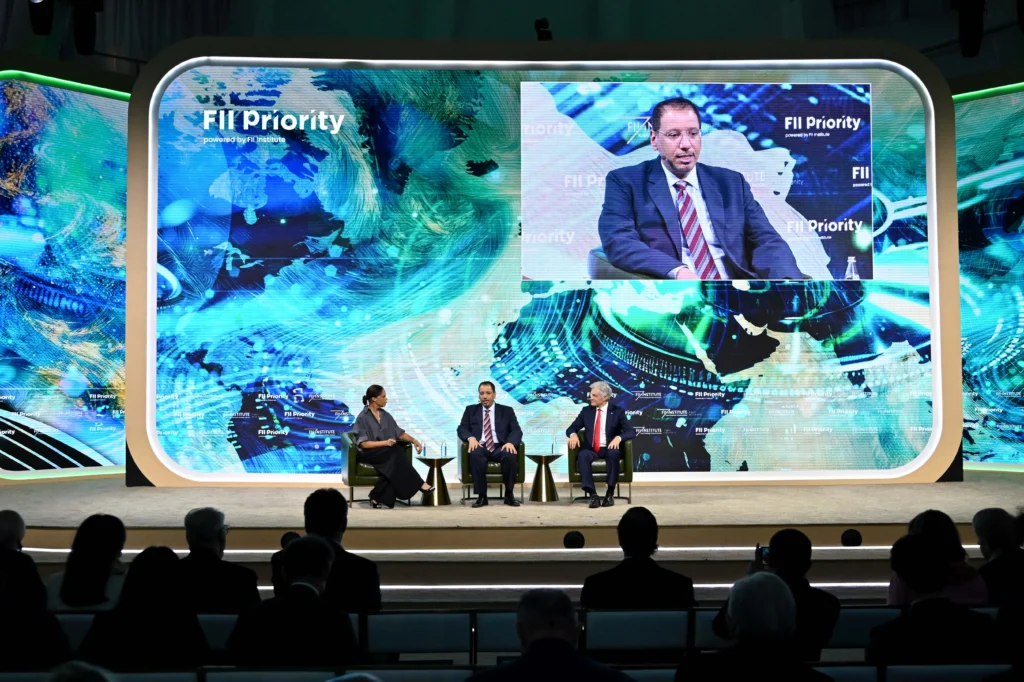
Healthcare reflects a different type of pressure, one that plays out over longer time horizons. Chronic diseases account for more than 70% of global deaths, placing sustained pressure on healthcare systems and shaping long-term investment priorities. H.E. Dr. Majid Alfayyadh, CEO of King Faisal Specialist Hospital and Research Centre, described medical diplomacy as a system that operates across borders and institutions. “Medical diplomacy, unlike diplomacy in general, transcends borders… so it is borderless and something that has been very effective over the years that needs to be utilized more.”
He emphasized that outcomes depend on alignment between policy and execution. “For medical diplomacy to be successful in transferring knowledge and improving healthcare globally, it has to be [a combination] of national strategy and political will.” He also reframed how healthcare is viewed within national systems. “Government tend to look at health as cost, where we see it as a platform for innovation, a platform for development. And the direct and indirect contribution to GDP is tremendous.”
Dr. Mehmet Öz, Administrator of the Centers for Medicare & Medicaid Services, connected this directly to economic performance. “You cannot be a wealthy country if you’re not a healthy country.”
In healthcare, capital is tied less to short-term cycles than to long-term system resilience, innovation capacity, and national productivity.
Capital aligns with policy, infrastructure, and execution
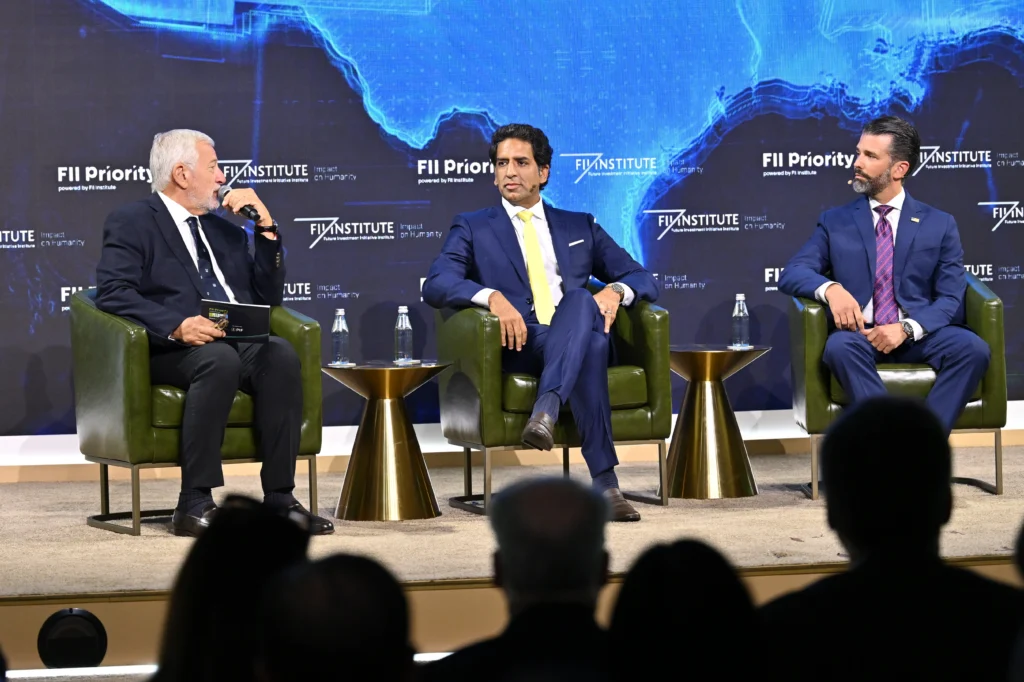
Across these sectors, investment decisions are increasingly shaped by broader frameworks. Omeed Malik, Founder and President of 1789 Capital, described the sequence succinctly. “Culture. Politics. Then finance. The money flows in that order.”
Donald Trump Jr., Partner at 1789 Capital, brought the focus back to a core enabler across sectors. “Energy is everything… If you don’t have the energy to power it, none of it matters.”
Where capital is being directed
Across aerospace, energy, critical minerals, and healthcare, the same pattern is visible. Demand continues to expand, systems operate under pressure, and supply remains uneven. Capital is moving toward sectors where long-term demand, system resilience, and strategic capacity matter most.
Produced by: FII Institute’s Editorial Team
The morning sessions on Day 2 of FII PRIORITY Miami focused on the practical conditions shaping investment decisions across infrastructure, private markets, artificial intelligence, asset management, and the macroeconomic outlook. Different sectors were discussed, but the underlying questions were closely connected: where value is being built, how liquidity can return, and what investors now require in a more selective market environment.
Building for permanence
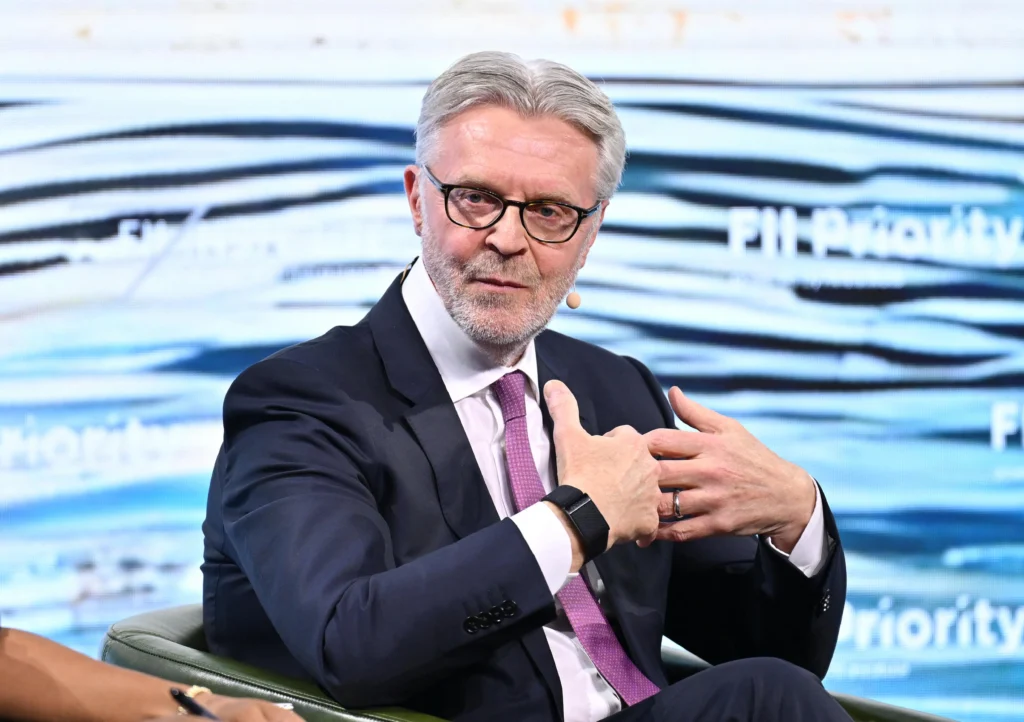
The opening discussion on green urban development focused on how large-scale projects are increasingly being assessed as long-term economic systems rather than isolated real estate plays. Michael Dyke, Chief Executive Officer of New Murabba, said: “We are not just creating a collection of assets, we are building a place where people genuinely want to live, work, and play.” The broader conversation centered on livability, infrastructure, and the ability to sustain demand over time.
Travel infrastructure and logistics capacity
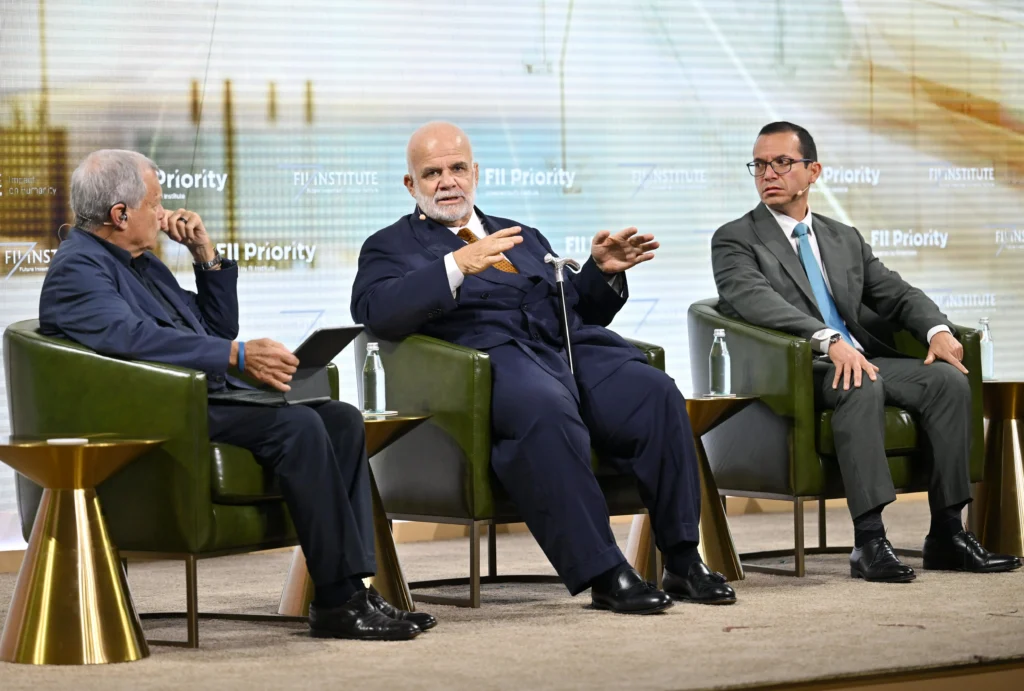
That systems perspective carried into the session on travel infrastructure, where speakers looked at airports, logistics networks, hospitality, and transport links as part of the wider investment story behind travel growth. Marco Mejia, Acting Chief Executive Officer of King Salman International Airport, brought up the establishment of a FedEx regional hub in Riyadh as an example of Saudi Arabia’s broader logistics growth. According to the official masterplan for King Salman International Airport, the project is expected to contribute SAR 27 billion annually to non-oil GDP, create 103,000 direct and indirect jobs, and handle up to 3.5 million tons of cargo by 2050. Manfredi Lefebvre d’Ovidio, Chairman of the World Travel & Tourism Council, also noted that fuel costs “make a big difference.”
Liquidity and the exit backlog
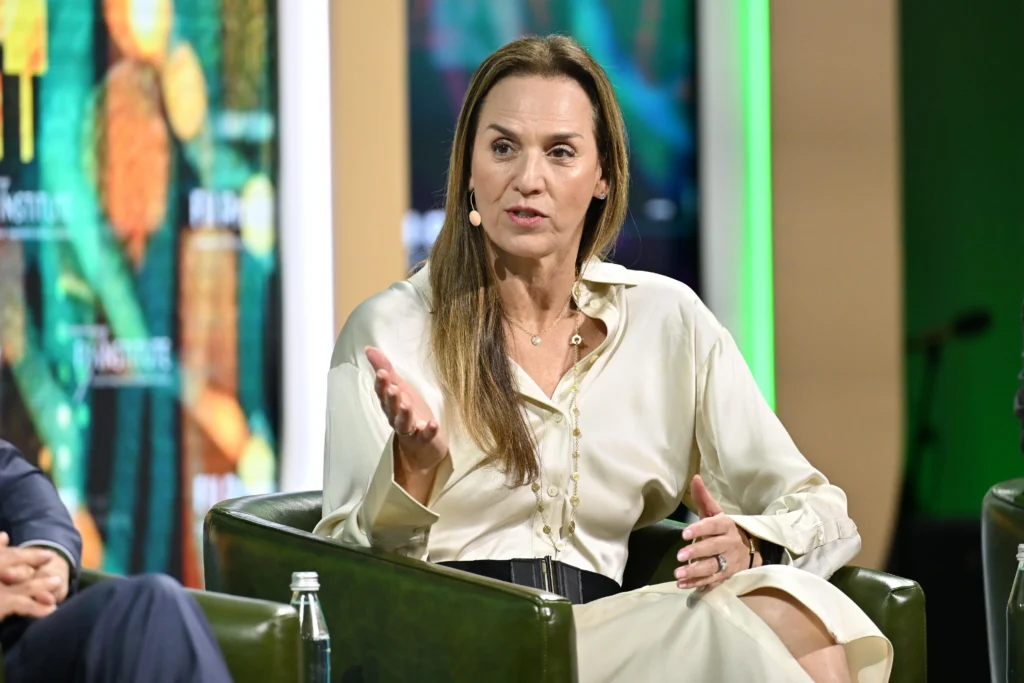
The conversation then turned to private markets and the challenge of exits. In the session titled “How to Solve the $3 Trillion Exit Problem,” speakers examined the continued backlog in private markets and the limits of relying on initial public offerings alone to restore market flow. Michal Katz, Head of Investment and Corporate Banking at Mizuho Americas, argued that “IPOs are a milestone. They’re not the destination.” The discussion focused on the wider mix of tools available to unlock liquidity and recycle capital in a more selective environment.
AI, policy, and regulatory clarity
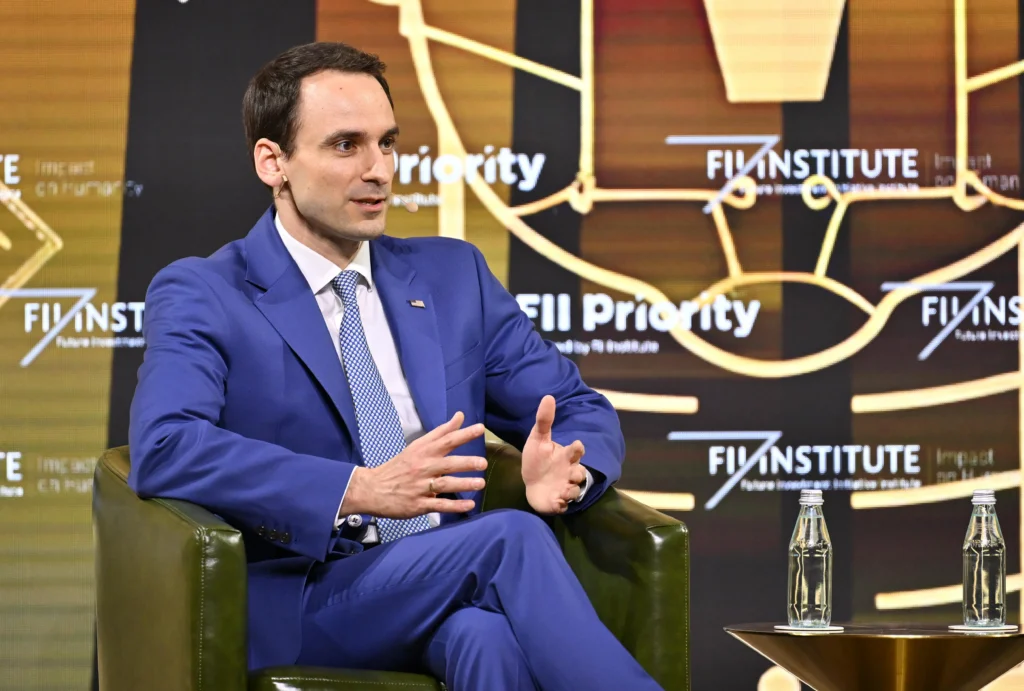
Artificial intelligence was discussed through the lens of policy clarity. Michael Kratsios, Director of the White House Office of Science and Technology Policy, defended the newly proposed AI national framework, which includes provisions related to child safety, as well as energy and data centers regulations.
Asset management under pressure to adapt
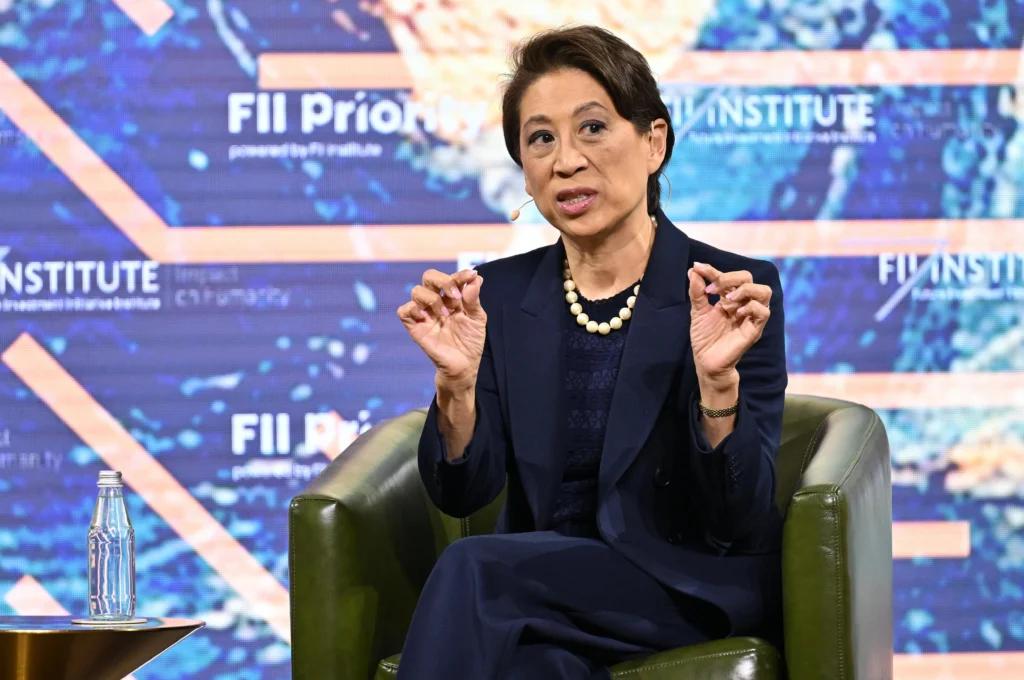
Asset management added another investment dimension to the morning. The discussion centered on how the industry is adapting to technological change, scale, customization, and evolving client expectations. Yie-Hsin Hung, President and Chief Executive Officer of State Street Investment Management, said that “AI enables mass customization at scale at much lower cost,” linking technology more directly to how firms can sharpen their offering and build value over time.
A more selective macro backdrop
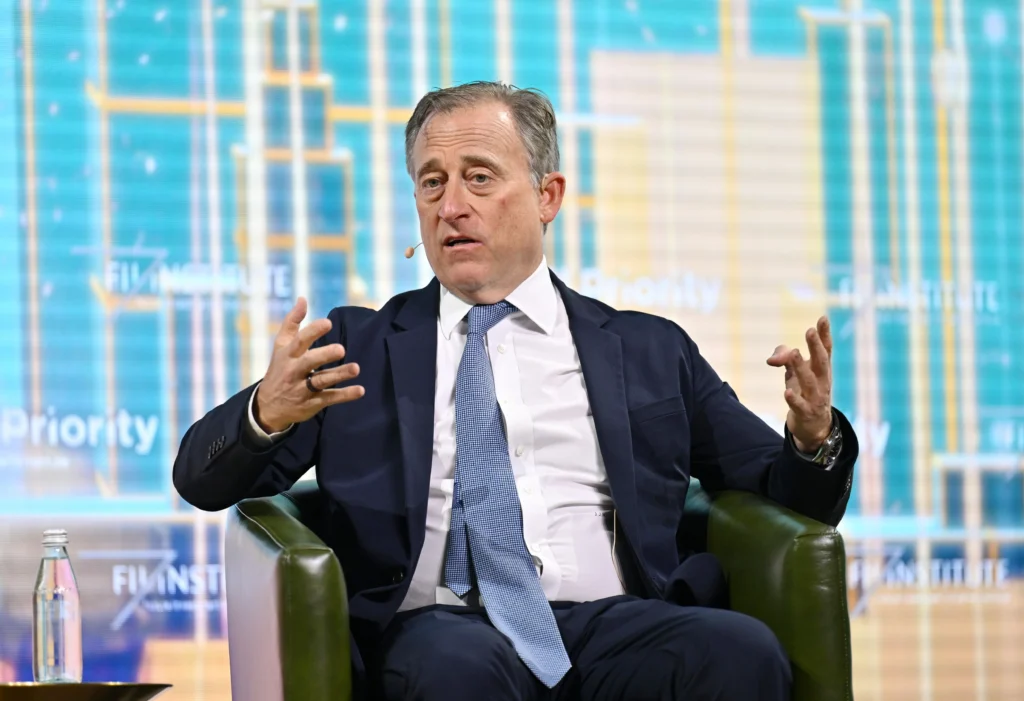
The morning closed with a more cautious macroeconomic perspective. Josh Harris, Founder of 26North, said: “In today’s environment, you have to move very slowly, stay focused on high quality assets, and be ready with capital.” His remarks reflected a broader theme across the sessions: capital remains active, but it is moving with greater selectivity and closer attention to quality, resilience, and timing.
Produced by: FII Institute’s Editorial Team
Miami, March 27, 2026 – Day 2 of FII PRIORITY Miami witnessed conversations about the ways in which the global economic outlook is being reshaped in real time by disruption, and how capital adapting and reinventing accordingly.
Across the day’s plenary sessions, speakers provided insight into markets, investment strategy and economic direction, addressing geopolitical instability, energy volatility, supply chain fragmentation and the transformative impact of artificial intelligence.
Building cities as investment systems
The day opened with a focus on green urban development, where speakers reframed cities as integrated, long-term investment platforms. Michael Dyke, Chief Executive Officer, New Murabba, said:
“We are not just creating a collection of assets, we are building a place where people genuinely want to live, work, and play, which fundamentally changes how you think about urban development.”
Redefining asset management in an era of disruption
In ‘Redefining Asset Management Amid Constant Change’, the audience heard how the industry is being reshaped by technology, scale and structural market shifts. Yie-Hsin Hung, President & Chief Executive Officer, State Street Investment Management, said:
“AI enables mass customization at scale at much lower cost, and ultimately those companies that can harness these technologies to build sustainable advantage and compound value over time are the ones that will endure.”
Global economic outlook: volatility beneath the surface
In a panel on the “World Economic Outlook” Josh Harris, Founder, 26North, warned:
“In today’s environment, you have to move very slowly, stay focused on high quality assets, and be ready with capital, because we are at the beginning of a period where volatility is rising significantly after years of stability.”
Aerospace and industrial scale: the next investment supercycle
In discussions on aerospace, speakers highlighted the sector as a strategic growth engine tied to industrial policy and global supply chains. Éric Martel, President & Chief Executive Officer, Bombardier, said:
“Commercial aviation demand is projected to double over the next 20 years, reshaping supply chains, capital flows, and industrial priorities.”
Investing in nations in a fragmented world
A recurring theme across sessions was how investors are reassessing what it means to invest in a nation. Capital is increasingly flowing toward markets that demonstrate:
- Policy clarity and regulatory stability
- Execution capability at scale
- Alignment between public and private sector priorities
Critical minerals: the new strategic frontier
The race for critical minerals was framed as an important issue for the global economy, underpinning energy transition, AI infrastructure and industrial growth.
Infrastructure, travel and shifting demand patterns
Speakers also provided real-time insight into how geopolitical disruption is reshaping global industries. Manfredi Lefebvre d’Ovidio, Chairman, World Travel & Tourism Council, said:
“Cruising depends a lot on the cost of fuel… it makes a big difference.”
Alejandro Reynal, President & Chief Executive Officer, Four Seasons, added:
“The short-term impact in the region is direct and impactful… I remain bullish, optimistic about the region and the future prospects.”
Sport, entertainment and compute
After the lunch break, the Friday afternoon programme looked at new engines of growth and influence.
“Which Compute Hubs Will Win the Next Wave of AI?” examined the global race to dominate AI infrastructure, highlighting how energy, data, and sovereign ambition are converging to determine the next centres of economic power.
In “Building a Worldwide Mythology, Not Just a Blockbuster”, David Maisel, Founding Partner of Mythos Studios, revealed how long-term value creation is increasingly tied to the ability to build enduring intellectual property and cultural franchises that transcend markets and platforms.
The panels concluded with Gianni Infantino, President of FIFA talking about “the biggest show on earth”, the FIFA World Cup. Explaining the economic, cultural and human impact of the great game, he brought onto stage football legend Ronaldo Luís Nazário de Lima
Presidential Address
Day 2 concluded with an address to the FII Institute community by Donald J. Trump, 45th and 47th President of the United States of America.
ENDS
About FII Institute
The FII Institute is a global nonprofit foundation with an investment arm and one agenda: Impact on Humanity. Through its THINK, XCHANGE, and ACT pillars, the Institute fosters ideas, convenes leaders, and invests in scalable solutions across AI and robotics, sustainability, healthcare, and education.For media inquiries, registration, and further details, please contact [email protected]
At FII Priority Miami 2026, two seemingly different worlds—sports media and luxury—delivered a unified message: the future of value is no longer in ownership, but in experience.
From live sports streaming to high-end hospitality, the winning formula is clear: hyper-personalized, frictionless, and emotionally resonant experiences—powered by AI and global digital platforms.
From Products to Moments: The Experience Economy Takes Over
Luxury is undergoing a structural shift. As Joseph DaGrosa, Founder & Chairman of DaGrosa Capital Partnersput it, “people are getting older… and they’re moving away from buying things to really wanting to have experiences where they can enjoy life.”
This is not just demographic—it’s cultural. Consumers across generations are prioritizing memories over material goods, pushing experiences—travel, dining, hospitality—ahead of traditional luxury products.
Sports, meanwhile, has always traded in experience—but is now scaling it globally. As Marc Ganis, Founder & Executive Managing Director of Sportscorp Ltd noted, live sports remains uniquely valuable because “it can’t be time shifted… people want to watch it live.”
That urgency—combined with emotional connection—is what both sectors are now monetizing more intelligently.
Personalization at Scale: The New Premium Standard
The next frontier is not just experience—but personalized experience at scale.
In sports, this is being driven by technology as Ganis said:
“AI is going to allow… not just the expansion of being able to watch your games anywhere… but the games you want to see, who you want to watch them with.” Imagine choosing your own camera angle, following a single player, or virtually watching a match with friends across continents.
Luxury is moving in the exact same direction. AsJonathan Goldstein, Co-Founder & CEO of Cain highlighted: “I want to make sure that the automation… makes sure that I’m actually treated as an individual… that they know what I like.” From hotels that remember your wellness preferences to curated, localized luxury offerings, individuality is becoming the ultimate status symbol.
Frictionless by Design: AI as the Invisible Engine
If personalization is the promise, AI is the engine—and invisibility is the goal.
Luxury leaders were blunt: friction kills experience. “Every time the customer has to stop and get a receipt and deal with that… it’s literally just the absolute killer.”, said Marc Lotenberg, Founder, CEO & Chairman of Dorsia.
The ambition? A world with no payments, no queues, no interruptions—just seamless flow.
Sports are evolving in the same direction. Streaming is no longer just distribution—it’s becoming a full-stack commercial engine. As Danny Townsend, CEO of SURJ Sports Investment, explained, it is turning into “a digital platform to drive the economics… where they sell tickets… merch… engage the consumer… and clip the ticket on those transactions.”
In both sectors, AI isn’t redefining the experience—it’s enhancing it.
The Globalization of Emotion—and Revenue
Another shared shift:globalization powered by digital access.
Sports leagues are no longer local or even national—they are global entertainment platforms. As Al Guido, Chairman & CEO of Elevate put it, even a century-old league is now “very much a startup across the globe.”
Luxury is following suit, but with a twist: global reach, local relevance. Brands need to move away from standardized products toward “localized product”.
The convergence is clear: scale globally, personalize locally.
The Untapped Asset: Loyalty
Perhaps the most underexploited overlap is loyalty.
Sport holds one of the most powerful emotional assets of any industry—yet has only recently begun to monetize it effectively. As Townsend explained, “sports fans… [have] loyalty… like no other level in any other sector—we just have never monetized that appropriately.”
Luxury, on the other hand, is rediscovering loyalty through intimacy, purpose, and sustainability—serving a consumer who is “incredibly educated… and… would rather buy something that is personal [and] purposeful.”, added Nadja Swarovski, Managing Partner, of Pegasus Capital.
Both industries are now racing to convert emotional connection into long-term value.
The Bottom Line: Experience is the New Currency
Across both panels, a clear shift is underway:
- Ownership is declining in importance
- Experience is the primary driver of value
- Personalization is the new luxury
- AI is the enabler of frictionless ecosystems
- Global reach must coexist with local relevance
- Loyalty is the most underleveraged asset
Or, as Scott O’Neil, CEO of LIV Golf, reminded the room, cutting through all the tech and monetization talk: “Don’t ever forget… the magic of the why.” Because in both sports and luxury, the future isn’t just about better products or platforms—it’s about creating moments people never want to leave.