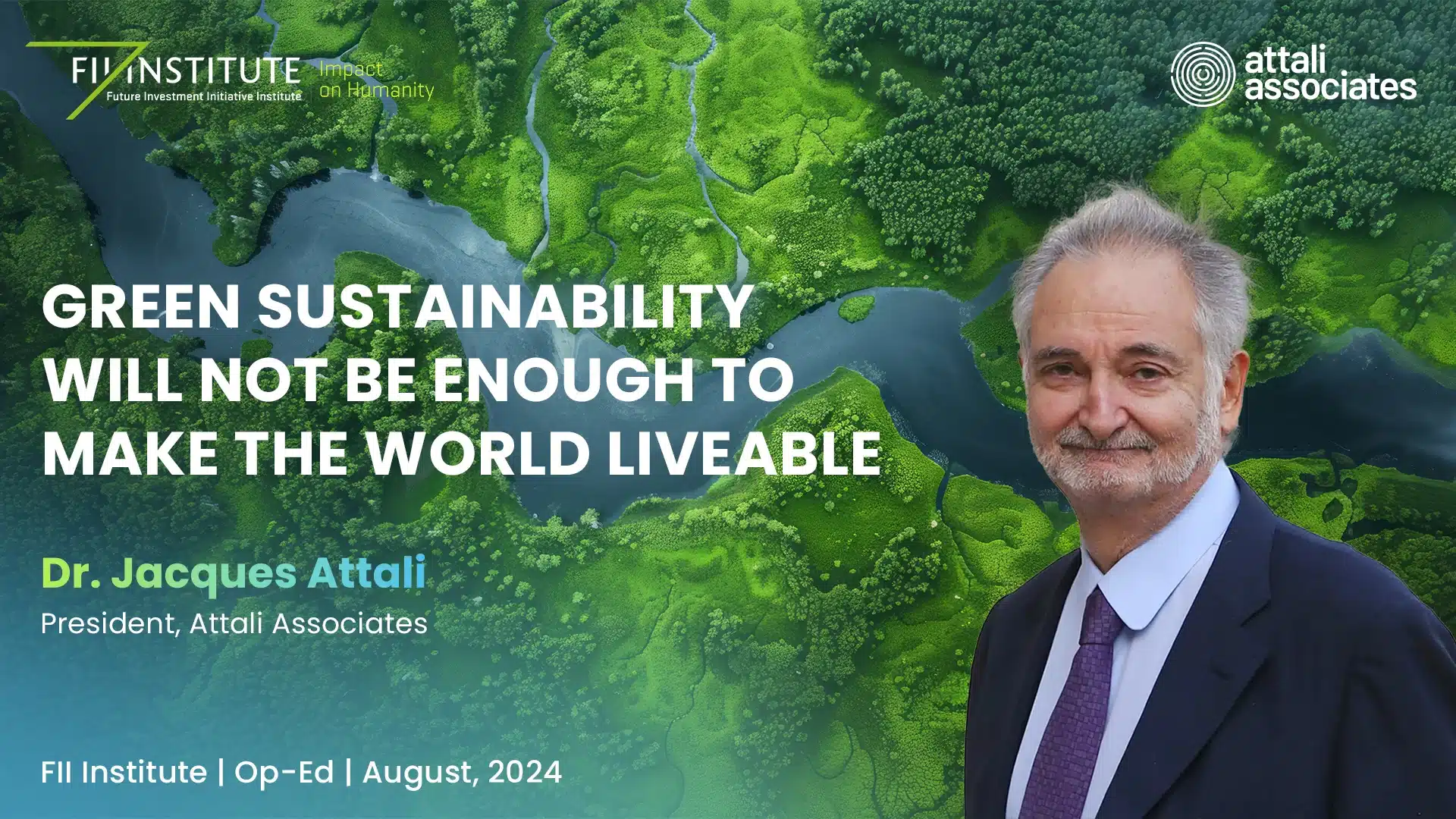
We must address the urgent reality of climate change and its dire consequences in 2050. If humanity does not achieve carbon neutrality, one-third of humanity will be living in too hot and inundated areas by then. Therefore, reaching carbon neutrality in 2050 is a goal and a necessity. Significant investments will be required to drastically reduce the use of fossil fuels and substantially increase carbon capture. This transition is crucial for our future and should be a top priority for all of us.
According to a UN High-Level Climate Action Champions report, confirmed by many other sources, the total world investment needed for this transition is around 130 trillion dollars, requiring an annual investment of 3500 billion dollars, representing 1.3% of the world’s GDP. The investment will be allocated roughly as follows: 50% for green electricity distribution networks and energy storage, 15% for renovating housing and heating, 5% for decarbonizing industry, and 10% for green mobility, including planes, shipping, and battery infrastructure. Additionally, 4% for carbon capture, 2% for hydrogen, 2% for low emissions fuels, and 5% for agriculture, forestry, and other land use.
The total investment in the transition is only one-third of what is needed. To keep up, we must double the investment before 2035 and quadruple it before 2040. These investments can be financed 70% by private finance, with nearly half funded directly through corporate balance sheets. They could also be economically sound, with 70%- 80% of technologies estimated to have higher Net Present Value than high-carbon alternatives by 2030.
The majority of these investments must be located in Asia Pacific (43%), North America (18%), Africa (5%), Central and South America (5%), the Middle East (4%), and Eurasia (3%).
However, reaching carbon neutrality isn’t the only investment needed. We also need the next generation to be healthy, well-educated, and have access to healthy food. To reach that, enormous investments are badly needed in urban, health, education, and social support infrastructure in countries with booming populations, as well as financing for pensions in countries with aging populations. They will represent, as a whole, another 3,500 billion dollars per year.
Suppose we don’t make these investments as we do those needed to preserve the climate. In that case, billions of illiterate, hungry, and unhealthy people will try to survive in a world with a livable climate. This is not a promising future.
Therefore, we must make a clear distinction between the sectors that are useful for the future ( such as sustainable energy, health, education, sustainable agriculture, healthy food, water, carbon capture, recycling, defense, and security ) which form the “economy of life,” and those that form the “economy of death,” such as fossil fuels, artificial sugar, nitrogens, and all related industries.
Today, the “economy of death” represents more than 50% of global GDP, and this is roughly the same in all countries.
Our aim should be to transition, before 2030, to a world economy where the economy of life accounts for more than two-thirds of the total, which will mean shifting around 4% of the world GDP every year towards the economy of life sectors. That is not impossible. That requests vision and planning.
This is a formidable challenge but also a huge opportunity. Nations that lead the way in this transition will lead the world in 2050.