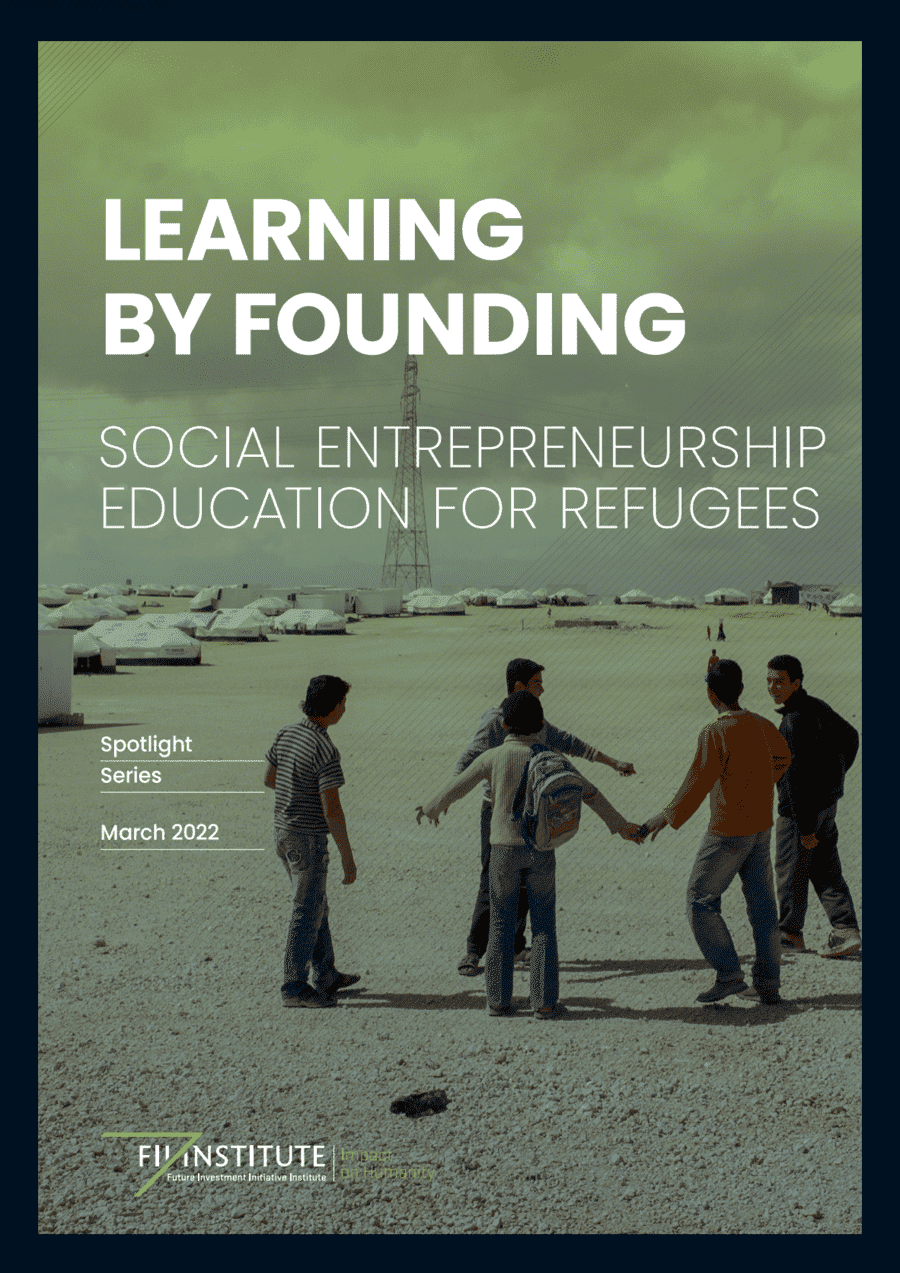
The millions of inhabitants of refugee camps are often seen as people with zero options. And especially the young generation has next to no chances to get higher education and decent work. But entrepreneurship education can change that. Not for profit in the first place – but for a chance
MORE THAN 20 MILLION REFUGEES in the world are under care of the UN High Commissioner for Refugees (UNHCR). They live in refugee camps outside their home countries, often for years. And more than half of them are children and young adults.1 They have good chances to survive – that’s what the global community cares for, with UNHCR and the World Food Programme (WFP) at the frontline. Both organisations are representing the joint efforts of the global community to leave no-one behind. They have been awarded with three Nobel Peace Prizes for their tireless work: the WFP in 2020, and the UNHCR twice, in 1954 and 1981.2 But the millions of refugees these organisation care for have very limited perspectives. It is often completely unclear if and when they might be able to return to their home – if there is anything left of it. And it is often complicated to build up lasting relations with the host country, as Alexander Betts states, professor of Forced Migration and International Affairs at Oxford University: “Refugees generally face different institutional constraints compared to citizens, in areas that may include the right to work, business registration, the enforcement of contracts and property rights. This shapes the terms on which they enter markets, including the labor market.”3 EDUCATION – A SCARCE RESOURCE Those constraints also affect the phase of life before you even can enter the labor market: youth. Secondary education, formation, vocational training – whatever could prepare young people for their working life is a very scarce resource in refugee camps. This higher education gap is a striking