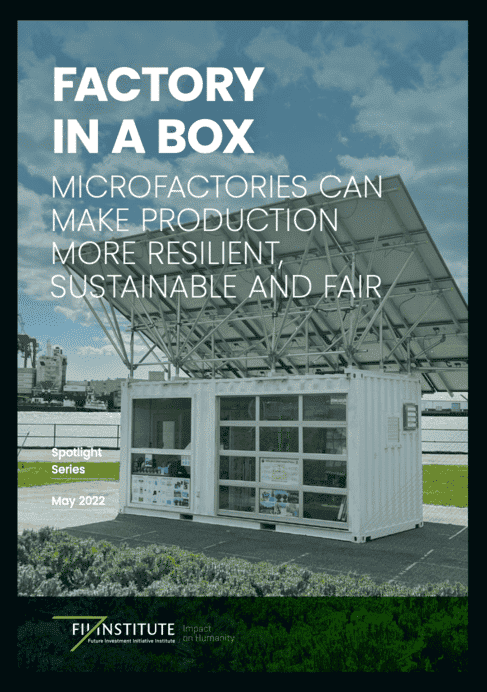
An unprecedented series of recent supply chain disruptions has highlighted the need for alternatives to complex global systems. Fast and versatile, microfactories the size of shipping containers can make supply chains more resilient and value creation more decentralized – with significant social and environmental benefits.
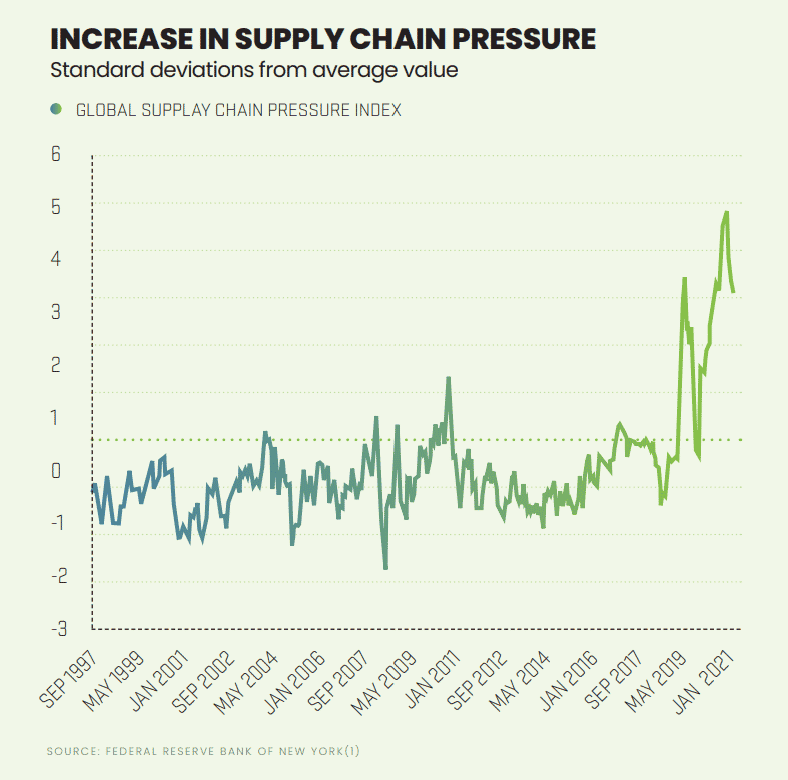
The world is in the midst of a major supply chain crisis. According to an index from the Federal Reserve Bank of New York, global supply chain pressure remains at historically high levels1 – the result of disruptions ranging from Covid-19 and the 2021 Suez Canal blockage to the recent war in Ukraine. These incidents have highlighted the fragility of complex, interconnected models that span continents to deliver almost every product we consume.
Such models have been designed to maximize economic efficiency. Production in the 21st century often involves shipping raw materials across the globe to huge factories, typically in low-income regions, to produce goods as quickly and cheaply as possible. Then the products are sent to consumers around the world via an equally complex distribution system.
When it works, the benefits are obvious: a vast selection of affordable products are readily available to billions of people; crossborder cooperation and investment has increased, providing the Global South with access to jobs.
But as the last two years have shown, globalization also has its shortcomings, some of which are seriously undermining these benefits. Shipping times have increased massively. Three years ago, it took just under 50 days for goods to ship from a supplier’s warehouse in China to a port in the United States. According to US logistics firm Flexport, that has now more than doubled to approximately 111 days, largely thanks to continued pandemic restrictions.
Shipping costs have also exploded in the last two years.
In April 2020, it cost around $1,400 to ship a standard 40-foot container; since July 2021, the price has hovered around the $10,000 mark – an increase of just over 600 percent.
GROWING ENVIRONMENTAL IMPACT
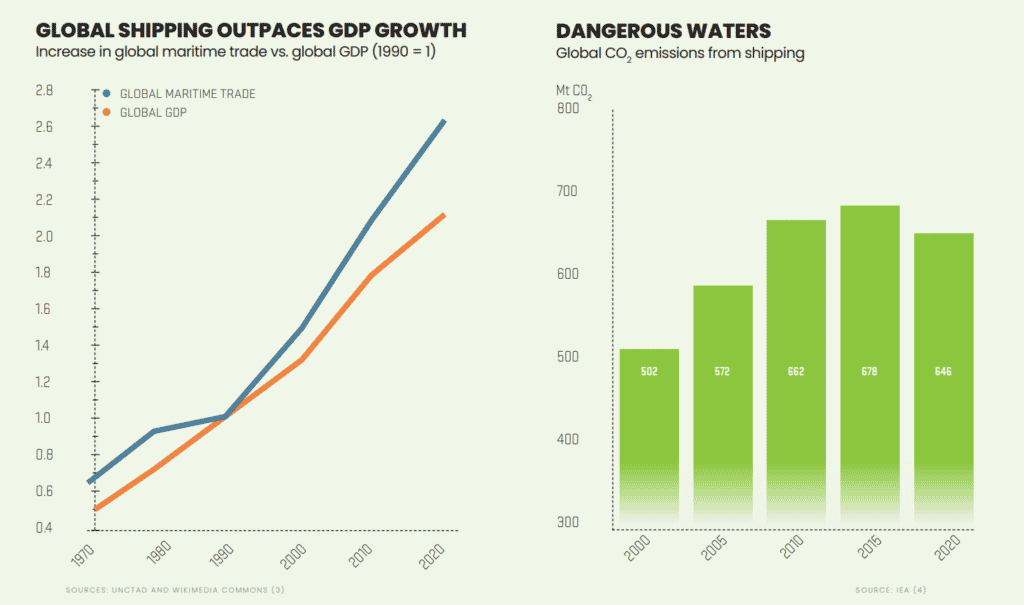
The global supply chain is also taking a social and environmental toll. Ninety percent of world trade is now transported by sea – a hard sector to decarbonize. Between 2000 and 2019, CO2 emissions from international
shipping grew 40 percent. Shipping now accounts for between 2 and 3 percent of global emissions.
And it isn’t just raw materials and products being sent around the globe. In a bid to reduce recycling costs, many rich nations are also shipping vast amounts of waste to poorer countries. The UK, for example, ships twothirds of its plastic waste overseas.6 Between 2001 and 2019, hazardous waste shipments from the EU doubled from 3.9 million tons to 8.1 million tons.7 Yet many developing countries lack the necessary infrastructure to safely and effectively recycle waste materials, exposing workers to harmful substances and creating further pollution.